







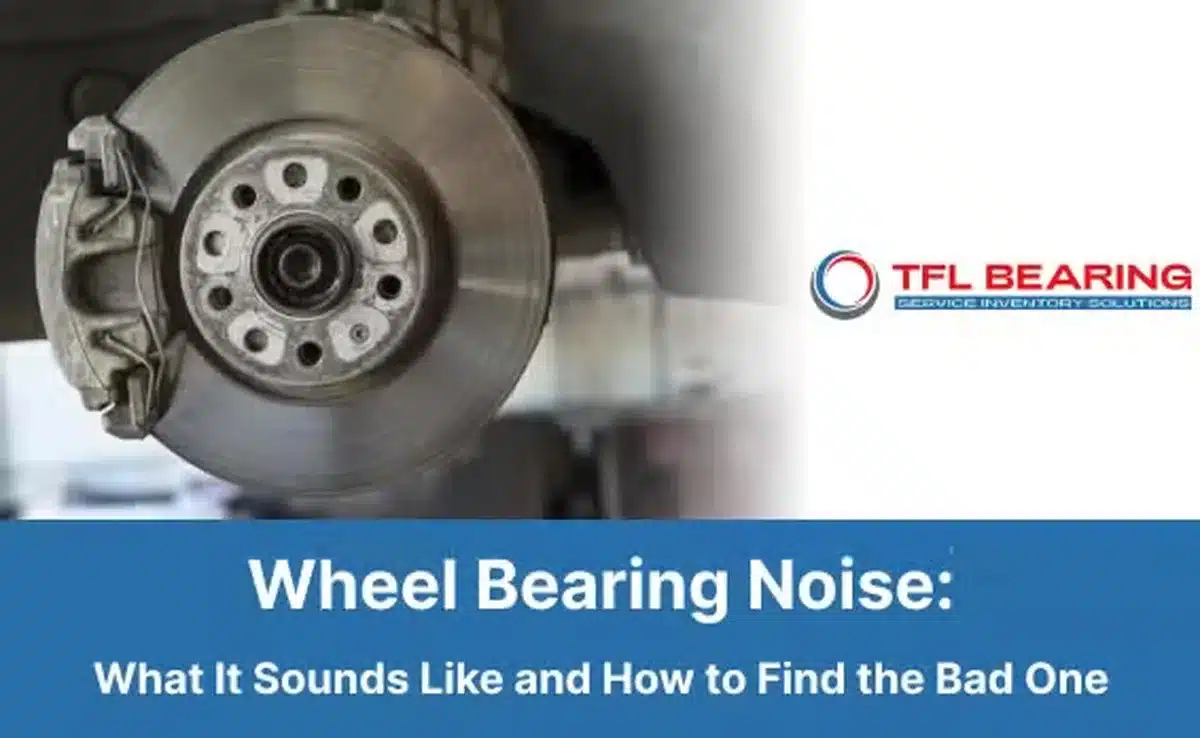
Wheel bearing noise is usually a hum, growl or rumble that rises and falls with road speed, not engine speed, and changes when you steer gently left or right. If the sound stays the same when you shift into neutral and coast, but gets louder in a long sweeping curve, a worn bearing is the most likely cause.
That’s the easy part. The hard part is proving which corner it’s coming from before you spend money.
Wheel bearing noise travels. A technical piece in Brake & Front End points out that the sound often moves through the drivetrain and comes out at an engine or transmission mount, so it can seem to come from somewhere far from the real source. People replace the wrong hub all the time, and the side-to-side “turn test” you’ve read about is a good clue, not a verdict.
This guide covers what each type of wheel bearing noise means, how to narrow it down to one wheel, how to rule out tires, and what the repair costs in the US right now.
What does a bad wheel bearing sound like?
Most failing bearings start as a low drone you notice at 30 to 50 mph and blame on the tires. Over weeks or months it turns into a growl, and in late stages a grinding you can sometimes feel through the floor or steering wheel. The sound tracks wheel rotation: double your speed and the pitch climbs with it.
Here’s how the common descriptions of wheel bearing noise map to what’s going on inside the bearing.
Humming or droning
This is the early stage. The raceways have started to pit or the grease has thinned, so the balls or rollers no longer roll perfectly smooth. Wheel bearing humming noise is easy to miss on coarse pavement and obvious on a quiet stretch of new asphalt.
Growling or rumbling
The surface damage has spread. Spalling (small flakes of steel breaking off the races) gives the bearing a rough, gravelly voice that gets louder under load. This is the noise most mechanics mean when they say a bearing is “talking.”
Grinding
Now metal is rubbing metal with very little lubricant left. A wheel bearing grinding noise usually comes with heat, and sometimes with play you can feel by hand. Don’t plan a road trip on it.
Clicking or chirping
A cyclic chirp at low speed can be a bearing, but a click that only shows up while turning is more often an outer CV joint. Brake & Front End calls popping or clicking in turns a classic CV symptom, so check the boot for tears before blaming the bearing.
Clunking
A clunk over bumps points to looseness somewhere, which could be a worn bearing with excess play, a loose axle nut, or a suspension joint. It needs a hands-on check.
One more detail worth knowing: the same Brake & Front End article notes the noise may vanish at some speeds and only appear at others. So “it went away on the highway” doesn’t clear the bearing.
How to tell which wheel bearing is bad
This is where most of the wasted money goes, so it gets the most space here.
Start with the load test, but read it correctly
When you turn left, the car’s weight shifts to the right side and loads the right side bearings harder. A damaged bearing gets noisier under load. So, as a general rule, noise while turning left points to a bearing on the right side, and the reverse is true for right turns.
To run it safely, pick an empty, straight road. Hold the speed where the wheel bearing noise is loudest, then make gentle lane-width sways left and right. You don’t need to swerve hard; a small steering input moves enough weight. Note three things:
- Does the noise get louder on one sway and quieter on the other?
- Does it disappear completely in one direction?
- Does it stay exactly the same both ways?
Louder on a left sway means suspect the right side. Louder on a right sway means suspect the left. No change at all in either direction is a strong hint that you’re hearing tires, a differential or something else entirely.
The catch: this test tells you the side, not front or rear. On a front wheel drive car, front wheel bearing noise is more common and often comes with a light steering wheel vibration or pull. Rear wheel bearing noise tends to be a steadier drone because the rear wheels don’t steer. Those are tendencies, though, and the noise transfer problem means your ears can still misplace it by a full axle.
Confirm on a jack before you buy parts
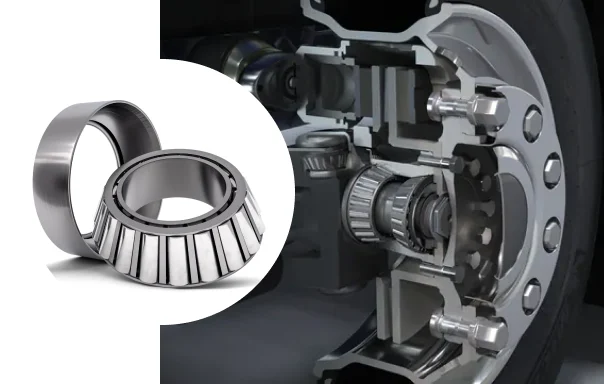
Raise the suspect wheel and support the car on stands. Grab the tire at 12 and 6 o’clock and rock it. Then try 3 and 9 o’clock (play there is more often a tie rod).
On a car with sealed hub units, Brake & Front End says you shouldn’t feel any play at all. Older cars with serviceable tapered bearings can have a little, and a dial indicator should show no more than about .005 inch on a healthy bearing.
Then spin the wheel by hand and feel the tire with your palm. A rough, gritty or notchy feel, compared side to side, is often more telling than wobble.
Can a wheel bearing make noise without play?
Yes, and it’s common. GMB, a hub assembly maker, notes that in the early stages of failure there may not be any play, so the rocking test may not catch anything. You’ll often hear the problem before you can feel it. A bearing with pitted races can hum loudly and still be tight. So “no play” is not a clean bill of health.
If the road test and the jack test disagree, a chassis ear (a set of clamp-on microphones) settles it. Clip one to each knuckle, drive, and compare where the wheel bearing noise is loudest. These used to be dealer tools, but prices have dropped enough that many independent shops own one.
Wheel bearing noise vs tire noise
Tires and bearings sit inches apart and both spin at wheel speed, so they can produce the same roar. Cupped or scalloped tread is the most common impostor. A few checks separate them.
- Change the road surface. Drive the same speed over smooth asphalt and then rough concrete. Tire noise shifts with the surface. Wheel bearing noise comes from inside the hub, so it barely cares what you’re driving on.
- Run your hand over the tread. With the car parked, feel around each tire. Cupping feels like a series of dips; feathering feels sharp one way and smooth the other. GMB’s tire vs bearing guide suggests this exact check and adds that uneven wear itself hints at worn struts or ball joints.
- Swap tire positions. Rotate the tires front to rear and drive again. If the noise moves with the tire, you’ve saved yourself a hub.
The two can also feed each other. A loose bearing wears tires unevenly, and badly worn tires add stress to bearings, so finding cupped tread doesn’t fully clear the hub.
Why wheel bearings start making noise
Most wheel bearings never get the chance to wear out from age. According to figures from SKF cited by Rick’s Free Auto Repair Advice, over 90% of original equipment bearings last the life of the vehicle. Of the ones that fail early, roughly a third go from fatigue, a third from lubrication problems and a sixth from water getting past a failed seal.
Add those last two together and you get half of early failures, all tied to grease and sealing. Water turns grease milky, rust etches the races, and the hum starts.
In practice, these are the wheel bearing noise triggers worth checking on your own car:
- A torn or worn seal, often after deep puddles, car washes aimed at the hubs, or winter road salt
- A hard pothole or curb strike, which can dent the races (called brinelling) even when the wheel looks fine
- A reused or under-torqued axle nut. Brake & Front End calls improper axle nut installation one of the most common causes of wheel bearing comebacks
- Hammering a bearing in instead of pressing it, which damages it before it turns a single mile
- Larger wheels, wheel spacers or a different offset, which change the load on the bearing
From the bearing side of the business, the seal and the grease are where cheap parts cut corners first. Two hubs can share identical dimensions and still differ a lot in seal lip design and grease fill, and you won’t see that from the box.
Wheel bearing noise when turning, accelerating, braking or at certain speeds
When turning
Covered above: wheel bearing noise that gets louder in a turn means more load on the bad side. A click in turns is more likely a CV joint.
At high speed vs low speed
Wheel bearing noise usually gets louder as speed rises. A noise only at low speed, especially a scrape, is often a bent brake dust shield or dragging pad.
When accelerating
True wheel bearing noise doesn’t care about throttle. If the growl changes when you press or lift the gas at a steady speed, look at the drivetrain, transmission or differential instead.
When braking
Brake & Front End says a noise that only happens when braking is likely a brake problem, not a bearing. A sticking caliper can mimic a bearing’s speed related scraping, but it often changes when you touch the pedal lightly.
Is it safe to drive with a bad wheel bearing?
For a short, gentle trip to a shop with a bearing that only hums, most drivers get away with it. Nobody can give you a reliable mileage number, though, and any article that promises a set mileage is guessing. The rate of failure depends on how damaged the races are, how much grease is left and what loads the wheel sees.
What changes the answer from “book it this week” to “park it”:
- Grinding instead of humming
- Play you can feel at the wheel, or a clunk over bumps
- A hub noticeably hotter than the others after a drive
- An ABS or traction control light, since many hub units carry the wheel speed sensor or its tone ring
A bearing that keeps degrading heats up, loosens and in rare worst cases lets the hub separate. You don’t want to find out at 70 mph.
What wheel bearing replacement costs
RepairPal’s estimator puts the average US wheel bearing replacement between $346 and $504, with labor at $226 to $331 and parts at $121 to $172. A full bolt-on hub assembly costs more on average, with RepairPal’s hub replacement estimate at $707 to $864 (last updated September 2026).
Those averages hide a wide spread. Pressed-in bearings need a hydraulic press and more labor time, while some bolt-on hubs come off with a few bolts. Luxury and heavy vehicles cost more. And quoting per wheel matters, because you rarely need both sides at once unless both have failed.
Should you replace them in pairs? Not by default.
Unlike brake pads, bearings don’t wear in matched sets. If the other side passes the spin and play checks, leave it. The exception is a high mileage car where the second bearing is already starting to hum.
How to fix wheel bearing noise
There’s no repair for wheel bearing noise short of replacing the bearing. Grease additives and repacking won’t undo pitted races, and on sealed hub units there’s nothing to repack anyway. What you can control:
- Confirm the corner with at least two tests (load test plus jack or chassis ear) before ordering parts.
- Buy the bearing or hub by the exact part number for your VIN, since some models come in more than one variant.
- Use a new axle nut and torque it to the factory spec with a calibrated wrench. Don’t use an impact gun for final torque.
- Press bearings in by the outer race. Never hammer them.
- Check the ABS sensor reading on the test drive afterward.
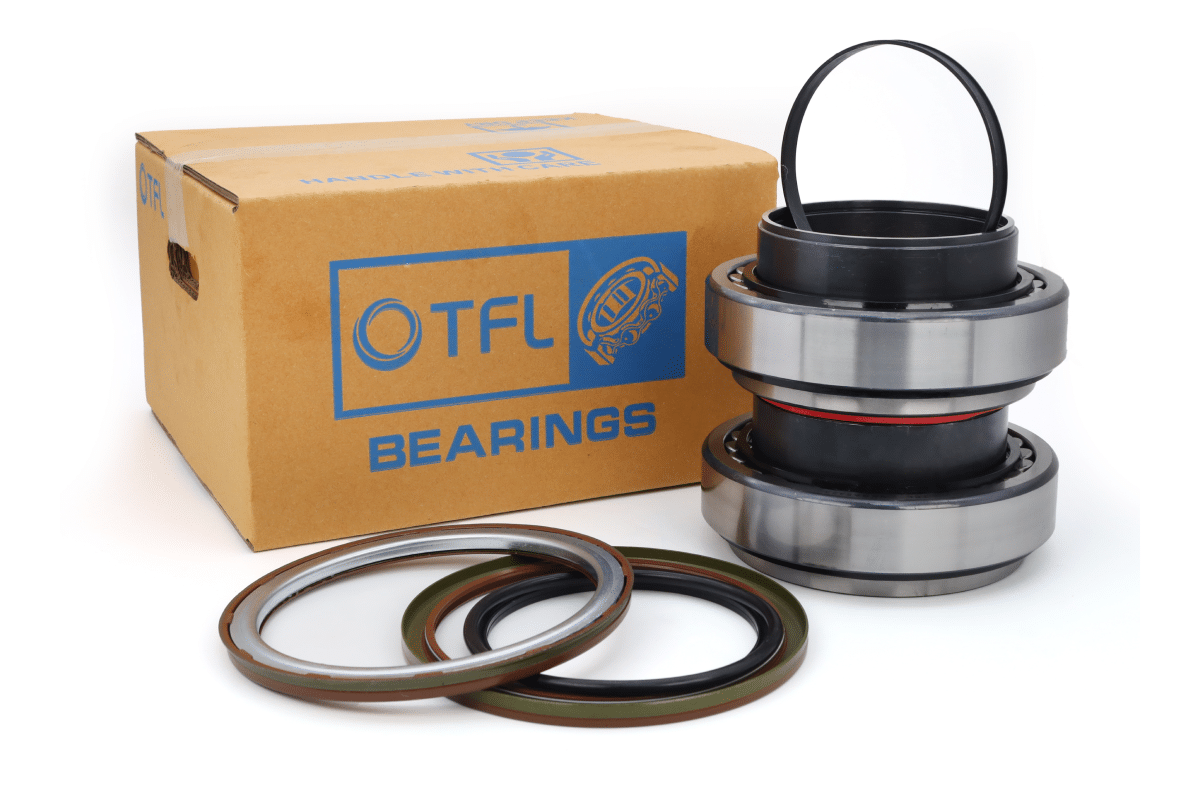
If you’re a parts buyer or repair shop sourcing hub bearings in volume, TFL supplies automotive bearings including tapered roller bearings and angular contact ball bearings with cross-reference checks against OE part numbers. Send your list through the quote page and we’ll match specs before anything ships.
Quick answers
Does wheel bearing noise get louder with speed?
Usually, yes. It follows wheel rotation, so the pitch and volume climb as you go faster, though it can fade in and out at certain speeds.
Can a bad wheel bearing cause vibration?
It can. A worn front bearing can send a fine buzz through the steering wheel or floor, and the looseness can also wear tires unevenly, which adds its own vibration.
What happens if you ignore wheel bearing noise?
The bearing keeps heating and loosening. Expect damage to the hub, ABS sensor ring and tires first, and in the worst case, a wheel that no longer runs true.