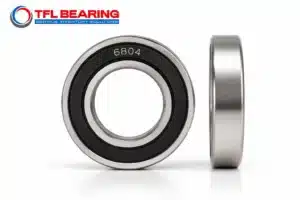








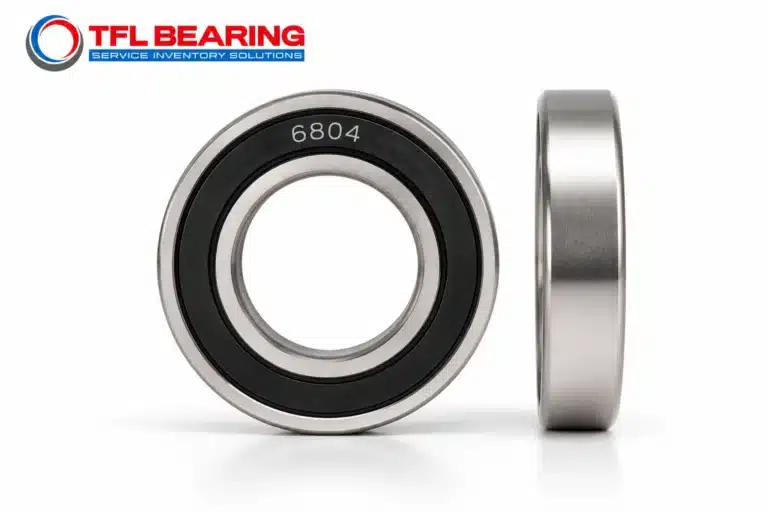
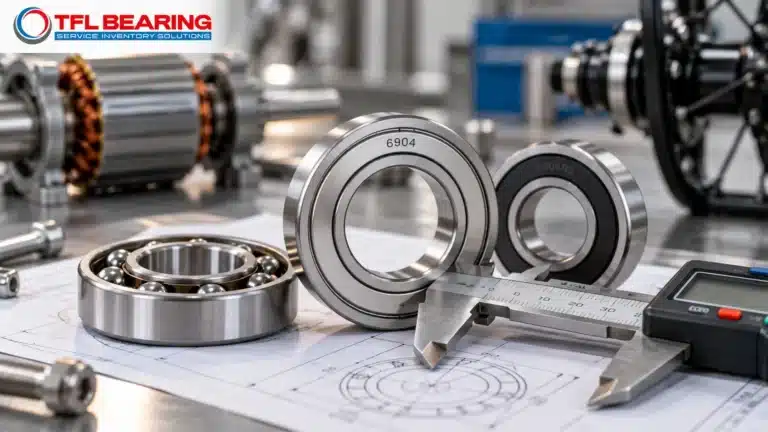
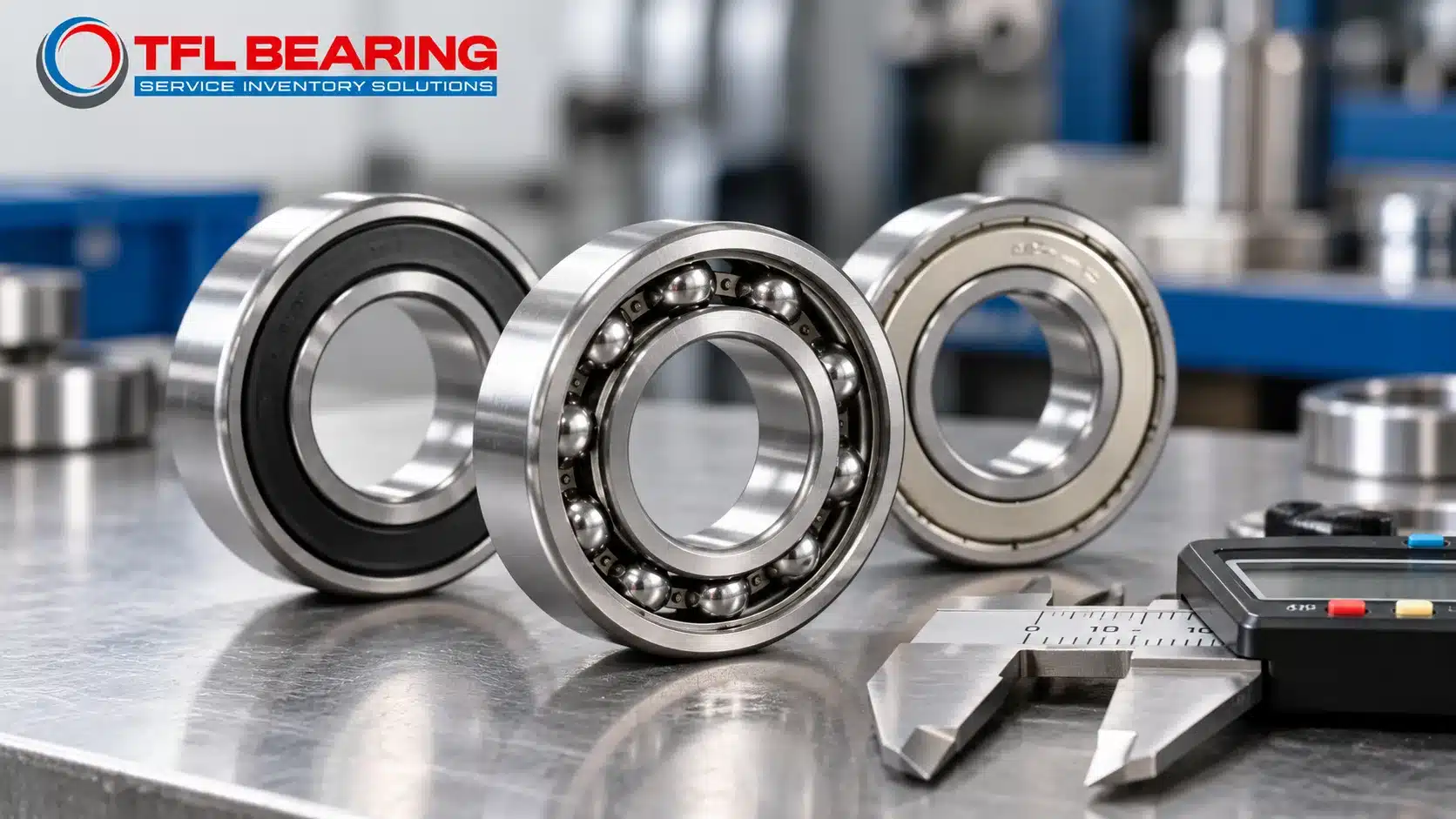
A 6902 bearing is a single row deep groove ball bearing with a 15 mm bore, a 28 mm outside diameter and a 7 mm width. You’ll often see the size written as 15x28x7. It’s slim and light, so it shows up in bike hubs, small electric motors, compact gearboxes and automation parts.
On a 6902 bearing, the number tells you the size. The letters after it tell you the seal. Get both right, and your replacement will fit and last.
What Are the 6902 Bearing Dimensions?
The 6902 bearing size is 15 mm inside, 28 mm outside and 7 mm wide, with a 0.3 mm minimum corner chamfer. These boundary dimensions follow the ISO 15 standard. That means a 6902 from any brand, open or sealed, has the same three numbers.
| Dimension | Metric | Inch |
|---|---|---|
| Bore (d) | 15 mm | 0.591 in |
| Outside diameter (D) | 28 mm | 1.102 in |
| Width (B) | 7 mm | 0.276 in |
| Chamfer r (min) | 0.3 mm | 0.012 in |
| Shaft shoulder da (min) | 17 mm | 0.669 in |
| Housing shoulder Da (max) | 26 mm | 1.024 in |
Source: NSK and Koyo online catalogs, checked October 2026.
The code is easy to read. “69” means the thin, extra light series. “02” means a 15 mm bore. Bore codes 00 to 03 are fixed at 10, 12, 15 and 17 mm. From 04 upward, you multiply the code by 5.
What Do 2RS, RS and ZZ Mean on a 6902?
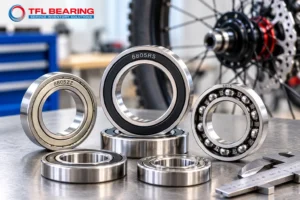
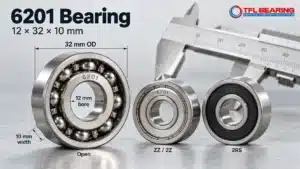
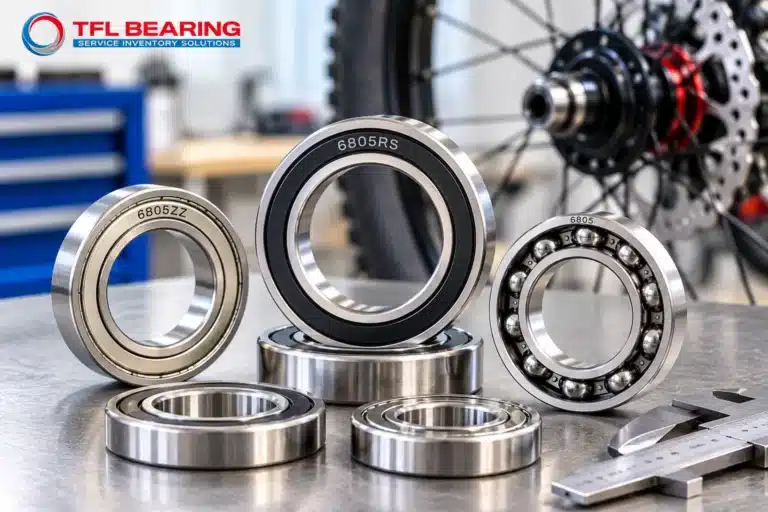
The suffix shows how a 6902 bearing is closed. A 6902 2RS bearing has a rubber contact seal on both sides. A 6902RS bearing has a seal on one side only. A 6902 ZZ bearing has two metal shields that sit close to the inner ring without touching it. An open 6902 has no closure at all.
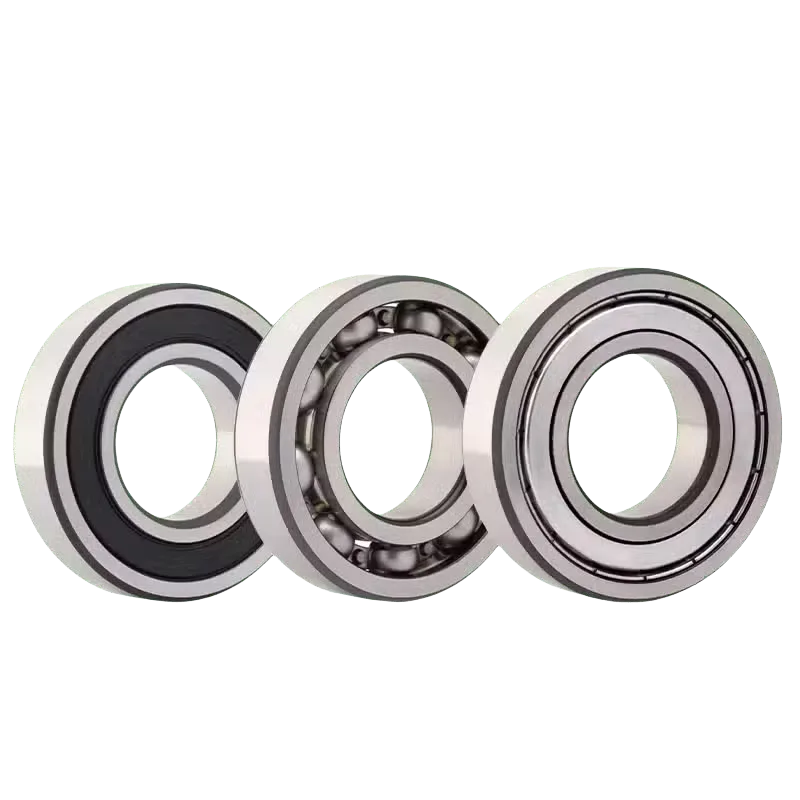
Picture a jar. A seal is a lid pressed on tight. A shield is a lid resting just above the rim. The tight lid keeps more dirt out, but it’s harder to turn.
| Version | Closure | Best for | Trade off |
|---|---|---|---|
| Open 6902 | None | Oil lubricated gearboxes | Needs outside lubrication |
| 6902 ZZ | Two metal shields | Clean, faster motors | Lets fine dust and water in |
| 6902 2RS | Two rubber contact seals | Bike hubs, outdoor and wet areas | More drag, lower speed limit |
| 6902RS | One rubber seal | Housings already protected on one side | The open side needs protection |
Brands label 6902 sealed bearings differently. SKF uses 2RS1 or 2RZ, NTN uses LLU, NSK uses DDU, and bike specialist Enduro uses LLB. It’s the same idea with different letters.
How Much Load and Speed Can a 6902 Bearing Handle?
Load and speed ratings for a 6902 bearing depend on the maker. NSK rates its open 6902 at 4.75 kN dynamic and 2.26 kN static, with a 26,000 rpm grease speed limit. NTN rates its version at 3.65 kN and 2.00 kN. Sealed 2RS versions usually drop to about 16,000 rpm, because the seal lips rub.
| Source (checked October 2026) | Dynamic load (Cr) | Static load (C0r) | Grease speed limit |
|---|---|---|---|
| NSK 6902, open | 4.75 kN | 2.26 kN | 26,000 rpm |
| Koyo 6902, open | 5.40 kN | 2.25 kN | Not listed in source |
| NTN 6902, open | 3.65 kN | 2.00 kN | 24,000 rpm |
| TFL 6902, open | 974 lbf (about 4.33 kN) | 506 lbf (about 2.25 kN) | 29,000 rpm |
| Typical 6902 2RS listings | 3.65 to 4.36 kN | 2.00 to 2.24 kN | About 16,000 rpm |
Dynamic load is what the bearing carries while it turns. Static load is what it takes while standing still without denting the raceway. Think of a car parked on a soft driveway.
Never copy one brand’s numbers into another brand’s design. Check the datasheet of the part you actually buy, like our 6902 thin section ball bearing page, which lists tolerances, clearance and materials.
What Is the Difference Between 61902 and 6902?
There’s no size difference. A 61902 and a 6902 bearing are the same 15x28x7 deep groove ball bearing. SKF and Schaeffler (FAG) write 619 for this series, while NSK, NTN and Koyo write 69. So an SKF 61902 2RS1 replaces a 6902 2RS directly.
That’s why a search for a 6902 SKF bearing usually lands on 61902 parts. To match part numbers across other brands, use our bearing cross reference guide.
6802 vs 6902: Can You Swap Them?
No. A 6802 and a 6902 bearing both have a 15 mm bore, but the 6802 measures 15x24x5. It’s 4 mm smaller outside and 2 mm thinner, so it will rattle in a 6902 housing. A 6002 goes the other way at 15x32x9. Always check all three numbers, never just the bore.
| Model | Size (mm) | Series | Typical use |
|---|---|---|---|
| 6802 (61802) | 15x24x5 | 68, ultra thin | Thru axle bike hubs, tight spaces |
| 6902 (61902) | 15x28x7 | 69, thin | Bike hubs, small motors, pivots |
| 6002 | 15x32x9 | 60, light | General machinery needing more load |
All three belong to the same family of deep groove ball bearings. They carry radial load plus some axial load in both directions.
Is a 6902 Ceramic Bearing Worth It?
Most “ceramic” 6902 bearing options are hybrids. They pair silicon nitride (Si3N4) balls with steel races, and Enduro sells this build in its ABEC 5 range. Riders choose hybrids for lower rolling resistance. They cost several times more than a steel 6902, though, so they make the most sense in racing hubs.
Know the limits. The steel races can still rust, and ceramic balls can’t save a bearing with a worn seal. For wet or salty places, a stainless steel S6902 is often the cheaper fix.
Where Is the 6902 Bearing Used?
UK bike retailer Westbrook Cycles lists 6902 bearings among the most common mountain bike bearings, from trail bikes to downhill bikes. You’ll also find them in:
- Bike hubs, bottom brackets and suspension pivots
- Small electric motors and compact gearboxes
- Machine tools, 3D printers and robotic arms
- Printers and small fans
Suspension pivots only rock back and forth. For those, bike suppliers often suggest “MAX” type bearings, which have extra balls to spread impact loads. For other space saving designs, browse our thin section ball bearings range.
There’s one more limit to keep in mind. Thin rings mean a 6902 isn’t built for heavy shock or large axial loads. In those cases, step up to a 6002 or an angular contact bearing.
Common Mistakes When Replacing a 6902 Bearing
- Measuring only the bore. A 6802 and a 6002 also have a 15 mm bore.
- Pressing on the wrong ring. In a hub, press the new bearing in through the outer ring, never the inner ring.
- Running a 2RS near its speed limit. Contact seals heat up, so use ZZ or open types for fast, clean motors.
- Assuming every 6902 has the same load rating. The table above shows they don’t.
- Reusing a bearing you knocked out. Removal force often marks the raceways.
Tips for Choosing the Right 6902
- Read the ring of the 6902 bearing first. The number gives the size, and the suffix gives the seal and clearance.
- If the markings are gone, measure with digital calipers: bore, then outside diameter, then width.
- Match the environment. Mud and water call for 2RS. Clean, high speed jobs suit ZZ.
- Use the same method for every size you stock, as our 6201 bearing guide shows.
Conclusion
A 6902 bearing is a 15x28x7 thin section deep groove ball bearing. Pick the right seal, check all three dimensions, and confirm the load rating from the real datasheet. Need one box or a mixed order? Request a quote from TFL with your part number, seal type and quantity.
FAQs
What does C3 mean on a 6902 2RS C3?
C3 means the 6902 bearing has more internal clearance than normal (C0 or CN). It’s used when heat or a tight fit would shrink that gap. Replace C3 with C3 unless an engineer says otherwise.
How long will a 6902 bearing last?
There’s no single number. Under ISO 281, rated life in millions of turns equals the dynamic load rating divided by the applied load, cubed. Dirt, poor fitting and the wrong grease cut that life short.
Can I regrease a sealed 6902 2RS?
Yes, carefully. Lift one rubber seal with a thin pick, pack in fresh grease, then press the seal back. Metal ZZ shields rarely come off cleanly, so replacing is usually smarter.
How do I remove a 6902 from a bike hub?
Use a blind bearing puller, or tap a drift evenly around the old bearing from the other side. Work slowly so the hub shell stays straight, and fit a new bearing afterward.
Can I buy the 6902 bearing from TFL Bearing in bulk?
Yes. TFL lists an open 6902 and supports mixed model orders. The MOQ depends on the product type and specs, so send your requirements, and the team will confirm stock, MOQ and price.