








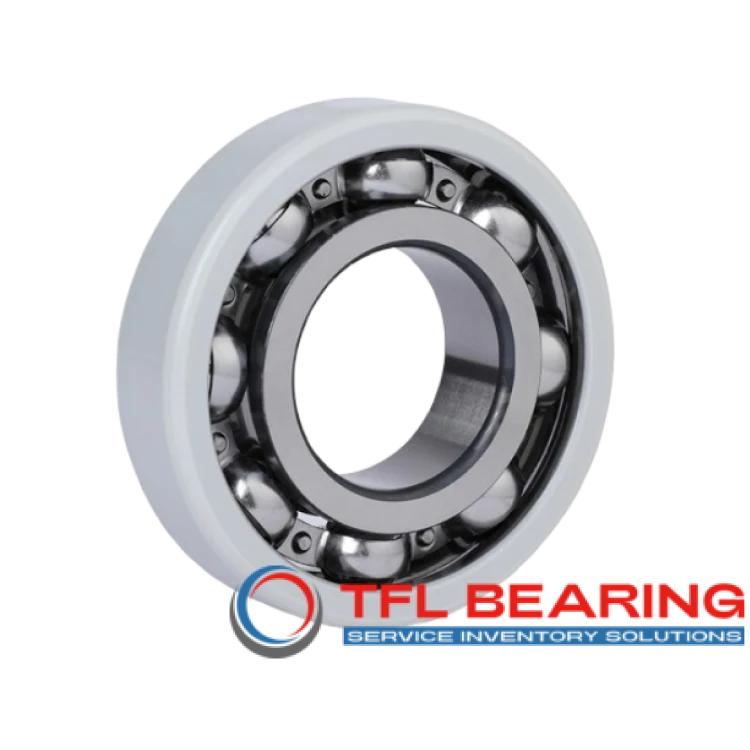
A one way bearing is a bearing that spins freely in one direction and locks solid in the other. Small sprags or rollers inside wedge between two rings when you turn it backward, so torque passes straight through. You already know the idea from a bicycle: you can coast, but pushing the pedals still drives the wheel.
This guide covers how it works, the main types, where they’re used and how to spot a failing unit.
What Is a One Way Bearing?
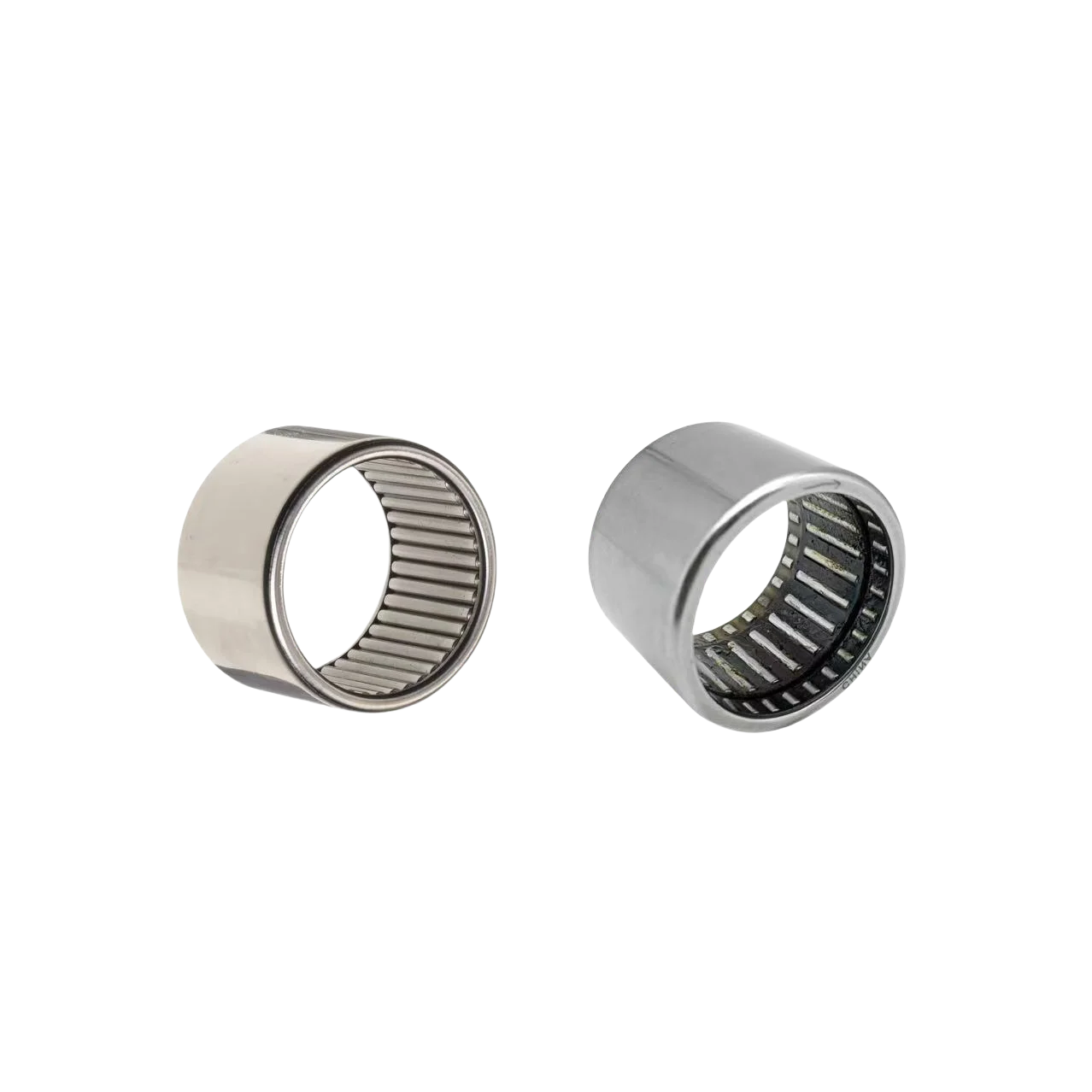
A one way bearing is a part that transmits torque in one direction of rotation and freewheels in the other. Many designs combine a clutch and a normal ball bearing in one compact unit. That single part supports the shaft and controls its direction, with no power, sensor or outside control.
It goes by many names. A sprag clutch guide from GMN Bearing USA lists one way bearing, freewheel clutch, cam clutch and overrunning clutch as names for the same part. You’ll also see one way clutch bearing, roller clutch bearing and anti reverse bearing in catalogs.
How Does a One Way Bearing Work?
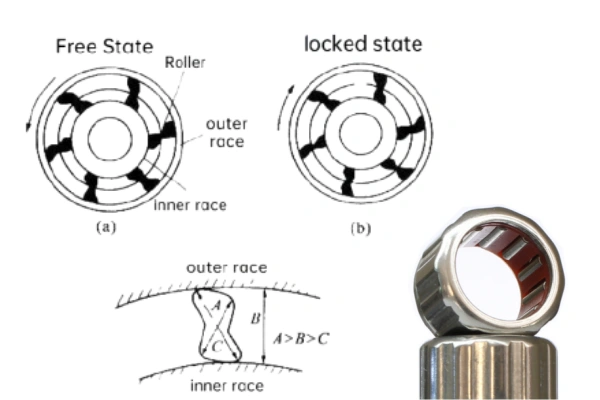
Locking parts sit between the inner and outer ring. Turn the shaft the free way and they tilt or roll aside, so the shaft spins with very little drag. Turn it the other way and they jam against both rings. The two rings then lock together instantly, and torque passes through.
There are two common ways to create that jam.
Roller ramp (one way roller clutch)
Each roller sits in a sloped pocket with a tiny spring behind it. When the motion reverses, the roller climbs into the narrow end of the slope, like a wedge under a door. It locks as long as the friction between the roller and the ring is greater than the tangent of the ramp angle.
Sprag (sprag clutch bearing)
Sprags are small shaped blocks that stand at an angle, a bit like books leaning on a shelf. Turn one way and they lean over. Turn the other way and they stand up, become taller than the gap and grip both rings. A typical industrial sprag clutch has 24 to 60 sprags around its circumference.
Sprag vs Roller vs Needle: Which One Way Clutch Type Fits?
Sprag types carry the most torque for their size. Roller types suit low to medium torque and indexing, and drawn cup needle clutches win where space is tight. McMaster Carr’s 2026 catalog notes that sprag clutches handle higher torque than roller clutches because they have more contact points.
| Feature | Sprag type (such as CSK) | Roller ramp clutch | Drawn cup one way needle bearing |
|---|---|---|---|
| Locking part | Angled sprags | Spring loaded rollers on ramps | Needle rollers in a thin steel cup |
| Torque for its size | Highest | Low to medium | Good for its size |
| Radial space | Same as a 62 series ball bearing | Usually larger | Very small |
| Supports the shaft? | Yes, built in ball bearing | Depends on design | Only versions with built in bearings |
| Typical jobs | Backstops, conveyors, printing machines | Overrunning and indexing | Compact drives |
| Mounting | Press fit on shaft and in housing | Keyed or press fit | Simple press fit in housing |
A real example: the CSK series
The CSK series is a popular sprag clutch bearing. It is a sprag clutch built into a 6200 series ball bearing, with sizes 8 and 40 as exceptions. A CSK20 measures 20 x 47 x 14 mm and is rated at 50 Nm of torque with a maximum speed of 6000 rpm.
That’s the same outer size as a 6204 deep groove ball bearing. So you can often fit one into a similar housing and add one way action without redesigning the machine.
Drawn cup clutches
These use a thin pressed cup to save space. Boca Bearings’ HFL series places two radial bearings on either side of a needle roller clutch and works from minus 30°C to 120°C, with oil lubrication recommended above 70°C. If you use a plain clutch with no built in bearing, McMaster recommends pairing it with needle roller bearings to carry the radial load.
You can browse sizes in our one way needle roller bearing clutches range.
Where Are One Way Bearings Used?
A one way bearing does three jobs. Backstopping stops reverse motion, and overrunning lets the driven part spin faster than the driver. Indexing turns a rocking motion into steady steps. RS Components lists conveyor drives, hoist load brakes, fan drives, pumps and printing machines as typical uses.
Cars are full of them. In a starter motor, the drive’s one way clutch lets the gear freewheel once the engine fires, so the engine can’t spin the starter at damaging speed. Many alternators also use a pulley with a one way clutch that freewheels when engine speed suddenly drops. These parts sit alongside the other automotive bearings in a typical engine bay.
What Are the Advantages of a One Way Bearing?
It controls direction automatically, locks with zero backlash and saves space by doing two jobs in one part. Most sealed versions arrive greased and ready, so maintenance stays low. That makes it simpler and cheaper than a powered brake.
Backlash is the small free play before something catches, like the slack in a loose bike chain. CSK bearings transmit torque with zero backlash and come filled with grease for low maintenance.
What Are the Limitations?
- It only locks one way. If you need to hold a load in both directions, you need a different solution.
- Torque has a ceiling. Overloading can make the clutch slip or damage the sprags.
- Fit is critical. CSK types pass torque through an interference fit, with N6 tolerance for the housing and n6 for the shaft, according to Simply Bearings.
- Pawls can be stronger. A NASA patent (US 6,640,949) notes that pawls can resist reverse rotation better than typical sprags.
What Are Bad One Way Bearing Symptoms?
A healthy one way bearing turns freely one way and locks the other. Tire Review advises that a bad overrunning drive turns freely in both directions or not at all. Slipping under load, whining, grinding and jerky engagement are other warning signs.
In cars, the clues are easy to miss. Mechanic Rick Muscoplat (2022) explains that a worn starter drive clutch first shows up as a whine when you try to start, and it may take several attempts before it works. A failing alternator pulley can cause belt slippage and undercharging.
The quick test is simple. Hold the outer ring of the one way bearing and turn the inner ring both ways by hand. If it locks both ways, spins both ways or feels gritty, replace it.
Common Mistakes When Choosing or Fitting a One Way Bearing
- Fitting it backwards. Check the free direction by hand before you press it in. Reversing it means the machine drives the wrong way or not at all.
- Using a loose fit. A press fit design mounted with a slip fit will spin on the shaft instead of locking.
- Choosing by bore size alone. Check rated torque against your peak load, including shock at start up.
- Expecting a plain clutch to carry radial load. Many drawn cup clutches need a separate support bearing.
- Swapping brands blindly. Run a bearing cross reference check on size, torque and speed before you switch.
Conclusion
A one way bearing gives you automatic direction control in one small, low maintenance part. Pick sprag types for high torque, roller types for indexing and drawn cup types for tight spaces. Then check fit, torque and free direction before you install. If you’re replacing a part, send the TFL Bearing team your model number or drawing and get a matched quote for your one way bearing.
FAQs
Is a sprag clutch the same as a one way clutch?
A sprag clutch is one type of one way clutch. Roller ramp and needle roller clutches do the same job with rollers instead of sprags.
Can I regrease a sealed CSK bearing?
Usually you don’t need to. Sealed versions come greased for life. Some open types can run in an oil bath, so check the maker’s guidance.
Which way does a one way clutch lock?
It depends on how you mount it. Flipping the bearing reverses the locking direction, so always test it by hand first.
Does a sprag clutch have backlash like a ratchet?
No. A ratchet clicks from tooth to tooth, so it moves a little before it catches. A sprag grips at any point, with zero backlash.
Can TFL Bearing help me find a replacement for a branded bearing?
Yes. TFL checks dimensions, load ratings, tolerances and seals against major brand part numbers. It also handles mixed model orders with pre shipment inspection under ISO 9001 and IATF 16949 quality systems.