








Finding an EZO SRW0ZZ listing online was not the difficult part. Finding 500 pieces of actual available stock was.
A customer came to TFL Bearings with a time-sensitive requirement for 500 EZO SRW0ZZ miniature bearings. The exact part number was already known, but the customer could not obtain the required quantity through local supply channels. Availability was also extremely limited in China.
We first checked our regular supply channels. When those sources could not immediately confirm enough inventory, we expanded the search through additional bearing supply channels. We eventually located sufficient stock, confirmed the quantity, prepared the order, and shipped it. The complete sourcing-to-shipment process took approximately one month.
This order illustrates a common B2B procurement problem: a bearing can be easy to find in catalogs and on product pages, yet difficult to purchase in the quantity and timeframe a real order requires.
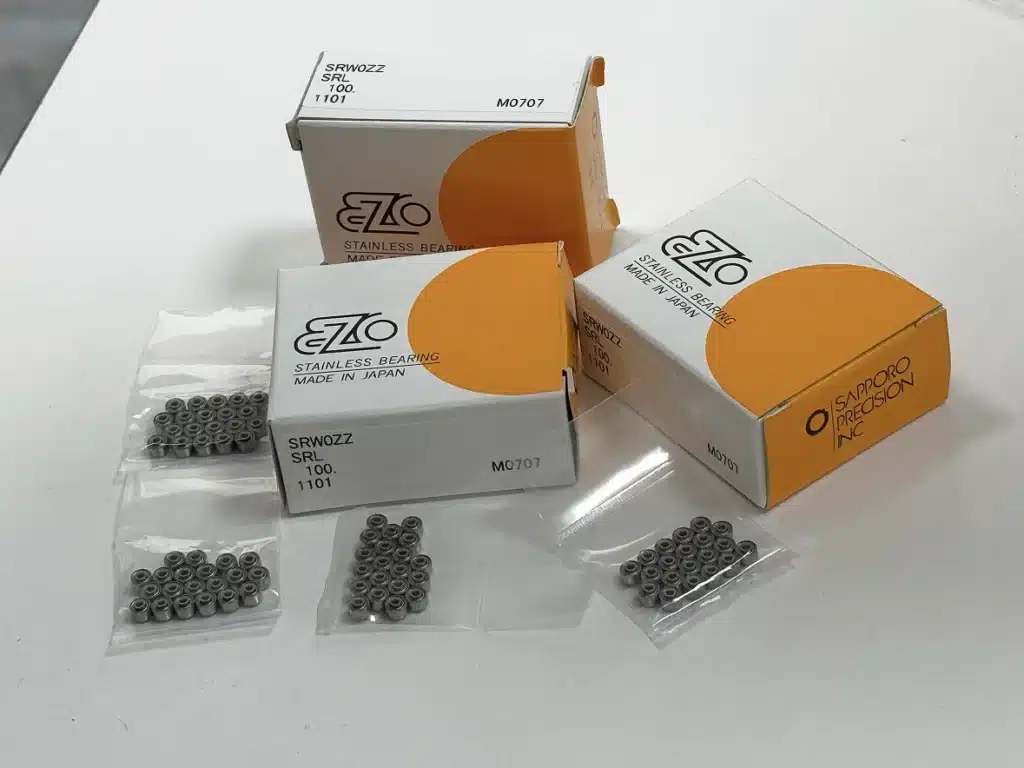
The Challenge: Finding 500 EZO SRW0ZZ Bearings
This was not a bearing-selection problem. The customer already knew the exact brand and model required. The purchasing requirement had four fixed elements:
- Brand: EZO
- Model: SRW0ZZ
- Quantity: 500 pieces
- Timing: a time-sensitive sourcing requirement
The customer had already tried local supply channels without success. The challenge was not identifying the bearing or finding a supplier willing to discuss it. The challenge was locating enough physical inventory to fulfill the complete 500-piece order.
That distinction matters. One sample, a few remaining pieces, or an unconfirmed supplier listing could not solve the customer’s procurement problem. The order required 500 pieces of the specified EZO SRW0ZZ bearing from supply that could actually be verified and coordinated for shipment.
What Was the EZO SRW0ZZ Used For?
The customer described the application simply:
“We use this to ride in a detent on a drum.”
In other words, the SRW0ZZ bearing interacted with or rode along a detent feature on a drum as part of the customer’s mechanical arrangement. This application detail explains why an exact small bearing could matter to the assembly, but the customer did not provide further operating information.
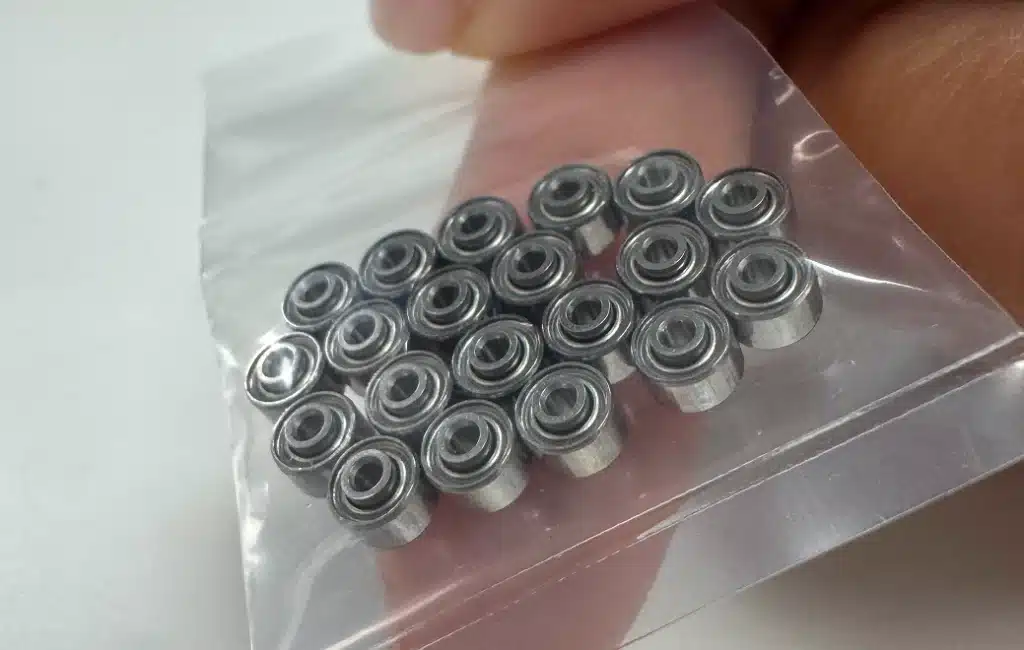
We therefore did not assume the equipment type, detent geometry, load, speed, temperature, lubrication condition, or the function of the complete mechanism. When sourcing an exact replacement, keeping confirmed facts separate from assumptions helps prevent an unverified application description from becoming an incorrect technical recommendation.
Why Was the SRW0ZZ Difficult to Source in Quantity?
The SRW0ZZ is a specialized inch-size miniature ball bearing with an extended inner ring and shields on both sides. Its very compact dimensions and specialized configuration help explain why it may not be stocked in the same depth as common metric bearing series.
| Specification | EZO SRW0ZZ |
|---|---|
| Type | Inch-size miniature ball bearing |
| Bore diameter | 1.191 mm / 0.0469 in |
| Outside diameter | 3.967 mm / 0.1562 in |
| Shielded inner-ring width | 3.175 mm / 0.1250 in |
| Shielded outer-ring width | 2.380 mm / 0.0937 in |
| Configuration | Extended inner ring, double shielded |
Brief dimensional context for the EZO SRW0ZZ. Confirm the current manufacturer specification and required suffixes before ordering.
The specifications were not the main obstacle in this case. Availability was. Specialized miniature bearings may have lower or less predictable inventory across general supply channels. A supplier may recognize the model and still have only a handful of pieces—or none physically available.
This is the difference between product existence and order availability. A model can remain in a catalog, appear on distributor websites, and return many search results while still being unavailable locally, subject to replenishment, or stocked in quantities far below a production requirement.
Online Listings Did Not Mean 500 Pieces Were Available
Online search results create visibility, but they do not always provide dependable inventory information. In industrial procurement, a product page can mean several different things:
- The supplier recognizes or has previously sold the model, but currently has no stock.
- A small residual quantity is available, but not enough to fulfill the order.
- The displayed inventory has not been updated.
- The product is available only after a new production or replenishment lead time.
- The supplier must check another warehouse or source before confirming quantity.
- Stock is divided among multiple channels and cannot be treated as one confirmed lot.
For this order, finding pages that mentioned SRW0ZZ did not answer the customer’s real question: Can one sourcing process deliver 500 pieces?
| What an Online Search Shows | What Procurement Must Confirm |
|---|---|
| The model appears on a website | Is stock physically available now? |
| A product page exists | How many pieces can actually be supplied? |
| “Contact us” or “available” appears | Can the source fulfill all 500 pieces? |
| The model remains listed | What is the current, confirmed lead time? |
| Several suppliers appear in search | Can the inventory and supply route be verified? |
Online visibility is not the same as verified order availability.
Our Initial Supply Channels Could Not Immediately Fulfill the Order
TFL first checked its normal supply channels. Available SRW0ZZ inventory was limited, and sufficient quantity was not immediately available or easy to confirm.
We did not treat partial availability as a completed solution. The customer did not need a sample or a small replacement quantity; the customer needed 500 pieces. We also did not imply that the bearings were already sitting in TFL’s own warehouse. The value of this case came from the sourcing work required after regular channels could not fulfill the complete requirement.
Being transparent at this stage matters. For a hard-to-find bearing search, an early “not immediately available” is more useful than an optimistic answer based on an unverified listing. It defines the real gap and allows the search to focus on sources that may hold sufficient stock.
Expanding the Search Beyond Regular Bearing Supply Channels
When the initial checks did not produce enough confirmed inventory, TFL expanded the search through additional bearing supply sources. The process followed a clear sequence:
- Confirm the requirement. EZO brand, complete SRW0ZZ model, and 500-piece quantity.
- Check regular supply channels. Determine whether the full quantity was immediately available.
- Identify the shortage. Separate small or uncertain quantities from supply capable of fulfilling the order.
- Expand the search. Investigate additional bearing supply channels without disclosing confidential supplier information.
- Verify availability. Check whether reported quantities were real and sufficient.
- Coordinate the order. Bring the available supply together into a workable 500-piece fulfillment plan.
- Prepare and ship. Complete order handling and arrange shipment to the customer.
The key point is simple: the search did not stop when normal channels could not immediately provide the requested quantity. TFL continued investigating a broader supply network until enough stock was located.
Finding a Listing Was Easy. Confirming Real Stock Was Harder.
In hard-to-find bearing sourcing, the decisive question is not whether a model appears online. It is whether the required quantity physically exists, can be verified, and can actually be supplied.
This verification step is especially important when the requested quantity is much larger than the few pieces a distributor may keep for replacement demand. A buyer can spend days contacting websites individually and still receive the same answers: no stock, insufficient quantity, or a lead time that does not fit the requirement.
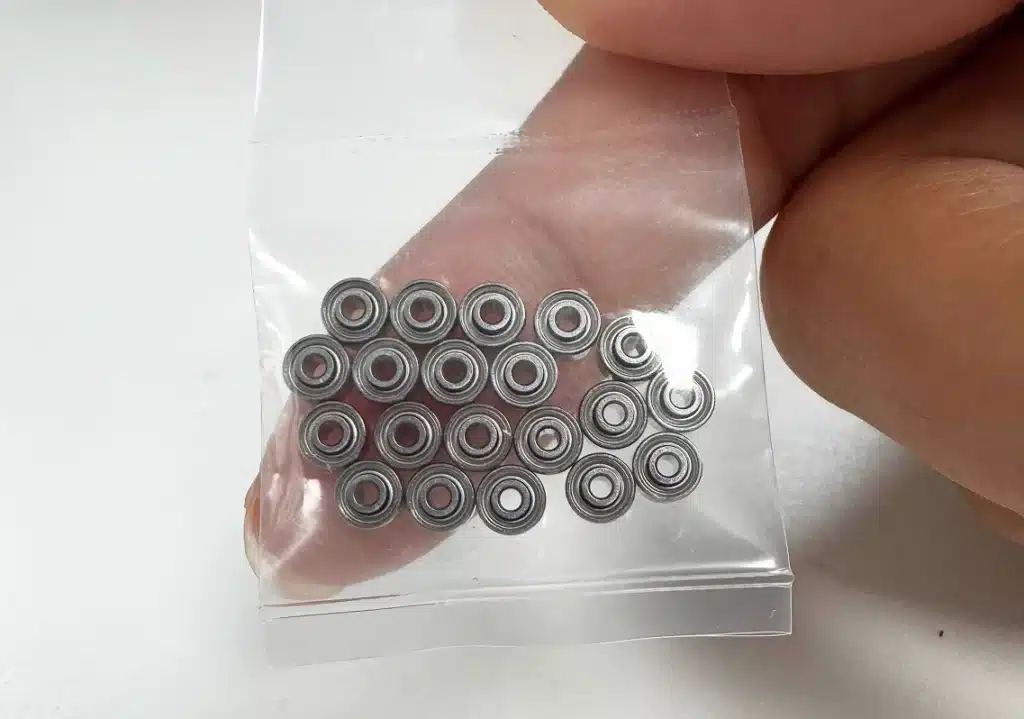
A sourcing service does not make scarce inventory appear. Its practical value is the ability to check more appropriate channels, distinguish listings from confirmed supply, and coordinate the procurement process when a workable source is found.
From Initial Search to Shipment in About One Month
The complete process—from the expanded sourcing effort through stock confirmation, order preparation, and shipment—was completed in approximately one month.
| Stage | What Happened |
|---|---|
| Customer requirement | 500 EZO SRW0ZZ bearings requested |
| Initial availability check | Regular channels had limited or insufficient supply |
| Expanded sourcing search | Additional bearing supply channels were checked |
| Supply confirmation | Sufficient quantity was located and verified |
| Order preparation | The 500-piece requirement was coordinated for fulfillment |
| Shipment | Completed within the approximately one-month process |
The actual sourcing path for the 500-piece EZO SRW0ZZ order.
One month should not be presented as universally fast. The relevant context is that both local and Chinese-market availability were limited, the customer needed a substantial 500-piece quantity, and the complete order required more than a routine stock release.
The result was that the customer did not have to continue contacting unavailable local sources one by one. TFL located enough supply and moved the requirement through to shipment.
What This Order Shows About Hard-to-Find Bearing Sourcing
For a difficult-to-source bearing, knowing the part number is only the beginning. A successful search must answer several connected questions:
- Is this the exact brand and model required?
- Does physical stock exist?
- Is the complete required quantity available?
- Can the source and inventory be checked?
- Can the expected supply timing meet the buyer’s requirement?
The same problem can occur with specialized miniature bearings, uncommon inch-size series, older or low-volume models, low-stock items, and brand-specific replacement requirements. It can also arise when a common model is needed in an uncommon quantity.
No supplier can responsibly guarantee that every rare bearing will always be available. TFL’s role is to investigate: check regular and additional sourcing channels, confirm current availability where possible, and report whether a suitable supply option can be found.
When Should You Use a Bearing Sourcing Service?
A broader sourcing search may be useful when:
- Your local distributor has no stock.
- The manufacturer or regular channel has a lead time that does not meet your schedule.
- You need more pieces than are available locally.
- The model appears online, but sellers cannot confirm inventory.
- Your equipment requires an exact bearing brand, model, or suffix.
- You need help checking supply beyond your established purchasing channels.
The earlier the shortage is identified, the more time there is to investigate realistic options. If an order is time-sensitive, share the required date at the beginning rather than after a source has been found.
What Information Should You Send for a Hard-to-Find Bearing Search?
Providing a complete request reduces back-and-forth and helps avoid checking the wrong variant. Send:
- The exact brand, if brand-specific supply is required
- The full bearing model or part number, including suffixes
- The required quantity
- The delivery country or destination
- The required timing
- Clear photos of the bearing and markings if identification is uncertain
- Any confirmed application or interchange requirements that affect acceptance
For an exact replacement, do not omit shields, seals, clearance, precision, material, lubrication, or other suffix information shown on the bearing or drawing. Similar-looking designations can represent different configurations.
Frequently Asked Questions
Why can a bearing appear online but still be unavailable?
A product page may be a catalog listing rather than a live-stock record. The supplier may have no physical inventory, only a few pieces, outdated quantity information, or a replenishment lead time. Confirm the exact available quantity and current lead time through a direct inquiry.
Can TFL always source a rare or discontinued bearing?
No supplier can guarantee availability for every rare, obsolete, or discontinued model. TFL can check regular and additional supply channels, investigate current availability, and report suitable options when verifiable supply can be located.
What details are most important for an urgent bearing sourcing request?
Send the exact brand, full model and suffixes, required quantity, delivery destination, and required timing. If identification is uncertain, include clear photos of the bearing, its markings, and any available drawing or equipment documentation.
How long does hard-to-find bearing sourcing take?
It depends on the model, quantity, location of stock, verification requirements, and shipping route. In this EZO SRW0ZZ case, sourcing, stock confirmation, order preparation, and shipment were completed in approximately one month. That result should not be treated as a universal lead-time promise.
Can’t Find the Bearing Quantity You Need?
If your regular supplier cannot provide the exact bearing model or quantity required, send TFL Bearings the brand, complete part number, quantity, destination, and timing requirement.
We can check additional sourcing channels and provide current availability information where suitable supply can be located.
Product dimensions referenced in this article are based on the EZO/Kitanihon Seiki dimensional catalog. Confirm the current manufacturer specification, complete designation, and application requirements before ordering. EZO is a trademark of its respective owner. TFL Bearings is not presented here as an authorized EZO distributor or official agent; this article describes an independent sourcing case.