







Marine Bearings
Key Areas Utilizing Marine Bearings
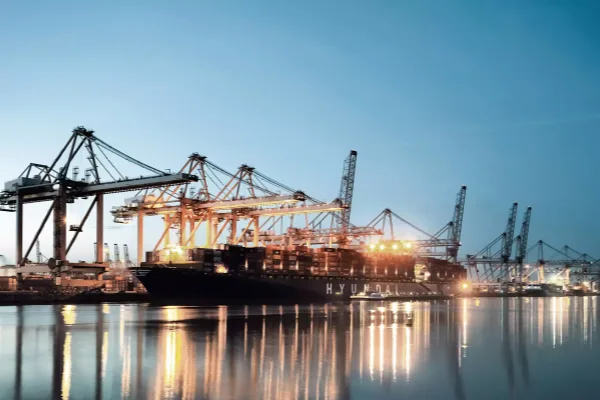
Critical Components Utilizing Marine Bearings
Propulsion System Bearings
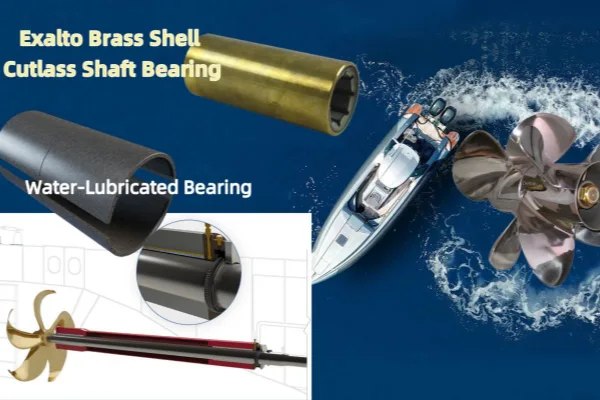
A critical component, particularly on smaller to medium-sized vessels, is the cutlass bearing (also known as a cutless bearing or marine cutlass bearing). These are typically water-lubricated journal bearings often made with a rubber cutless bearing surface within a shell of brass, bronze, or phenolic material.
Positioned at the stern tube or strut, the cutless bearing supports the end of the propeller shaft closest to the propeller.
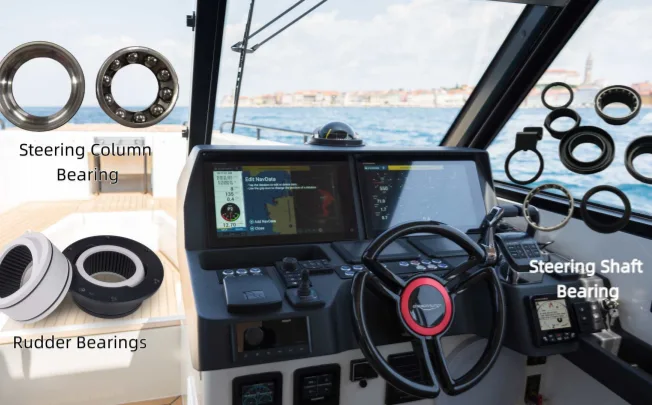
Marine Steering System Bearings
The steering shaft bearings facilitate the rotation and articulation of the steering column and linkages. This includes the steering shaft support bearings which ensure the shaft is held firmly in place while allowing for precise movement.
In complex systems, an intermediate shaft or steering column intermediate shaft may be used to connect different parts of the steering linkage, also requiring dedicated bearings.
Corrosion Resistant Bearings for Deck Machinery and Other Applications
These applications often involve heavy, intermittent loads and constant exposure to the elements. Therefore, the use of specifically engineered corrosion resistant bearings is not optional but mandatory.
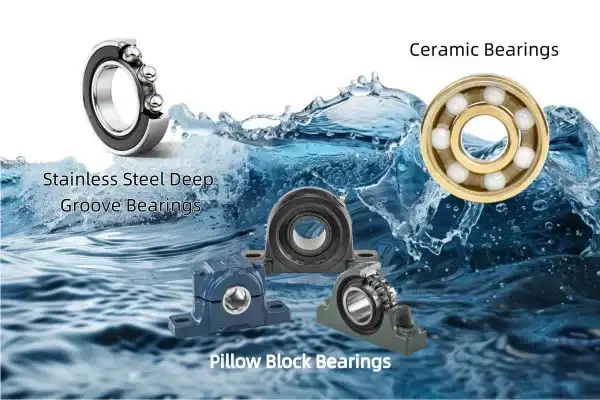
Materials like stainless steel bearing components, ceramics, or special polymers are often employed to withstand the harsh marine environment. These saltwater-resistant bearings prevent rust and degradation that could lead to premature failure.
Marine Cutless Bearing Cross-Reference & Size Chart (Naval Brass/Rubber)
| Industry Code | Shaft Size ID | Outside Dia. | Length | OEM Brand Ref. | Our Equivalent |
|---|---|---|---|---|---|
| ABLE | 3/4″ | 1-1/4″ | 3″ | Johnson Duramax / Morse | Get Quote All sizes available |
| ACID | 7/8″ | 1-1/4″ | 3-1/2″ | Johnson Duramax / Morse | |
| BAIT | 1″ | 1-1/2″ | 4″ | Johnson Duramax / Morse | |
| 870254100 | 25 mm | 40 mm | 100 mm | Johnson Duramax |
* Legal Disclaimer & Cross-Reference Notice:
All Original Equipment Manufacturer (OEM) names, part numbers, symbols, and descriptions (e.g., Johnson Duramax®, Morse®) used in this cross-reference chart are for identification and reference purposes only. It is not implied that any part listed is the official product of these manufacturers. Our company is an independent supplier of premium alternative bearings and is not affiliated with, endorsed by, or sponsored by any of the aforementioned trademark holders.
Fitment Notice: While every effort has been made to ensure the accuracy of this data, this chart is intended as a general guide. Customers are solely responsible for verifying the exact dimensions, tolerances, and material specifications required for their specific marine applications prior to purchase.
FREQUENTLY ASKED QUESTIONS

What are Cutless Bearings and why are they used in marine propulsion?
Why is corrosion resistance so important for marine bearings?
Where are steering shaft bearings typically located?
How do marine bearings handle continuous exposure to seawater?
Marine bearings combat saltwater through a combination of advanced surface treatments (like zinc-nickel alloy or black oxide coatings), martensitic stainless steel (such as 440C), and heavy-duty contact seals. When paired with marine-specific water-resistant grease, these defenses prevent rust and surface spalling.
What is the typical lead time for heavy-duty port crane bearings?
Through our robust global supply network and ready-to-ship inventory, TFL Bearing can drastically reduce standard lead times for critical port machinery components. For standard heavy-duty roller bearings, we often dispatch within days, ensuring your equipment downtime is kept to an absolute minimum.
Advanced Marine Bearing Solutions
Marine Bearings are high-strength rolling-element bearings engineered specifically for ship propulsion systems, deck machinery, and offshore platforms. Designed to withstand extreme saltwater corrosion and relentless dynamic loads, TFL Bearing’s premium marine solutions drastically reduce equipment downtime and lower maintenance costs in the harshest ocean environments.
The Anatomy & Mechanics of Marine-Grade Bearings
In marine applications, bearings must endure complex stress profiles that standard industrial bearings cannot survive. At the core of a vessel’s propulsion system, Spherical Roller Thrust Bearings play a pivotal role. Their internal anatomy features asymmetrical barrel-shaped rollers and specially contoured raceways. This optimized geometric design allows them to seamlessly accommodate the massive, continuous axial thrust generated by propellers, while simultaneously compensating for shaft misalignment caused by hull deflection or heavy sea states.
Similarly, heavy-duty Cylindrical Roller Bearings are frequently deployed in deck winches, capstans, and marine gearboxes. Their line-contact internal structure provides exceptional radial stiffness. This unique mechanical advantage enables them to effectively absorb the instantaneous shock loads and severe radial impacts typical of heavy lifting, mooring, and towing operations, ensuring continuous power transmission without catastrophic failure.
Water-Lubricated Stern Tube Bearings (Cutlass Bearings)
Beyond traditional rolling elements, propulsion systems rely heavily on water-lubricated stern tube bearings, commonly known as Cutlass Bearings. Unlike standard bearings that require oil or grease, these highly specialized components utilize the surrounding seawater as a natural hydrodynamic lubricant.
The anatomy of our premium cutlass bearing solutions features a rigid outer shell—typically precision-machined naval brass or lightweight non-metallic composites—bonded to a specialized, fluted nitrile rubber (NBR) inner lining. As the propeller shaft rotates, the uniquely designed longitudinal grooves channel water through the bearing. This not only creates a low-friction fluid film but also actively flushes out abrasive particles, sand, and grit, preventing scoring on the expensive propulsion shaft.
TFL Bearing supplies a comprehensive range of these water-lubricated marine bearings, available in both standard imperial and metric shaft sizes, ensuring rapid replacement for dry-dock repairs and routine vessel maintenance.

Configuration Options: Materials, Seals, and Clearances
Selecting the correct internal configuration is critical for marine bearings to survive unpredictable ocean conditions. For material selection, we supply options ranging from high-carbon chromium steel with advanced anti-corrosion coatings to premium martensitic stainless steel (440C) for ultimate rust prevention. Cages are typically precision-machined brass, offering superior resistance to the high-frequency vibrations found in winch and crane operations compared to standard stamped steel cages.
Clearance and sealing are equally vital. We provide bearings with C3 or C4 internal radial clearances to safely accommodate the rapid thermal expansion caused by severe temperature fluctuations between freezing deck conditions and high-heat engine rooms.
| Sealing Type | Marine Application Scenario | Protection Level |
|---|---|---|
| Open (No Seals) | Enclosed marine gearboxes and propulsion shafts with continuous oil bath lubrication. | Base (Relies on system enclosure) |
| Metal Shields (ZZ) | Below-deck auxiliary motors requiring friction-free, high-speed rotation. | Medium (Blocks large particulate debris) |
| Contact Seals (2RS/Heavy-duty) | Exposed deck machinery (winches, capstans) facing direct seawater splash and salt spray. | Maximum (Watertight and dust-proof) |
🚢 Expert Diagnosis: Combating High-Humidity Failures
“In offshore environments, a robust physical seal is only half the battle against corrosion. For deck equipment exposed to direct sea spray, I strongly recommend pairing heavy-duty contact seals with a premium Calcium Sulfonate Complex Grease. This specific lubrication acts as an active chemical barrier, aggressively neutralizing salt elements and repelling water before they can pit the raceways—often doubling the bearing’s operational lifespan in the field.”
— Jessica Jia, Chief Technical Advisor at TFL Bearing
TFL Bearing Quality & Global Marine Supply Readiness
Marine operations cannot afford vessel grounding or prolonged port delays. Through our extensive global supply network and robust ready-to-ship inventory, TFL Bearing ensures that critical replacement bearings reach your shipyard or maintenance facility exactly when needed. Our commitment to reliability is anchored in a strict quality control system, fully certified to ISO 9001 and IATF 16949 standards.
Every premium bearing solution we supply is subjected to rigorous inspection protocols. From verifying precise CNC machining tolerances to confirming the exact micron depth of our anti-corrosion treatments, we guarantee that our clients receive technically flawless components capable of enduring the most unforgiving maritime operations.

Real-World Applications: From Propulsion Systems to Port Cranes
Theoretical performance only matters when proven in the field. TFL Bearing’s supply network has successfully delivered critical spherical roller bearings and specialized thrust solutions to marine operations worldwide. For instance, a major fleet operator managing Offshore Support Vessels (OSVs) was experiencing premature failure in their propulsion shafts due to continuous hull deflection. By upgrading to our premium solutions featuring precision-machined brass cages and advanced anti-corrosion coatings, the operator successfully doubled their maintenance intervals.
In another scenario, a deep-water port facility struggled with early raceway spalling in the gearboxes of their heavy-duty ship-to-shore (STS) cranes, caused by high-frequency hoisting impacts. We supplied a tailored batch of high-capacity cylindrical roller bearings designed to absorb extreme radial shock. This upgrade entirely eliminated the unexpected downtime, demonstrating why choosing a reliable supply partner is just as critical as the engineering itself when seeking manufacturing-level quality in the marine sector.
Ready to Secure Your Marine Operations?
Don’t let bearing failure anchor your fleet or stall your port machinery. Whether you need standard replacements or customized anti-corrosion solutions, our engineers are ready to assist. Send us your technical drawings or OEM part numbers for a rapid response.
Request a Quote & Technical Review TodayRELATED ARTICLES
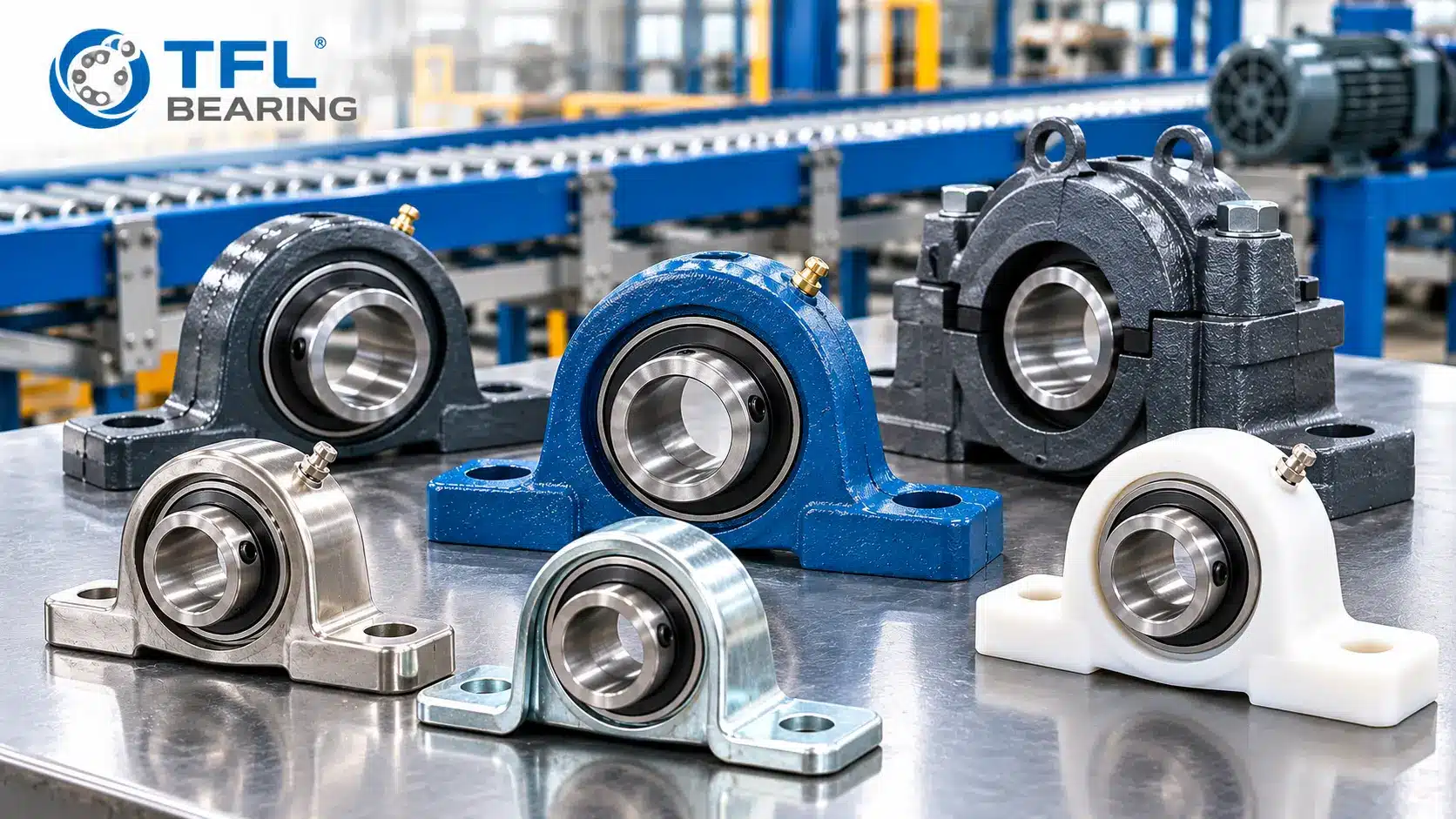
Pillow block bearings are mounted bearings that hold a spinning shaft parallel to a flat surface. They use a bolt down housing with a bearing inside. You’ll find them on conveyors, fans, pumps and farm machines. This guide covers the types, how to read sizes, and the mistakes that wear them out early. What Is […]