







Is Your Motor Bearing Noise Normal?

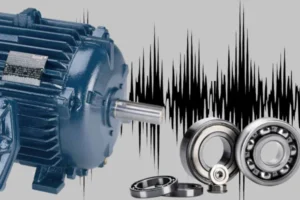
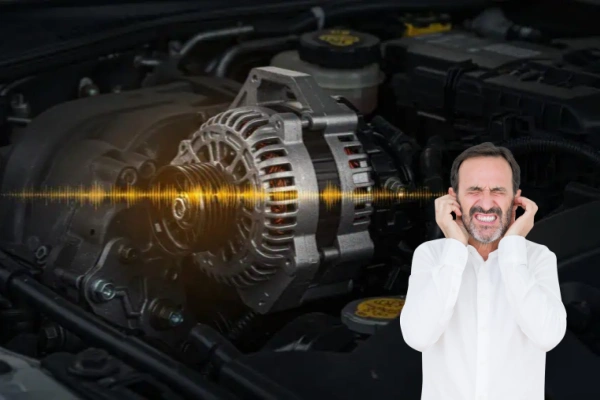
The picture shows a motor that is emitting disturbing noises.

Table of Contents

Is It Normal for Motor Bearings to Make Noise?

Yes — a certain level of bearing noise is completely normal during motor operation.
What matters is whether the noise is stable and consistent, or a warning sign of failure.

TFL summarizes three key indicators of normal bearing sound:

  1. Stable and uniform tone – no sudden metallic clicks or squeaks.
  2. Sound changes with speed – noise increases proportionally with RPM.
  3. No irregular frequency spikes – no cyclic knocks or vibration bursts.

Do “Silent” Bearings Exist? Uncovering Inherent Bearing Sounds

Many engineers often ask, “How can bearing noise be completely eliminated?” The answer is: it’s impossible to eliminate entirely. Bearings will inevitably produce some inherent sounds during normal operation. These sounds are not indicators of malfunction but rather natural byproducts of their internal movements.
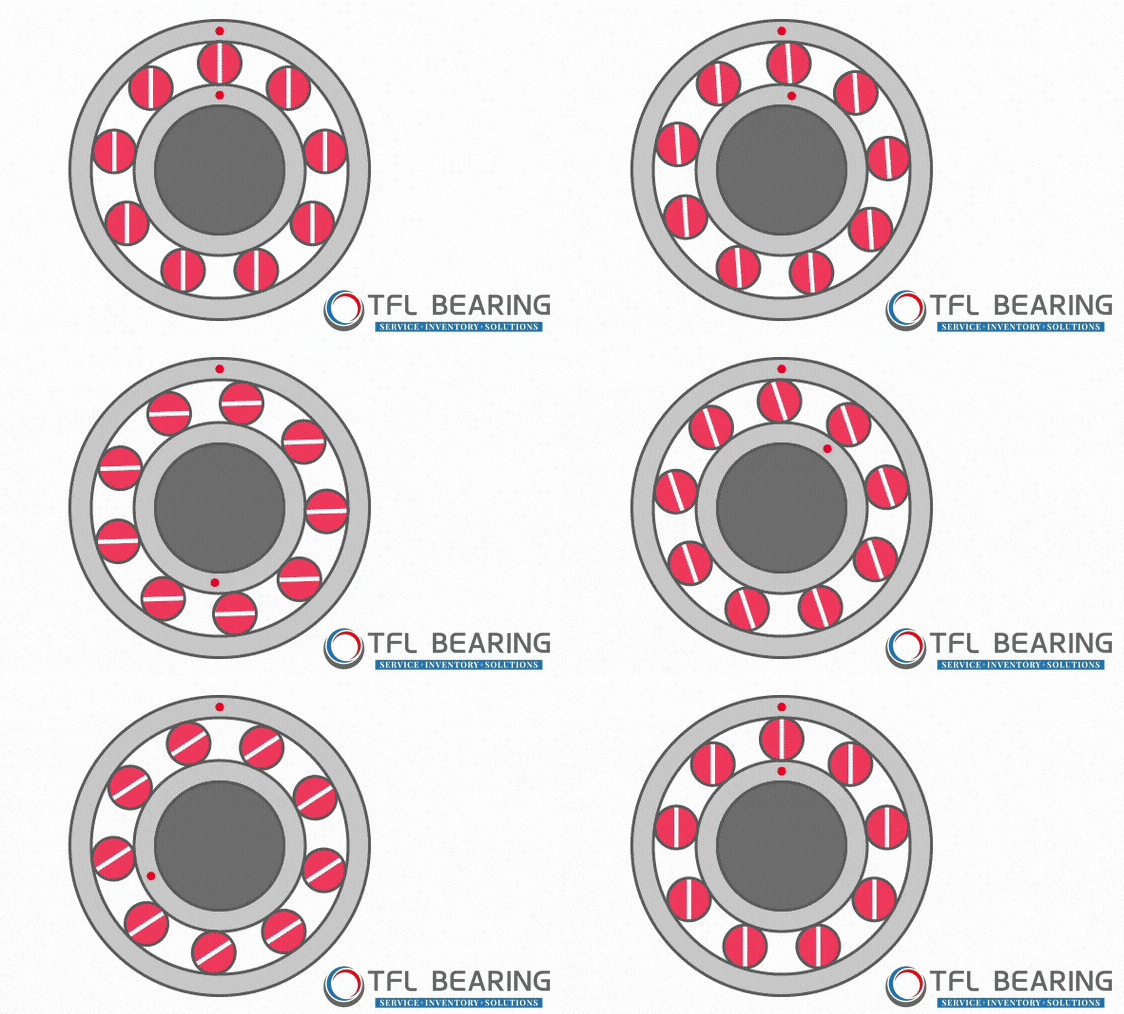
image shows an animation of rolling bearings.
Ball Bearing or Roller Bearing Working Animation
  1. Slight Collisions Between Rolling Elements and Raceways: In the unloaded zone, rolling elements, after leaving the loaded zone, still possess a certain linear velocity and centrifugal force, leading to slight radial or axial collisions with the raceways. This collision sound is particularly noticeable when residual clearance exists.
  2. Interaction Between Rolling Elements and Cage: The cage guides the rolling elements, and axial, radial, and even circumferential collisions can occur between them. For instance, rolling elements actively push the cage in the loaded zone, or the cage pushes the rolling elements in the unloaded zone, as well as radial collisions of rolling elements with the cage due to centrifugal force.
  3. Lubricant Churning Sound: The lubricant inside the bearing is churned as the rolling elements move, which also generates a continuous sound.
  4. Sliding Friction as Rolling Elements Enter and Exit the Loaded Zone: Rolling elements experience a certain degree of sliding friction with the raceway when entering and exiting the loaded zone.
  5. Other Internal Movements: Bearings with seals may also produce slight noise due to the friction of their lips against the bearing rings.

Therefore, all normally operating rolling bearings will inevitably produce these inherent “normal noises.”

Characteristics of Normal Motor Bearing Sound: Stable, Uniform, No Abnormalities

Based on the analysis above, the primary characteristic of normal noise produced by a qualified bearing is that it should be stable and uniform. This means the volume and frequency of the noise should not fluctuate drastically but remain at a relatively steady level.

When a motor operates at a constant speed, the various internal movements of the bearing (such as rolling element friction, collisions, grease churning, seal friction) should also be in a stable state. Consequently, the bearing noise produced should be stable and uniform. Of course, “stable and uniform” does not refer to a constant single tone but rather a stable composite of small-cycle collision sounds and some continuous friction sounds.

In practical assessment, in addition to stability and uniformity, we must also consider a crucial factor: no abnormal frequencies. This means there should be no sharp squealing, periodic knocking, or obvious cyclical variations, which are often signs of an impending or existing bearing failure. For example, some interference-induced noises might also be stable and uniform, but their perceived frequency would differ significantly from the expected normal frequency of a bearing.

Sound FeatureNormal Bearing Sound (Inherent Noise)Abnormal Bearing Sound (Fault Warning)Potential Cause
VolumeLow, consistent, increases smoothly with speed.Suddenly loud, sharp, or intermittent.Early wear, poor lubrication, excessive preload.
Pitch/FrequencyStable, proportional to speed, no specific “foreign frequency.”Presence of a sharp squeal, a deep “rumbling” sound, or periodic “clacking” or “thumping” noises.Raceway/roller spalling, loose fit, contaminated grease, cage damage.
UniformityUniform, continuous, smooth “acoustic envelope.”Intermittent, irregular, such as extra “squeaking” upon startup or shutdown.Current corrosion (electrical erosion), foreign debris ingress, installation damage.

Expert Reference: TFL’s bearing design adheres to ISO 15242 standards for vibration and noise measurement and evaluation. If the noise emitted by your equipment’s bearing frequency is no longer synchronous with the rotational speed, or a sharp, singular frequency tone appears, immediate inspection is required.

Through efficient, self-owned factory operations, we can offer prices more competitive than international giants (e.g., FAG/SKF) while guaranteeing P5 (ABEC-5) or even P4 (ABEC-7) precision. We also achieve a shorter lead time on custom orders (standard items are kept in stock, custom order cycles are reduced by 20%).

TFL Bearings: Your Expert in Customized High-Performance Bearings

Whether you require standard bearing models or customized solutions for specific operating conditions, TFL Bearings can meet your needs.

We are committed to providing high-quality, reliable bearing products and excellent service to B2B customers worldwide. Our professional technical team can offer expert selection advice and customized designs based on your specific application scenarios.

Contact our technical team now for a professional quote and customized proposal:

Click the pop-up window on the sidebar to communicate with our experts in real-time!

Send your inquiry to: [email protected]

Click to browse our catalog of various types and various sizes of bearings and review our success stories.

Welcome To Share This Page:

Product Categories
Get A Free Quote
Related News

Wheel Bearing Noise: What It Sounds Like and How to Find the Bad One

Wheel bearing noise is usually a hum, growl or rumble that rises and falls with road speed, not engine speed, and changes when you steer gently left or right. If the sound stays the same when you shift into neutral and coast, but gets louder in a long sweeping curve, a worn bearing is the […]

Spherical Bearings: Types, GE Codes and How to Choose One

Spherical bearings let a shaft or pin rotate and tilt at the same time. Inside, an inner ring with a convex outer surface sits in an outer ring with a matching concave bore, so the two can swivel against each other. Most spherical bearings you’ll buy are spherical plain bearings: two steel rings, no balls, […]

6804 Bearing: Dimensions, Specs, Seal Types and Equivalents

A 6804 bearing is a thin section, single row deep groove ball bearing with a 20 mm bore, a 32 mm outside diameter and a 7 mm width. Many brands sell the same size as 61804. It carries radial loads and light axial loads where space is tight. This guide puts the size, load ratings, […]

6904 Bearing: Dimensions, Load Ratings, Seal Types and Cross Reference

A 6904 bearing is a single row deep groove ball bearing with a 20 mm bore, a 37 mm outside diameter and a 9 mm width. It’s thin, light and built for radial loads at high speed. You’ll find it in bicycles, small electric motors, power tools and compact machines. This guide gives you everything […]

6805 Bearing: Dimensions, Specs, Seal Types and Bike Uses (2026)

A 6805 bearing is a thin, single row deep groove ball bearing that measures 25 mm bore, 37 mm outside diameter and 7 mm width. Most sellers write that as 25x37x7. You’ll find it in bike hubs, suspension pivots, ebike motors, robots and compact machines. SKF and FAG sell the same size as 61805. The […]

6902 Bearing: Dimensions, Seal Types, Specs and Replacement Guide

A 6902 bearing is a single row deep groove ball bearing with a 15 mm bore, a 28 mm outside diameter and a 7 mm width. You’ll often see the size written as 15x28x7. It’s slim and light, so it shows up in bike hubs, small electric motors, compact gearboxes and automation parts. On a […]

Trailer Bearings: Size Chart, Grease, Repacking and Replacement Guide

Trailer bearings are the tapered roller bearings inside each wheel hub that let the wheel spin smoothly on the axle spindle while carrying the load. Every hub has two: a larger inner bearing and a smaller outer bearing. Service them every 12 months or 12,000 miles, and they’ll keep you rolling safely for years. Ignore […]

Gearbox Bearing Guide: Types, Positions, Failure Signs and Selection

A gearbox bearing is the part that holds each shaft inside a gearbox and lets it spin with very little friction. It carries the force from the meshing gears, so the teeth stay lined up, quiet and cool. When one wears out, the noise, heat and damage spread fast. Below, you’ll learn about the bearings […]

6201 Bearing: Dimensions, Specs, Seal Types and Replacement Guide

A 6201 bearing is a single row deep groove ball bearing with a 12 mm bore, a 32 mm outside diameter and a 10 mm width. It’s a light series part, so it’s smaller than the 6301 that fits the same 12 mm shaft. You’ll find it in small motors, fans, scooter wheels and household […]

One Way Bearing: How It Works, Types, Uses and Bad Symptoms

A one way bearing is a bearing that spins freely in one direction and locks solid in the other. Small sprags or rollers inside wedge between two rings when you turn it backward, so torque passes straight through. You already know the idea from a bicycle: you can coast, but pushing the pedals still drives […]

6301 Bearing: Dimensions, Specs, Seals and Replacement Guide

A 6301 is a single row deep groove ball bearing with a 12 mm bore, a 37 mm outside diameter and a 12 mm width. It’s a medium series part, so it carries more load than the smaller 6201 on the same 12 mm shaft. You’ll find it in electric motors, pumps, fans and car […]

Flange Bearing Types: What They Are and How to Choose the Right One

A flange bearing is a bearing with a flat, extended rim (the flange) that lets you bolt it to a surface or seat it in a housing, so the shaft stays exactly where it should. The term actually covers three different parts: bolt on mounted units, flanged ball bearings and flanged sleeve bearings. This guide […]

Thrust Bearing Types Explained: How They Work and How to Choose One

A thrust bearing is a bearing built to carry axial load, the push that runs along a shaft instead of across it. Picture a lazy Susan. Plates press down on it, yet it still turns. That’s the whole idea. If the force runs across your shaft, you need a radial bearing. If it runs along […]

Pillow Block Bearings: Types, Sizes and How to Choose the Right One

Pillow block bearings are mounted bearings that hold a spinning shaft parallel to a flat surface. They use a bolt down housing with a bearing inside. You’ll find them on conveyors, fans, pumps and farm machines. This guide covers the types, how to read sizes, and the mistakes that wear them out early. What Is […]

N vs NR Bearings: How to Choose the Correct Snap Ring Configuration

Compare N vs NR bearing suffixes, snap ring supply, shield and seal combinations, and the dimensions to check before ordering a replacement.

Can You Replace a Snap Ring Bearing with a Standard Bearing?

Can a standard bearing replace a snap ring bearing? Compare 6204 vs. 6204NR, axial retention, failure risks, and replacement suffixes before ordering.
About TFL Bearings

Why is TFL BEARINGS frequently chosen as the specified bearing brand bymajor international companies?

Reliable Operation Starts Here

Contact TFL Bearings for the Best Solutions!

Our efficient global supply chain and inventory management ensure fast response and timely delivery.

We tailor bearing solutions to unique needs. Services include design advice & custom specifications for your specific application.

Competitive prices. Quality bearings meet int'l stds; interchangeable. Reliable, economical alternative. Lower costs, keep performance & value.

Quality products plus reliable full service. Our pro team offers support from selection to after-sales. We aim to be your trusted partner.