









Executive Summary: As the 2026 Hormuz Strait crisis blocks critical maritime chokepoints, the traditional “Just-in-Time” manufacturing model is failing, exposing vulnerabilities in global logistics. For B2B procurement, ensuring supply chain continuity now requires shifting from factory-direct reliance to agile supply chain integrators capable of global sourcing, rapid air freight, and rigorous technical validation across a full range of standard and specialized bearings.
Ground Zero: The Current Status of the Strait of Hormuz Crisis
As of early May 2026, the Strait of Hormuz shipping risk has reached unprecedented levels, leaving this vital artery for global energy and industrial trade in a state of high volatility. Following the launch of military escort operations and subsequent clashes, commercial shipping through the region has been severely compromised. Over 850 commercial vessels have been reported stranded or forced into holding patterns at anchorages, prompting top-tier global logistics firms to suspend regional transits indefinitely.
According to recent industry updates from Reuters Logistics and supply chain trackers like Supply Chain Dive, the fragile ceasefire in the region is being rigorously tested. The resulting mass diversion of global shipping traffic around the Cape of Good Hope is not merely a temporary inconvenience—it represents a structural shock to global trade routing, extending lead times by 3 to 5 weeks for standard maritime freight and triggering a severe shortage of available containers worldwide.
The Collapse of “Just-in-Time” and the Rise of Supply Chain Integrators
During the stable decades of the past, many companies relied heavily on direct-from-factory models with single premium brands. The “Just-in-Time” (JIT) model worked perfectly when shipping lanes were predictable. However, the 2026 maritime crisis has exposed the fatal flaw of traditional factory reliance: fixed production capacities and single-route logistics lack the elasticity needed to handle sudden geopolitical shocks.
When a major chokepoint like the Strait of Hormuz is compromised, the impact cascades. It’s not just finished bearings that are delayed; the raw materials required for manufacturing (such as high-grade GCr15 steel) also face transit bottlenecks, causing rolling delays across tier-one manufacturers globally.
In this context, the value of a comprehensive Supply Chain Integrator becomes paramount. When mainstream shipping lanes are blocked, a partner with global resources doesn’t wait for a single factory to catch up. Instead, they rapidly mobilize a flexible supply chain, cross-referencing premium alternatives across all bearing categories to ensure you receive components with identical technical parameters—without the agonizing wait.
| Sourcing Model | Logistics Routing | Crisis Response Speed | Brand & Sourcing Flexibility |
|---|---|---|---|
| Traditional Single Factory | Fixed maritime lanes (Highly vulnerable) | Slow (Bound to rigid production queues) | None (Limited to a single brand catalog) |
| Supply Chain Integrator (TFL) | Dynamic global routing & Air freight | Rapid (24-72 hours via global inventory nodes) | High (Cross-references premium alternatives across all categories) |
From a 45-Day “Sea Drift” to a 72-Hour “Air Rescue”
Just recently, we assisted a large-scale industrial pump manufacturer based in France in averting an imminent production shutdown.
The client ordered a batch of core standard components through another channel, but the cargo was stranded in an anchorage south of the Hormuz Strait. The shipping carrier’s only solution was rerouting around the Cape of Good Hope, adding at least 4 to 5 weeks to the lead time. Facing catastrophic financial and reputational damage, the client urgently needed high-end, in-stock alternatives.
As a dedicated global bearing supply chain integrator, we immediately activated our crisis response protocol:
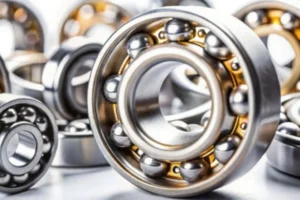
- Precision Sourcing: We completely bypassed the congested Middle Eastern transit hubs. Utilizing our global backup nodes, we instantly secured high-quality inventory of the urgently needed standard Single Row Deep Groove Ball Bearings 6320-Z/C3S1.
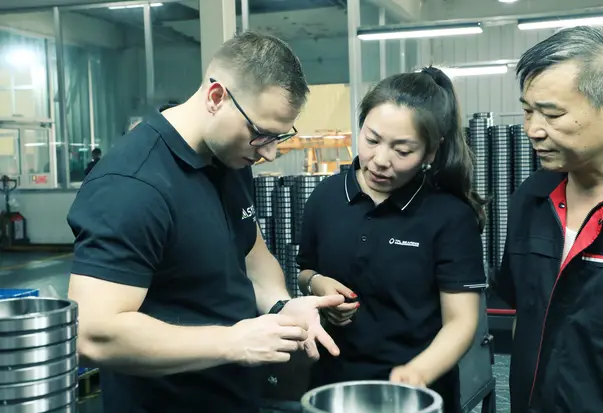
- Rapid Technical Verification: Within 24 hours, we provided the French engineering team with complete dimensional inspection reports, C3 clearance verification, and material composition analyses to prove the alternative was functionally identical to their original spec.
- Direct Air Freight: Delivered via international air freight within 72 hours, the components arrived directly at the client’s facility in France, completely neutralizing the crisis.
The Technical Firewall: Why Verification Beats Low Prices
During supply chain disruptions, panic buying often leads to catastrophic engineering mistakes. The market is suddenly flooded with “in-stock” products of unknown origins. For high-value equipment like large industrial pumps, compressors, or motors, a single incorrect component selection can result in premature failure and millions of euros in secondary downtime losses.
🛡️ Expert Insight: Jessica Jia (Chief Technical Advisor)
When executing an emergency brand replacement for standard models like the Single Row Deep Groove Ball Bearings 6320-Z/C3S1, buyers must establish a rigorous technical firewall. For instance, the ‘C3’ radial internal clearance is non-negotiable for accommodating thermal expansion in high-speed applications. Similarly, the ‘S1’ suffix indicates dimensional stability up to 200°C. You cannot simply swap it with a standard clearance bearing just because it fits the shaft. We insist on verifying these specific operational suffixes and high-purity GCr15 chrome steel rather than sacrificing material integrity just to meet a deadline.”

Strategic Logistics Advice for the B2B Procurement Manager
The escalating Strait of Hormuz shipping risk is a severe wake-up call for B2B procurement. Geopolitical volatility is the new normal. To protect your operations, procurement managers must adopt proactive strategies rather than reactive panic-buying:
- Consolidate and Advance Inventory: With freight capacity tightening globally, consolidate small, fragmented orders into bulk purchases to offset the unpredictability of maritime shipping cycles.
- Audit Your “Single Point of Failure”: Review your BOM (Bill of Materials). If a critical component can only be sourced from one factory reliant on one shipping lane, you are at risk.
- Build a “Qualified Alternative List”: Don’t wait until core equipment stops running to look for replacement parts. Pre-approve specialized supply chain integrators with robust global inventory networks.
Strategic Logistics FAQ (Crisis Management)
How can procurement managers mitigate delayed shipments for standard bearings?
Consolidate small, fragmented orders into bulk purchases to offset the unpredictability of shipping cycles, and establish a “Qualified Alternative List” of suppliers with robust global inventory networks before core equipment stops running.
Are alternative bearing brands safe to use in critical industrial equipment?
Yes, provided they pass a strict verification process. Always request complete material test reports, verify precise geometric tolerances, and confirm specific operational suffixes (like C3 clearance or S1 heat stabilization) match original design parameters before installation.
Need Urgent Sourcing for 6320-Z/C3S1 or Other Bearings?
Bypass maritime bottlenecks. Get rapid technical validation and direct air-freight delivery options across our full range of bearings to keep your operations running.
Contact Our Global Support Team