









The short answer: The primary difference between ball bearings and roller bearings is their contact geometry. Ball bearings utilize spherical elements for point contact, making them ideal for high-speed, low-load, and low-friction applications. Roller bearings utilize cylindrical or tapered elements for line contact, allowing them to support significantly heavier radial and shock loads at moderate rotational speeds.
Choosing the right bearing is critical for machinery performance, operational efficiency, and long-term service life. Bearings play a fundamental role in reducing friction, supporting loads, and ensuring smooth motion in rotating and linear systems. Among the many bearing types available, one of the most common and important comparisons engineers, maintenance professionals, and procurement teams face is ball bearings vs roller bearings.
While both bearing types are designed to minimize friction between moving components, their internal construction, load-handling capabilities, speed limits, and operating characteristics differ significantly. Selecting the wrong bearing type can lead to premature failure, excessive wear, increased energy consumption, and costly downtime. Understanding the functional differences between ball bearings and roller bearings helps ensure that the selected bearing matches the application’s operating conditions, load requirements, and performance expectations.
What Are Ball Bearings
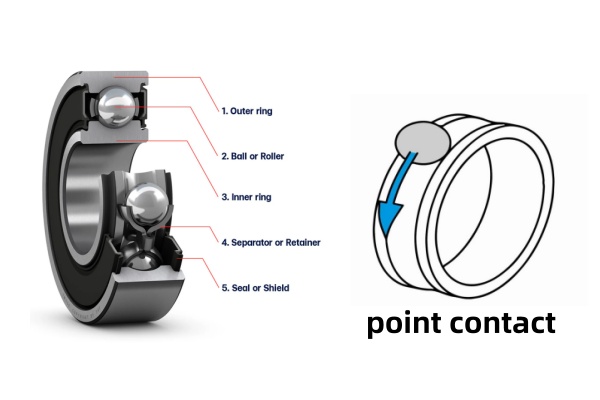
Ball bearings use spherical rolling elements positioned between an inner race and an outer race. These balls rotate freely, creating point contact with the raceways. Because the contact area is small, friction is minimized, allowing ball bearings to operate smoothly and efficiently at high speeds.
Ball bearings are designed to support both radial and axial loads, although their load-carrying capacity is limited compared to roller bearings. They are particularly valued for their low friction, quiet operation, and ability to maintain precise motion control. Due to these characteristics, ball bearings are widely used in applications where speed, accuracy, and low noise levels are more important than heavy load capacity.
Common designs include deep-groove ball bearings, angular-contact ball bearings, and self-aligning ball bearings, each suited to specific operating conditions and load directions.
Common Ball Bearing Series (High Speed & Precision):
- 6000, 6200, 6300 Series: Deep Groove Ball Bearings (Versatile, most common).
- 7000, 7200, 7300 Series: Angular Contact Ball Bearings (For combined loads).
- 1200, 1300, 2200 Series: Self-Aligning Ball Bearings (Corrects misalignment).
What Are Roller Bearings
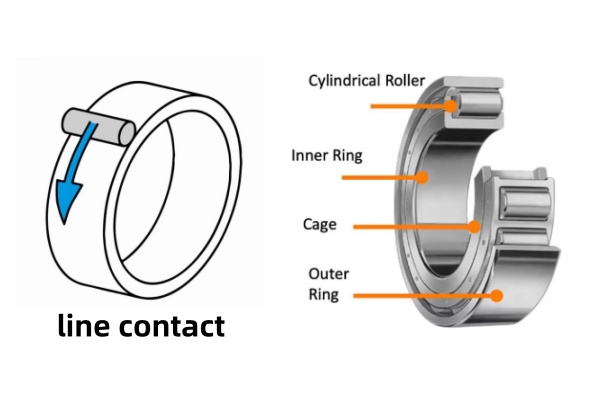
Roller bearings use cylindrical, tapered, spherical, or needle-shaped rolling elements instead of balls. Unlike ball bearings, roller bearings create line contact with the raceways rather than point contact. This increased contact area allows loads to be distributed more evenly across the bearing surfaces.
Because of this design, roller bearings are capable of supporting much higher loads than ball bearings. They are particularly effective in applications involving heavy radial loads, shock loads, or combined radial and axial forces. Roller bearings are commonly found in industrial machinery, heavy equipment, and systems that operate under continuous or demanding conditions.
Different roller bearing types serve different purposes. Cylindrical roller bearings are optimized for high radial loads, tapered roller bearings handle combined loads, spherical roller bearings compensate for misalignment, and needle roller bearings provide high load capacity in compact spaces.
Common Roller Bearing Series (High Load & Durability):
- NU, NJ, NUP Series: Cylindrical Roller Bearings (Heavy radial loads).
- 30200, 32200, 31300 Series: Tapered Roller Bearings (Heavy combined loads).
- 22200, 22300 Series: Spherical Roller Bearings (Heavy loads + misalignment).
- NA, NK Series: Needle Roller Bearings (Compact design).
Ball Bearings vs Roller Bearings: Key Differences
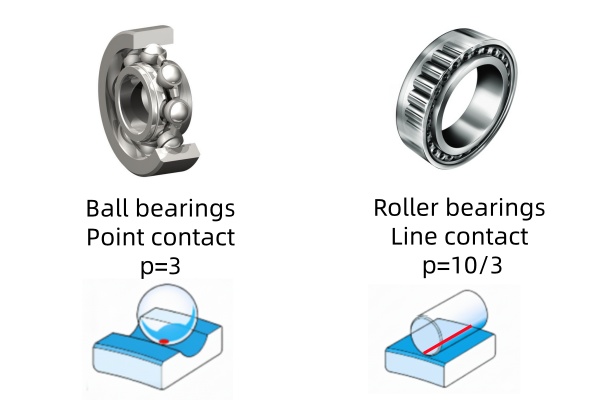
The fundamental difference in ball bearings vs roller bearings lies in their contact geometry. Ball bearings rely on point contact between the rolling elements and raceways, while roller bearings rely on line contact. This structural difference directly affects performance, load capacity, speed capability, and durability.
| Specification Dimension | Ball Bearings | Roller Bearings |
|---|---|---|
| Contact Type | Point Contact | Line Contact |
| Radial Load Capacity (Cr) | Low to Moderate | Exceptionally High |
| Axial Load Capacity | Moderate (Bi-directional) | High (Varies by sub-type, e.g., Tapered) |
| Maximum Speed (Max RPM) | High to Very High | Low to Moderate |
| Friction & Heat Generation | Minimal Friction | Moderate to High Friction |
| Typical Cost | Highly Economical | Higher Initial Investment |
Load Capacity Comparison
Load capacity dictates the ultimate survival of a bearing in harsh industrial environments.
Roller bearings deliver a significantly higher load capacity because their line contact design distributes stress across a wider surface area.
This structural advantage makes them the mandatory choice for heavy radial loads, extreme impact forces, or continuous structural stress.
Tapered roller bearings excel in handling complex combined radial and axial loads commonly found in gearboxes and industrial transmissions.
Conversely, ball bearings utilize point contact, which fundamentally limits their absolute load threshold.
While they successfully support proportionate forces, subjecting ball bearings to excessive loading accelerates metal fatigue and severely shortens service life.
Expert Insight: Jessica Jia, Chief Technical Consultant
“When assessing load ratings, never rely on static capacity (C0) alone. Dynamic load ratings (C) dictate operational longevity. If your axial-to-radial load ratio exceeds 0.5 in heavy machinery, standard deep groove ball bearings will fail prematurely. You must transition to tapered roller configurations or angular contact systems to ensure safe stress distribution.”
Speed and Operating Performance
Rotational speed capability sharply divides the application fields of these two bearing types.
Ball bearings dominate high-speed applications due to their minimal internal resistance.
This localized point contact drastically reduces internal friction, heat generation, and thermal expansion at elevated RPMs.
Roller bearings perform optimally at moderate speeds.
The extended line contact that provides superior load strength inherently generates greater sliding friction.
Operating standard roller bearings beyond their thermal reference speed without specialized lubrication systems will result in rapid overheating.
Durability and Service Life
When properly selected and installed, both ball bearings and roller bearings can provide long service life. However, their durability depends heavily on operating conditions and load profiles. Roller bearings tend to offer longer service life in heavy-load applications because the load is distributed more evenly across the rolling elements.
Ball bearings demonstrate excellent longevity in high-speed, low-load environments. Their simpler design and reduced friction help minimize wear when used within their intended limits. Using ball bearings in applications with excessive loads can lead to premature fatigue, surface damage, and early failure.
Correct bearing selection, proper lubrication, and routine maintenance are essential for maximizing service life regardless of bearing type.
Typical Applications of Ball Bearings
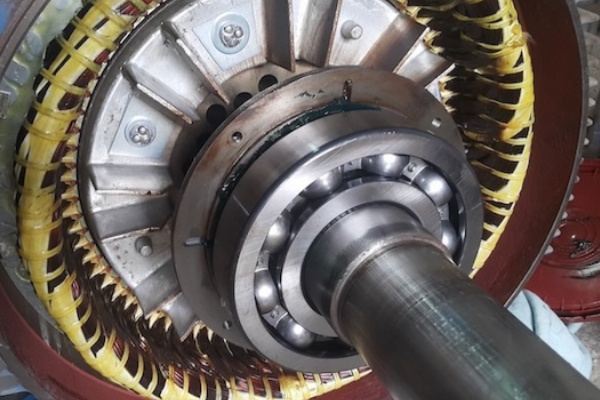
Ball bearings are widely used across a broad range of industries due to their versatility and efficiency. Common applications include electric motors, generators, pumps, household appliances, automotive accessories, and precision instruments. They are also commonly used in robotics, medical devices, and light industrial equipment.
Their ability to operate quietly and smoothly makes them especially suitable for applications requiring precise motion control and minimal vibration. In many cases, ball bearings are the preferred choice for compact designs with space constraints.
Typical Applications of Roller Bearings
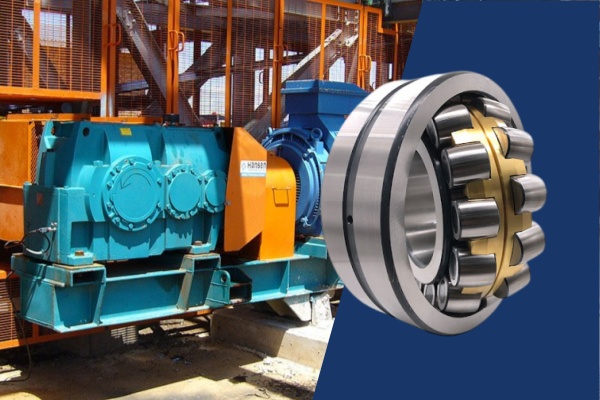
Roller bearings are commonly used in applications where strength, durability, and load capacity are critical. Typical applications include gearboxes, conveyors, construction equipment, wind turbines, mining machinery, steel mills, and heavy industrial drives.
They are also widely used in railway systems, agricultural machinery, and large rotating equipment where bearings must withstand continuous operation under challenging conditions. Roller bearings are often selected for environments involving shock loads, misalignment, or variable loading.
Cost and Maintenance Considerations
From a cost perspective, ball bearings are generally more economical, especially for smaller machines and high-speed applications. Their simpler design and widespread availability make them a cost-effective solution for many standard uses.
Roller bearings often involve higher initial costs due to their robust construction and specialized designs. However, in heavy-duty applications, they can provide better long-term value by reducing maintenance frequency, minimizing unexpected failures, and extending service intervals.
Maintenance requirements vary depending on operating conditions, lubrication practices, and environmental exposure. Proper lubrication and contamination control are critical for both bearing types.
Need Heavy-Duty Reliability for Your Equipment?
Download our comprehensive Industrial Roller Bearing Selection Guide or get a custom cross-reference quote tailored to your payload and speed specifications.
Explore Roller Bearings Catalog & Request QuoteHow to Choose Between Ball Bearings and Roller Bearings
When should I choose ball bearings over roller bearings?
You should choose ball bearings when your application requires high rotational speeds (RPM), minimal friction, and precise motion control, but only involves light to moderate radial and axial loads. They are highly economical for electric motors, pumps, and light industrial machinery.
Can roller bearings handle high speeds?
Generally, standard roller bearings are designed for moderate speeds. Because of their line contact design, they generate more friction and heat than ball bearings. If high speeds are required alongside heavy loads, specialized precision roller bearings with optimized clearance and lubrication systems are necessary.
Which bearing type is better for heavy shock loads?
Roller bearings are the superior choice for heavy shock loads. Their line contact geometry distributes extreme dynamic forces over a broader surface area, preventing the localized raceway deformation (brinelling) that would quickly occur in a point-contact ball bearing under the same stress.
Partner with SDTFL Bearings for the Perfect Fit
Selecting between ball bearings vs roller bearings is just the first step. To ensure your machinery runs at peak efficiency, you need a partner who understands the nuances of load, speed, and global supply chain demands.
At SDTFL Bearings, we operate as your agile supply chain integrator and trusted trading partner. Whether you need the high-speed precision of standard ball bearings or the rugged durability of customized roller series, we leverage our global network to deliver flexible, multi-brand alternative solutions that keep your operations moving without interruption.
Don’t let supply chain bottlenecks or the wrong bearing choice slow you down.
- Request a Quick Quote: Send your requirements to [email protected]
- Speak to an Expert: Call us at +86 15806631151
- Explore Our Catalog: Visit our product page via the sidebar to see our full range.