









Quick Answer: The “best” lubricant depends entirely on speed and temperature. For 80% of general-purpose applications (low to medium speed), Lithium-based Grease is the standard choice because it stays in place and seals out contaminants. For high-speed or high-temperature applications (>3000 RPM), Synthetic Oil is superior as it dissipates heat and reduces friction torque.
🛢️ Lubrication Critical Points
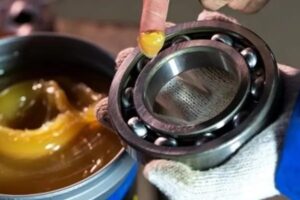
- The #1 Mistake: Over-Greasing. Filling a bearing housing 100% full causes “churning,” which generates excess heat and can blow out seals. Aim for 30-50% fill.
- Viscosity Matters: Higher load = Higher viscosity oil needed. Higher speed = Lower viscosity oil needed.
- Compatibility: Never mix different grease types (e.g., Lithium vs. Polyurea). Incompatible thickeners can turn the mixture into a runny liquid, causing failure.
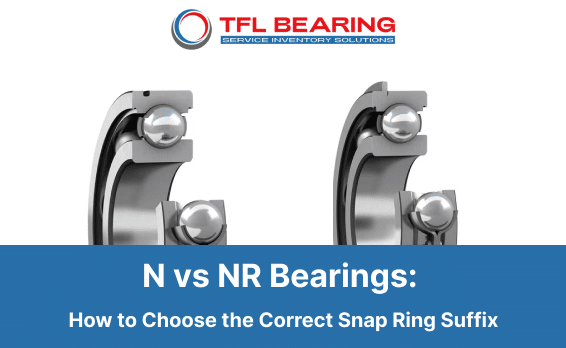
- Sealed Bearings: Bearings with shields (ZZ) or seals (2RS) are typically “lubricated for life” and should not be re-greased.
Ball bearings are essential components in countless mechanical systems, from industrial machinery and electric motors to automotive assemblies and precision equipment. While bearing design and material quality are critical, lubrication is often the single most important factor determining bearing performance and service life. Selecting the best lubricant for ball bearings requires a clear understanding of operating conditions, lubricant properties, and maintenance requirements. An incorrect lubricant choice can lead to premature wear, overheating, and costly equipment failure.
Why Lubrication Is Critical for Ball Bearings
Ball bearings operate through rolling contact between balls and raceways. Even with precise manufacturing, microscopic surface roughness exists on all contact surfaces. Lubrication creates a protective film that separates these surfaces, reducing friction and preventing direct metal-to-metal contact.
Proper lubrication also helps dissipate heat, protect against corrosion, and reduce noise and vibration. Without adequate lubrication, ball bearings quickly experience surface fatigue, increased friction, and accelerated wear, significantly shortening their operational life.

Understanding Lubrication Types for Ball Bearings
The two primary lubrication options for ball bearings are grease and oil. Each has advantages depending on application requirements.
Grease is the most commonly used lubricant for ball bearings due to its simplicity and ability to stay in place. It consists of base oil, thickener, and additives. Oil lubrication, on the other hand, provides superior cooling and is preferred in high-speed or high-temperature applications.
Determining the best lubricant for ball bearings starts with evaluating which lubrication type best suits the operating environment.

Grease Lubrication for Ball Bearings
Grease lubrication is widely used in general industrial and automotive applications. Its semi-solid nature allows it to remain within the bearing housing, reducing leakage and simplifying maintenance.
Grease is particularly suitable for moderate speeds, normal operating temperatures, and applications where relubrication access is limited. It also provides good sealing properties, helping protect bearings from contamination.
However, grease has limited heat dissipation capability compared to oil. In high-speed or high-temperature environments, grease may degrade more quickly, reducing its effectiveness.

Oil Lubrication for Ball Bearings
Oil lubrication is often considered the best lubricant for ball bearings operating at high speeds or under elevated temperatures. Oil flows freely through the bearing, continuously replenishing the lubrication film and carrying heat away from contact zones.
Oil lubrication is commonly used in turbines, high-speed spindles, gearboxes, and large electric motors. It allows for precise control of lubrication conditions and is well suited for systems with circulating lubrication or cooling mechanisms.
The primary drawback of oil lubrication is system complexity, as it requires seals, pumps, or circulation systems to manage oil flow.
Key Factors in Choosing the Best Lubricant
Selecting the best lubricant for ball bearings depends on several critical factors. Speed is one of the most important considerations. High-speed applications typically benefit from oil lubrication or low-viscosity grease to minimize friction and heat generation.
Load conditions also influence lubricant choice. Higher loads require lubricants with sufficient film strength to maintain separation between rolling elements and raceways. Temperature is another key factor, as lubricants must retain suitable viscosity and stability across the operating temperature range.
Environmental exposure, such as moisture, dust, or chemicals, must also be considered. In contaminated environments, grease with good sealing and corrosion resistance may be preferred.
Importance of Lubricant Viscosity
Viscosity determines a lubricant’s ability to form and maintain a protective film. Low-viscosity lubricants reduce friction and are suitable for high-speed applications, but they may not provide adequate film thickness under heavy loads. High-viscosity lubricants offer better load support but can increase friction and operating temperature.
The best lubricant for ball bearings balances viscosity with speed and load requirements. Manufacturers often provide viscosity recommendations based on bearing size and operating conditions to guide selection.
Additives and Lubricant Performance
Modern lubricants contain additives that enhance performance and durability. Anti-wear additives help protect bearing surfaces under boundary lubrication conditions. Corrosion inhibitors protect bearings from moisture and chemical exposure. Oxidation inhibitors improve lubricant stability at high temperatures.
Selecting a lubricant with appropriate additives ensures consistent performance and extended service life, especially in demanding industrial environments.
Temperature and Lubrication Stability
Temperature has a significant impact on lubricant behavior. As temperature increases, lubricant viscosity decreases, reducing film thickness. Excessive heat can also cause oxidation and breakdown of lubricant components.
High-temperature ball bearing applications require lubricants with strong thermal stability and resistance to oxidation. Synthetic oils and high-performance greases are often used in these conditions to maintain reliable lubrication.
Lubrication Quantity and Application
Using the correct amount of lubricant is just as important as selecting the right type. Over-lubrication can cause excessive heat buildup and increased friction, while under-lubrication leads to inadequate film formation and wear.
Proper lubrication practices involve applying the recommended quantity and ensuring even distribution within the bearing. Regular inspection and maintenance help maintain optimal lubrication conditions over time.
Maintenance and Relubrication Intervals
Lubricant condition degrades over time due to heat, contamination, and mechanical shear. Establishing appropriate relubrication intervals is essential for maintaining bearing performance.
Grease-lubricated bearings typically require periodic relubrication, while oil-lubricated systems rely on filtration and oil changes. Monitoring bearing temperature, noise, and vibration can help determine when lubrication maintenance is required.
Common Lubrication Mistakes to Avoid
Many bearing failures result from lubrication-related errors. Using the wrong lubricant type, incorrect viscosity, or incompatible lubricants can lead to rapid degradation. Mixing different grease types is particularly risky, as thickeners may be incompatible.
Another common mistake is neglecting environmental factors. Bearings exposed to moisture or chemicals require lubricants with specific protective properties to prevent corrosion and damage.
Best Lubricant Practices in Industrial Applications
In industrial environments, lubrication strategy should align with equipment criticality and operating conditions. High-speed machinery often benefits from oil lubrication systems, while general-purpose equipment may rely on high-quality grease.
Technical guidance and lubrication recommendations, such as those provided by SDTFL Bearing, help engineers and maintenance teams identify the most suitable lubricant for specific ball bearing applications and operating environments.
Energy Efficiency and Lubrication Choice
The best lubricant for ball bearings can also improve energy efficiency. Reduced friction lowers power consumption and operating temperature, contributing to overall system efficiency. In large industrial systems, optimized lubrication can result in measurable energy savings and reduced operating costs.
Environmental and Safety Considerations
Modern lubrication practices increasingly consider environmental impact and safety. Biodegradable lubricants and low-toxicity formulations are used in applications where environmental exposure is a concern. Proper lubricant selection and disposal reduce environmental risk and support sustainable operations.
Ball Bearing Applications and Lubricant Selection
Different applications place unique demands on ball bearing lubrication. Electric motors require lubricants that resist electrical discharge damage and operate quietly. Automotive applications demand lubricants that perform across wide temperature ranges. Precision equipment requires low-noise, low-vibration lubrication solutions.
Understanding application-specific requirements ensures that the selected lubricant supports reliable and consistent performance.
Conclusion
Choosing the best lubricant for ball bearings is a critical decision that directly impacts performance, reliability, and service life. The optimal lubricant depends on factors such as speed, load, temperature, and environmental conditions. Grease lubrication offers simplicity and protection for many applications, while oil lubrication provides superior cooling and performance in high-speed or high-temperature systems.
By understanding lubricant properties, maintenance practices, and application requirements, engineers and maintenance professionals can make informed lubrication choices that extend bearing life and reduce downtime. Proper lubrication remains one of the most effective ways to maximize the value and reliability of ball bearing systems across industrial and mechanical applications.
Ensure Smooth Operations with SDTFL Bearings
Choosing the best lubricant for ball bearings is only half the battle; starting with a superior bearing is the other. At SDTFL Bearings, we understand that proper lubrication is the lifeblood of your machinery. We don’t just sell bearings; we provide the technical expertise to help you match our high-quality components with the perfect lubrication strategy for your specific speed, load, and temperature requirements.
Don’t let friction compromise your efficiency. Let us help you extend the lifespan of your equipment with the right solutions.
Ready to optimize your bearing performance?
- Get Expert Recommendations: Email your operating conditions to [email protected] for a tailored consultation.
- Speak to a Specialist: Call us directly at +86 15806631151.
- Instant Support: Click the pop-up on the sidebar to chat with our technical team now.
FAQ: Ball Bearing Lubrication
Can I use WD-40 to lubricate ball bearings?
No. WD-40 is a solvent and cleaner, not a lubricant. It will dissolve and strip away the existing grease, leaving the bearing unprotected. Only use dedicated bearing grease or machine oil.
How often should I re-grease my bearings?
It depends on operating hours and conditions. For continuous industrial operation, a common rule is every 2,000 to 4,000 hours. However, if the environment is dirty or wet, intervals should be much shorter.
What happens if I put too much grease in a bearing?
Over-greasing causes fluid friction (churning), which generates excessive heat. This heat can degrade the grease, cause the oil to bleed out, and even blow out the bearing seals, leading to failure.
Grease vs. Oil: Which is better for high speed?
Oil is better for high speeds. Grease creates drag and retains heat. Oil mist or oil-air systems provide a thin film that lubricates without causing drag, and the oil flow helps carry away heat.