







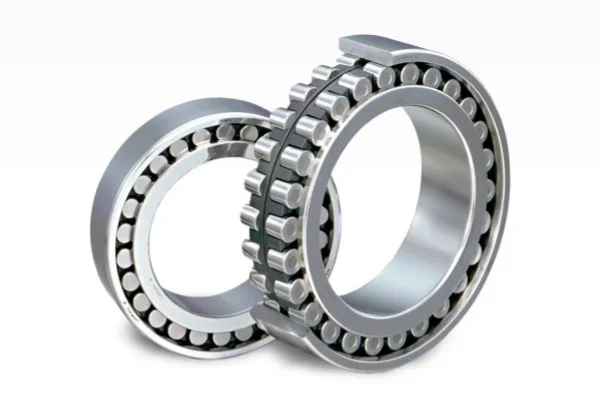
Quick Definition: Double row cylindrical roller bearings feature two rows of rollers to deliver significantly higher radial load capacity and stiffness than single-row designs. They are primarily used in precision machine tool spindles (NN/NNU types) and heavy rolling mills where deflection must be minimized, though they generally do not support axial (thrust) loads.
⚙️ Engineering Critical Points
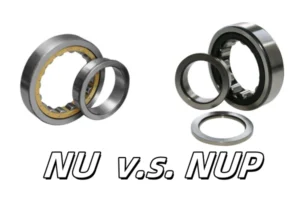
- NN vs. NNU Types: The key difference is the rib position. NN type has ribs on the inner ring (outer ring removable), while NNU type has ribs on the outer ring (inner ring removable).
- High Rigidity: Their cross-section height is low, allowing for larger shaft diameters and greater system rigidity, which is crucial for spindle accuracy.
- Axial Displacement: Most designs allow the shaft to expand axially (thermal float) relative to the housing, making them ideal non-locating bearings.
- Clearance Adjustment: Because the rings are separable, internal clearance can be precisely adjusted during installation by expanding the inner ring on a tapered shaft.
In modern industrial systems, bearing performance directly influences equipment reliability, efficiency, and service life. As machinery becomes larger, heavier, and more demanding, standard bearing solutions are often insufficient to handle increasing operational loads. Among the various bearing configurations available today, double row cylindrical roller bearings have emerged as a critical solution for applications requiring high radial load capacity, enhanced rigidity, and long-term operational stability. These bearings are widely used across heavy industries where durability and performance are non-negotiable.
Understanding Double Row Cylindrical Roller Bearings
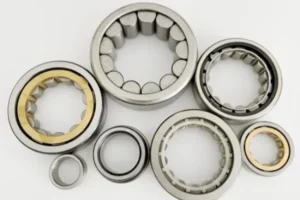
Double row cylindrical roller bearings are designed with two rows of cylindrical rolling elements arranged between inner and outer raceways. This configuration allows the bearing to distribute loads more evenly across a larger contact area compared to single row designs. The result is significantly higher radial load capacity and improved resistance to deformation under stress.
Unlike ball bearings, which rely on point contact, cylindrical roller bearings provide line contact between the rollers and raceways. This structural feature enables them to withstand heavy loads while maintaining smooth rotational motion. The double row design further enhances load distribution, making these bearings ideal for applications where high rigidity and reliability are required.

Key Structural Advantages of Double Row Designs
One of the primary advantages of double row cylindrical roller bearings lies in their ability to support extremely high radial loads without compromising performance. The dual-row arrangement increases stiffness, which helps maintain precise shaft positioning even under fluctuating or shock loads. This is particularly important in industrial machinery where misalignment or vibration can lead to premature component failure.
Another important benefit is operational stability. Double row bearings reduce deflection under load, improving rotational accuracy and minimizing wear on adjacent components. Their design also allows for efficient heat dissipation, which contributes to longer service life in high-speed or high-temperature environments.
Load Capacity and Performance Characteristics
Double row cylindrical roller bearings are specifically engineered to handle heavy radial loads while operating at moderate to high speeds. Although they are not typically designed to carry significant axial loads, some configurations allow limited axial displacement to accommodate thermal expansion of shafts. This feature is especially valuable in large industrial systems where temperature variations are common.
The increased load-carrying capacity of double row designs makes them suitable for continuous-duty applications. Their robust construction ensures consistent performance under sustained stress, reducing the risk of unexpected downtime and maintenance interruptions.
Applications in Heavy Industrial Machinery
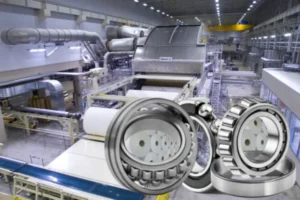
Due to their strength and reliability, double row cylindrical roller bearings are widely used in heavy machinery and industrial equipment. Common applications include rolling mills, gearboxes, compressors, pumps, and large electric motors. In these systems, bearings must support heavy rotating masses while maintaining precise alignment over long operating cycles.
In steel processing plants, for example, rolling mills operate under extreme loads and harsh conditions. Double row cylindrical roller bearings provide the rigidity and durability required to maintain consistent operation despite constant exposure to vibration, heat, and mechanical stress. Similarly, in mining and construction equipment, these bearings ensure stable performance in demanding environments.

Use in Power Transmission and Gear Systems
Power transmission systems rely heavily on bearings that can support high loads while maintaining smooth and efficient motion. Double row cylindrical roller bearings are commonly used in industrial gearboxes and drive systems where torque transmission generates significant radial forces. Their ability to maintain alignment under load helps reduce gear wear and improve overall system efficiency.
In large-scale electric motors and generators, these bearings play a critical role in supporting rotor shafts. The added stiffness of double row configurations minimizes shaft deflection, which is essential for maintaining electrical efficiency and reducing vibration-related damage.
Importance of Bearing Selection in Industrial Systems
Selecting the correct bearing type is a critical decision that impacts both performance and maintenance costs. Double row cylindrical roller bearings are often chosen when single row bearings cannot meet load requirements or when additional rigidity is needed. However, proper selection also involves considering factors such as operating speed, lubrication conditions, temperature, and mounting arrangements.
Incorrect bearing selection can lead to excessive wear, overheating, or premature failure. Therefore, understanding the operating environment and load characteristics is essential when integrating double row cylindrical roller bearings into industrial systems. Access to detailed technical specifications and engineering guidance helps ensure optimal performance.
Manufacturing Precision and Material Quality
The performance of double row cylindrical roller bearings is closely linked to manufacturing precision and material quality. High-grade bearing steel, advanced heat treatment processes, and precision grinding techniques contribute to improved load capacity and extended service life. Tight dimensional tolerances ensure uniform load distribution across both rows of rollers, reducing localized stress and wear.
Modern bearing manufacturers continue to invest in advanced production technologies to meet the growing demands of industrial applications. Precision machining and rigorous quality control standards are essential for delivering bearings that perform reliably under heavy loads.

Lubrication and Maintenance Considerations
Proper lubrication is essential for maximizing the lifespan of double row cylindrical roller bearings. Adequate lubrication reduces friction, minimizes wear, and helps dissipate heat generated during operation. Depending on the application, grease or oil lubrication may be used, with selection based on operating speed, temperature, and environmental conditions.
Routine maintenance and condition monitoring further enhance bearing reliability. Regular inspection helps detect early signs of wear or contamination, allowing for timely intervention before major failures occur. In critical industrial systems, predictive maintenance strategies are often employed to optimize bearing performance and reduce downtime.
Advantages Over Alternative Bearing Types
Compared to other bearing types, double row cylindrical roller bearings offer a unique balance of load capacity, rigidity, and operational stability. While spherical roller bearings provide misalignment tolerance, cylindrical designs offer superior stiffness and higher radial load capacity in applications where alignment can be controlled. Compared to single row bearings, the double row configuration delivers enhanced performance without significantly increasing installation complexity.
These advantages make double row cylindrical roller bearings a preferred choice in applications where precision and strength are prioritized over axial load capacity or self-aligning features.
Supporting Industrial Reliability and Efficiency
In modern manufacturing and heavy industry, equipment reliability directly impacts productivity and operational costs. Bearings play a central role in ensuring smooth and efficient motion across all rotating systems. Double row cylindrical roller bearings support this goal by delivering consistent performance under heavy loads and challenging operating conditions.
By reducing vibration, maintaining alignment, and supporting sustained loads, these bearings contribute to improved energy efficiency and reduced wear on connected components. This, in turn, extends the lifespan of machinery and lowers total cost of ownership.
Accessing Technical Guidance and Product Information
For engineers and procurement specialists seeking detailed information on bearing designs and applications, manufacturer technical resources are invaluable. Comprehensive product specifications, application guidelines, and engineering support help ensure correct bearing selection and integration. A detailed overview of double row cylindrical roller bearing solutions and their industrial applications can be explored through the technical product resources provided by SDTFL Bearing, which outline performance characteristics and application suitability in demanding environments.
Conclusion
Double row cylindrical roller bearings play a vital role in supporting heavy-load industrial applications where strength, rigidity, and reliability are essential. Their ability to distribute loads evenly across two rows of rollers makes them well suited for use in rolling mills, gearboxes, electric motors, and other high-demand systems. By offering enhanced load capacity, improved stability, and long service life, these bearings help industries maintain efficient and reliable operations.
Understanding the design, advantages, and application requirements of double row cylindrical roller bearings enables engineers and decision-makers to select the right solution for their specific needs. As industrial systems continue to evolve, these bearings will remain a cornerstone of heavy-duty mechanical design and performance.
Does your heavy machinery require enhanced rigidity and superior radial load capacity?
At SDTFL Bearings, we specialize in high-performance solutions, including double row cylindrical roller bearings designed to withstand the toughest industrial environments. Unlike standard ball bearings, our robust cylindrical roller bearings offer superior durability for steel rolling mills and large-scale gearboxes. Don’t compromise on operational stability—ensure your equipment runs smoothly with our precision-tested solutions.
Contact our engineering team today to discuss your specific load requirements or request a quote.
- Email: [email protected]
- Phone: +86 15806631151
FAQ: Double Row Cylindrical Roller Bearings
Can double row cylindrical roller bearings handle axial loads?
Generally, no. Standard double row cylindrical roller bearings (like NN and NNU types) are designed only for radial loads. They allow axial displacement to accommodate thermal expansion. Thrust loads must be handled by a separate thrust bearing.
What is the advantage of a tapered bore (K suffix)?
Bearings with a tapered bore (suffix K) allow for precise adjustment of radial internal clearance during installation. By pushing the inner ring up a tapered shaft, the ring expands, reducing clearance to increase rigidity.
Where are these bearings typically used?
They are most commonly found in machine tool spindles (lathes, milling machines) due to their high precision and stiffness. They are also used in heavy rolling mills and large gearboxes where loads are extreme.
Why do some outer rings have lubrication holes?
Many double row bearings (suffix W33) feature an annular groove and lubrication holes in the outer ring. This allows lubricant to be fed directly into the center of the bearing, ensuring both rows of rollers are evenly lubricated.