Super Precision Angular Contact Ball Bearings 7010 ACD/P4ATBTC

Super Precision Angular Contact Ball Bearings 7010 ACD/P4ATBTC

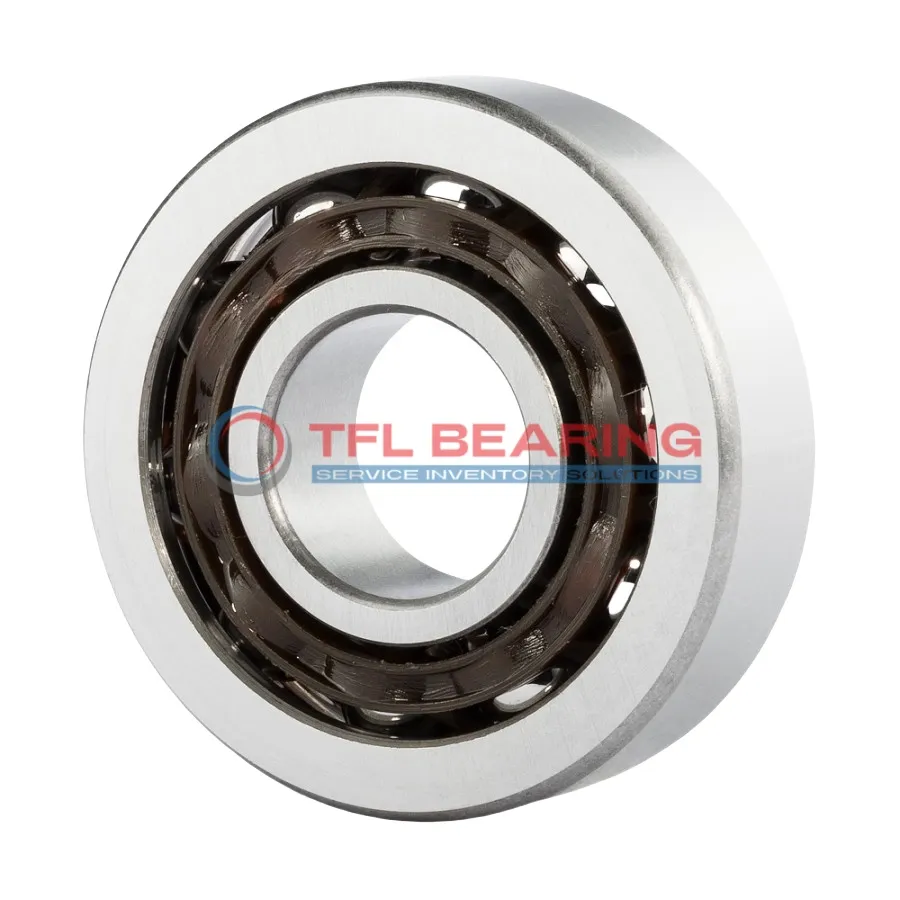
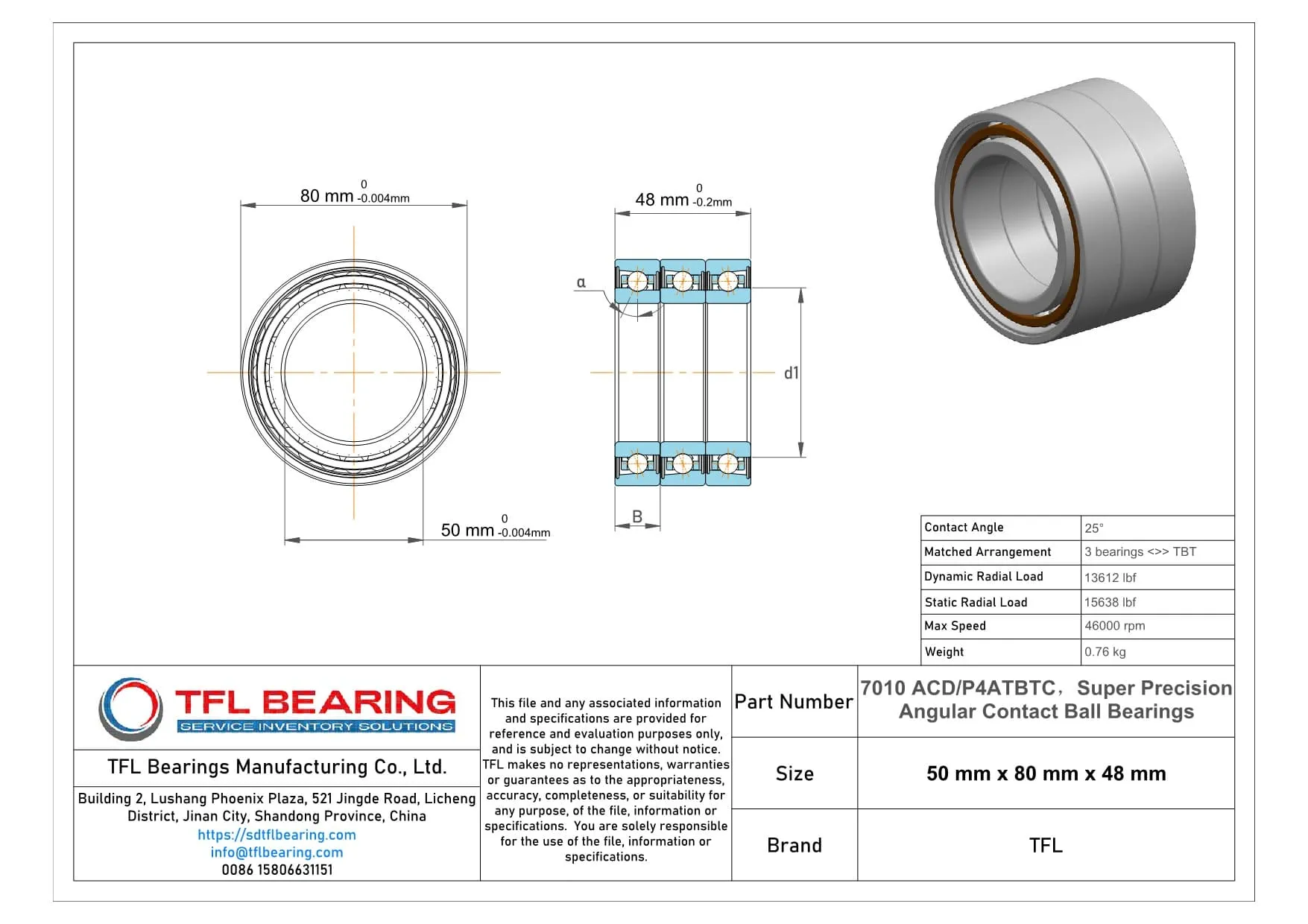
The 7010 ACD/P4ATBTC is a super precision angular contact ball bearing with a 50mm bore and 80mm outer diameter, crafted from durable chrome steel. It handles radial loads up to 13612 lbf and operates smoothly at speeds up to 46000 RPM.

Its 25° contact angle and matched set of three bearings (> TBT arrangement) provide excellent stability for angular loads. The phenolic cage ensures quiet operation and long service life.

This bearing is lubricated for reduced friction and works in temperatures from -30°C to 110°C. Ideal for high-precision applications like machine tool spindles or robotics.

Weighing 0.76kg, it meets P4A tolerance standards for exceptional accuracy. Interchangeable with SKF bearings, offering a reliable replacement option.

Get A Free Quote

Product Parameters

  • Part Number 7010 ACD/P4ATBTC
  • Brand TFL
  • Interchangeable SKF
  • Bore Dia 50 mm
  • Bore Dia Tolerance -0.004mm to 0
  • Outer Dia 80 mm
  • Outer Dia Tolerance -0.004mm to 0
  • Width 48 mm
  • Width Tolerance -0.2mm to 0
  • Ball Dia 9.525 mm
  • Ball Qty 18
  • Contact Angle 25°
  • Tolerance Class P4A
  • System of Measurement Metric
  • Seal Type Open
  • Matched Arrangement 3 bearings <>> TBT
  • Number Of Bearings In Matched Set 3
  • Universal Matching Bearing No
  • Preload Moderate / Class C
  • For Load Direction Angular Contact
  • Ring Material Chrome Steel
  • Ball Material Chrome Steel
  • Cage Material Phenolic
  • Dynamic Radial Load 13612 lbf
  • Static Radial Load 15638 lbf
  • Lubrication Lubricated
  • Temperature Range - 30°C to 110 °C
  • Max Speed 46000 rpm
  • Weight 0.76 kg
  • Price($) 263.889

Features

Performance Features of 7010 ACD/P4ATBTC Bearing

7010 ACD/P4ATBTC Bearing is designed with a 25° contact angle, optimising load distribution for angular contact applications.

The chrome steel rings and balls enhance durability, supporting dynamic radial loads up to 13612 lbf.

With a maximum speed of 46,000 rpm, it ensures smooth operation in high-speed scenarios.

Its phenolic cage maintains ball alignment, reducing friction and extending service life.

Application

Key Fields for 7010 ACD/P4ATBTC Bearing
7010 ACD/P4ATBTC Bearing is commonly used in high-precision machine tools, where its angular contact design ensures accurate spindle rotation. The moderate preload helps maintain stability during heavy cutting operations.

In robotics, 7010 ACD/P4ATBTC Bearing supports articulated arms, providing smooth movement and reducing vibration. Its phenolic cage offers lightweight durability, ideal for repetitive motions.

For aerospace applications, 7010 ACD/P4ATBTC Bearing handles both radial and axial loads in aircraft components. The P4A tolerance class ensures consistent performance under demanding conditions.

What Makes 7010 ACD/P4ATBTC Bearing a Preferred Choice?
7010 ACD/P4ATBTC Bearing excels in electric motors, where its high-speed capability (up to 46,000 rpm) enhances efficiency. The chrome steel construction also resists wear in continuous operation.

In medical imaging devices, 7010 ACD/P4ATBTC Bearing’s precision reduces noise and vibration, crucial for clear scans. The matched set arrangement further improves alignment accuracy.

Built for Heavy-Duty Use: 7010 ACD/P4ATBTC Bearing
7010 ACD/P4ATBTC Bearing is ideal for industrial pumps, handling both radial and thrust loads with ease. The open design allows for easy lubrication, extending service life.

In automation systems, 7010 ACD/P4ATBTC Bearing ensures reliable performance in linear guides and positioning stages. Its 25° contact angle optimises load distribution for smoother motion.

Automotive vs Aerospace: Applications of 7010 ACD/P4ATBTC Bearing
In automotive transmissions, 7010 ACD/P4ATBTC Bearing supports gear shafts, offering durability under high rotational speeds. The metric sizing fits seamlessly into European and Asian designs.

For aerospace actuators, 7010 ACD/P4ATBTC Bearing’s precision and thermal stability are critical. The phenolic cage withstands temperature fluctuations without compromising performance.


Q&A

SEND INQUIRY