








Single Row Angular Contact Ball Bearings (General)

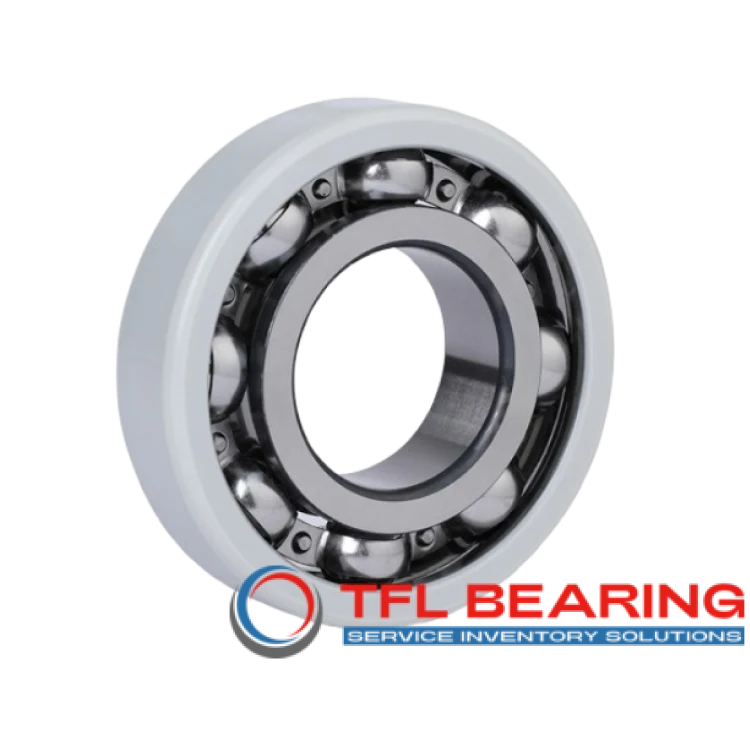
TFL supplies single row angular contact ball bearings for applications that require combined radial and one-direction axial load support, stable shaft positioning, and reliable performance at medium to high speeds. This product list covers 600 metric configurations, including common 72 and 73 series models, 25°, 30°, and 40° contact angle options, open and selected sealed designs, and brass, nylon, or stainless steel cage options. Buyers can compare bore diameter, outside diameter, width, contact angle, cage material, load rating, maximum speed, lubrication, and tolerance class before requesting a quotation. These bearings are commonly used in pumps, compressors, gearboxes, electric motors, machine tools, industrial drives, and equipment requiring accurate shaft positioning under combined radial and axial load conditions.

Supports Combined Loads Efficiently
Variety of Contact Angles Available


Versatile Choice Among Bearing Types
Single Row Angular Contact Ball Bearing Selection Guide
Choose single row angular contact ball bearings when the application needs to support radial load together with axial load in one direction. Use the product list to compare 72 and 73 series models by bore size, contact angle, cage material, open or sealed design, load rating, maximum speed, tolerance class, and pairing requirements. For axial load in both directions, single row angular contact bearings are normally mounted in pairs or bearing sets.
How to Choose This Bearing Type
Start by confirming the load direction. A single row angular contact ball bearing can support radial load and axial load in one direction. If the shaft must carry axial load in both directions, two bearings are normally arranged back-to-back, face-to-face, or in tandem depending on rigidity, load direction, preload requirement, and mounting space.
Next, check speed, shaft support rigidity, contact angle, preload or clearance requirement, and whether the bearing will be used alone or as a matched pair. A single row angular contact ball bearing is not the same as a four-point contact bearing or a double row angular contact bearing, so the complete bearing arrangement should be confirmed before replacement.

Common Series and Model Range
The current product list contains 600 metric single row angular contact ball bearing configurations. The main series include 72 and 73 series, with additional 70, 719, 718, 74, ALS, AMS, and large-size configurations. Bore sizes range from 10 mm to selected large industrial sizes above 1000 mm.
| Selection Item | Current Product Range | What Buyers Should Check |
|---|---|---|
| Main series | 72 and 73 series, plus selected 70, 719, 718, and 74 series | Choose according to load capacity, speed, width, and housing space |
| Contact angle | 25°, 30°, and 40° options | Higher contact angle generally supports higher axial load, while speed and friction should also be checked |
| Construction | Single row angular contact | Confirm whether one bearing, paired bearings, or a bearing set is required |
| Seal type | Mainly open, with selected sealed models | Check lubrication, contamination, speed, friction, and maintenance requirements |
| Cage material | Brass, nylon, and selected stainless steel cages | Confirm speed, temperature, vibration, lubricant, and application environment |
| Tolerance class | P6 / ABEC-3 in the current list | Confirm precision, runout, speed, and shaft positioning requirements |
Contact Angle, Open Type, and Cage Selection
Contact angle is one of the most important selection factors. A 40° bearing is commonly used where axial load capacity is important, while 25° and 30° options may be selected according to speed, rigidity, and load balance. Always confirm the contact angle shown in the complete bearing designation.
Open bearings are suitable where lubrication is managed by the equipment or where higher speed and lower friction are priorities. Selected sealed models, such as 2RZ-style configurations, can help retain lubricant and reduce contamination, but sealing may affect speed, friction, and operating temperature.
Cage material should also be checked carefully. Brass cages are often selected for robustness and demanding conditions, while nylon cages may suit many general industrial applications. Stainless steel cage options appear in selected models and should be confirmed by full bearing designation.
Need a Single Row Angular Contact Bearing Quote?
Send us the bearing number, contact angle, dimensions, load direction, speed, cage requirement, mounting arrangement, quantity, drawing, or sample photos. We will review suitable single row angular contact ball bearing options for your application.

Key Specifications to Confirm Before Quotation
For a quotation, provide the complete bearing number, bore diameter, outside diameter, width, contact angle, cage material, seal type, tolerance class, load direction, operating speed, lubrication method, mounting arrangement, quantity, and any drawing or sample photos.
If the bearing will be mounted in pairs, also confirm the arrangement: back-to-back, face-to-face, or tandem. Preload, axial clearance, universal matching suffixes, and mounting direction can affect performance, so these details should not be omitted during inquiry.
SKF / FAG / NTN Replacement Notes
Many buyers search single row angular contact ball bearings by SKF-style, FAG-style, NTN-style, or other brand-style numbers. TFL can help check replacement, alternative, cross-reference, or interchange options based on the complete designation, dimensions, suffixes, and application requirements.
Keep suffixes such as B, AC, A, BE, BECBP, BECBM, BEP, BEGAP, 2RZ, M, P, GA, GB, CB, DB, DF, DT, and precision or preload codes in the inquiry. These suffixes may define contact angle, cage, seal type, preload, matching condition, or bearing arrangement. TFL does not claim that alternatives are original brand products or authorized replacements unless clearly stated.
Common Applications
Single row angular contact ball bearings are commonly used in pumps, compressors, gearboxes, electric motors, industrial drives, machine tools, textile machinery, fans, blowers, and shaft systems that need combined radial and axial load support.
They are especially useful where shaft positioning, speed capability, rigidity, and one-direction axial load support are important. For high-speed spindle applications or very tight runout requirements, a super precision angular contact bearing category may be more suitable.
Selection Insight
Do not select a single row angular contact bearing by bore size alone. Confirm contact angle, mounting direction, pairing requirement, cage, speed, preload or clearance, lubrication, and axial load direction before approving a replacement.
Popular Models / High-Demand Models
Popular models from this product list include 7205 BECBP, 7206 BECBP, 7208 BECBP, 7210 BECBP, 7305 BECBP, 7306 BECBP, 7308 BECBP, and 7310 BECBP. Sealed examples include 7205 BE-2RZP, 7206 BE-2RZP, and 7306 BE-2RZP.
For a focused product page, 7206 BECBP is a good priority model because it has a common 30 mm bore, broad industrial use, and clear single row angular contact bearing positioning. 7306 BECBP is also worth considering for buyers who need higher load capacity in the same bore size range.
Why Source Single Row Angular Contact Ball Bearings from TFL?
TFL / SDTFL Bearing is a bearing supplier and sourcing partner for industrial bearing buyers. After customers confirm the model, drawing, sample, or application requirement, we help source suitable single row angular contact ball bearing options from qualified factory resources and coordinate availability, inspection, packaging, and shipment.
Before shipment, we check the agreed model, quantity, visible condition, packaging, and basic quality requirements. Custom cage options, matched pair requirements, lubrication, OEM marking, neutral packaging, and customized packaging can be discussed according to model, technical requirement, and order quantity.
You can browse the complete angular contact ball bearing range or read our overview on single row angular contact ball bearing applications, design, and installation.
TFL / SDTFL Bearing is an independent bearing supplier and sourcing partner. Brand-style numbers and suffixes are used only for replacement, alternative, cross-reference, or interchange identification. Final suitability must be confirmed from the complete bearing dimensions, contact angle, load direction, speed, cage, lubrication, preload or clearance, mounting arrangement, and application requirements.
FREQUENTLY ASKED QUESTIONS

Why can a single bearing only take axial load one way?
What's the main difference between single row angular contact ball bearings vs. double row angular contact ball bearing?
How do I choose the right contact angle when buying?
How long will it take to ship after the payment?
We have sufficient inventory. Most orders will be shipped within 10 days or less. After the order is dispatched, you can track the logistics information at any time until the goods are signed for.