Learn why bearing overheating has no universal temperature limit, how to read temperature trends, and when a hot bearing needs investigation or shutdown.
Selecting the right Taper Roller Bearing Size means you must match the bearing to your machine’s load, speed, and fit requirements. You need to know if the load is radial, axial, or both, and measure your shaft size carefully. About one in ten bearing failures happen because the wrong size gets chosen, which shows how important this step is.
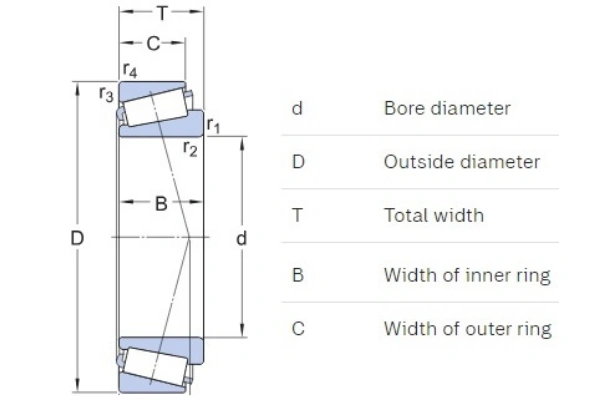
Choosing the correct taper roller bearing size requires matching the inner diameter (bore), outer diameter, and width to your specific load requirements. To ensure a precision fit, reference an ISO 355 standardized size chart and verify if your application demands metric or inch dimensions to prevent premature bearing failure.
Even small misalignments or incorrect fits can reduce bearing life by 20% or more. Always check load, speed, and fit for longer service.
Taper Roller Bearing Size
Series No.
Bore (d) mm
Outside (D) mm
Width (T) mm
Dynamic Load (kN)
30204
20
47
15.25
28.5
30205
25
52
16.25
32.5
32206
30
62
21.25
56.1
32208
40
80
24.75
82.5
32310
50
110
42.25
173
* Note: Dimensions follow ISO 355 standards. For custom clearance (C3/C4) or precision grades, please consult our engineering team.
Key Takeaways
Pick a bearing size that fits your machine’s load type. Make sure it matches the load size and shaft size. This helps stop early problems.
Use tools like calipers or micrometers to measure the shaft. Measure the housing too. This helps the bearing fit right.
Look at the bearing’s speed limit. Do not go over this speed. This stops the bearing from getting too hot or wearing out fast.
Think about which way the load pushes. Decide if you need single-row or paired bearings. This gives better support.
Follow the right steps to mount and pair the bearing. This helps the bearing last longer and work well.
Taper Roller Bearing Basics
What They Are
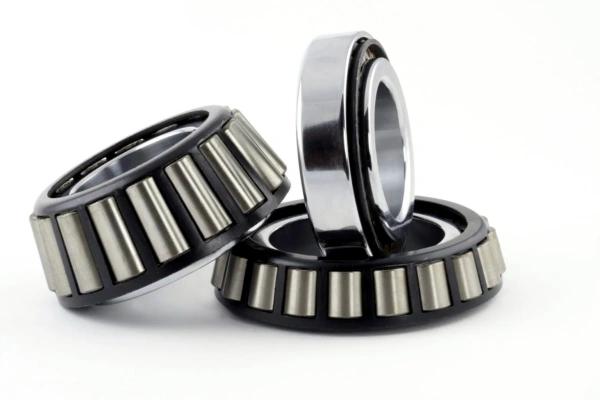
Tapered roller bearings help machines move easily and carry heavy things. You can tell them apart by their special shape. They have rollers shaped like cones, not balls or straight cylinders. These rollers move on cone-shaped paths. The inside and outside rings are not the same size. This shape lets the bearing handle side and end forces at once.
Tapered roller bearings are used in many fields because they are strong and last long. They work well where machines have heavy loads, shocks, or need to keep working for a long time. Here is a table that shows where you might find them and what they do:
Wind turbines (main shaft, gearbox, yaw and pitch systems)
Tapered roller bearings are liked in these jobs because they can take many kinds of forces, handle shocks, and last even in hard places. Picking the right Taper Roller Bearing Size helps your machines work better and stops expensive problems.
Taper Roller Bearing Size Factors
Load and Direction
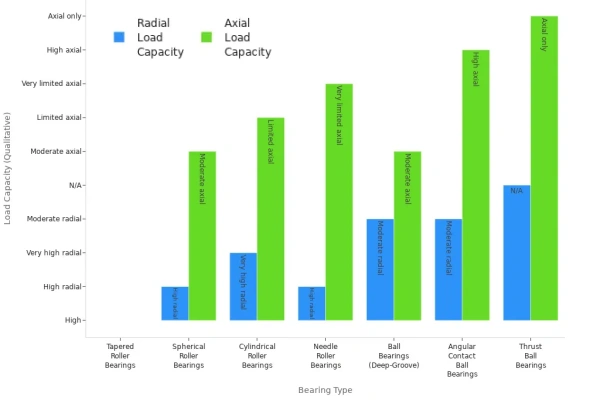
You need to know what kind of load your machine has. You also need to know how much load there is. Tapered roller bearings can take both side and end loads. This makes them different from other bearings. Look at the table below to see how they compare:
Bearing Type
Radial Load Capacity
Axial Load Capacity
Key Characteristics and Comparison to Tapered Roller Bearings
Tapered Roller Bearings
High (due to line contact and tapered raceways)
High (can absorb axial forces in one direction; often used in pairs for both directions)
Unique conical rollers and contact angle allow combined high radial and axial loads, surpassing many other types
Designed solely for axial loads, no radial load capacity
You must figure out both side and end loads. Use this formula: P = X * F_r + Y * F_a. P is the total load. F_r is the side load. F_a is the end load. X and Y are numbers from the bearing catalog. This helps you pick the right Taper Roller Bearing Size.
Speed Considerations
Every bearing has a top speed. The speed limit depends on size, design, cage, and oil or grease. Bigger bearings or heavy loads make more heat. This lowers the speed limit. Check the speed limit in the product table. If your machine runs close to this speed, ask the maker for help or use better cooling. The right Taper Roller Bearing Size helps your machine run well at the needed speed.
Radial vs Axial Load Ratings of Bearing Types
Shaft and Housing Fit
The bearing must fit your shaft and housing. Pick the shaft size first, then choose the bearing. The fit affects load, friction, and how straight things are. A tight fit stops the bearing from slipping. But if it is too tight, it can cause stress. A loose fit lets things expand but can make noise or shake. Always check the fit so your bearing lasts longer and works well.
Good fit means better load sharing and less wear.
Bad fit can cause slipping, heat, and early failure.
Pick the fit based on speed, load, and temperature.
Contact Angle and Rows
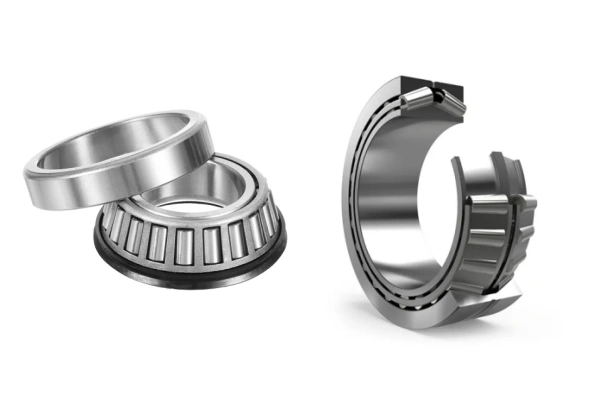
The contact angle and number of rows change how much load the bearing can take. A bigger contact angle lets the bearing take more end load. Single-row bearings work for most jobs. Double-row or paired bearings are better for bigger or mixed loads. When you pick the Taper Roller Bearing Size, think about the contact angle and how many rows you need.
single-row and double-row tapered roller bearings
Selection Steps
Define Application Needs
First, you need to know what your machine needs. Think about the loads the bearing will face. Loads can be from the side, end, or both. The angle of the load is important. It changes how the bearing handles force. You also have to pick single-row or multi-row bearings. Multi-row bearings are better for hard or heavy jobs.
Here is a simple way to figure out your needs:
Find out which way the loads go and how big they are.
Look at the contact angle to see how it changes things.
Pick single-row or multi-row bearings for your job.
When you think about what you need, remember these things:
Which way the load goes, how big it is, and if it shakes
How fast the machine spins
How hot or cold it gets
If it is clean and has enough oil or grease
What type and size of bearing you want
How much space you have and if it is steady
How exact the bearing needs to be
How the shaft and housing fit together
How much space is inside and how tight it is
What the cage is made of
How well it is sealed and protected
What the rings and rollers are made of
How you will put it in and take care of it
Tip: Write down everything your machine needs before you look for a Taper Roller Bearing Size. This helps you not make mistakes later.
Measure and Match Size
You have to measure your shaft and housing very carefully. Use tools like calipers or micrometers for best results. Make sure your tools are set right before you start. Clean your tools and parts so dirt does not mess up your work.
Follow these steps to measure well:
Use air gauges or micrometers to check the inside width and thickness.
Set your tools right before you use them.
Put the tool in gently and check in different spots.
Keep the tool straight on the part.
Measure around the shaft or housing to find any bumps.
Remember that heat can change the size of metal.
The surface should be smooth. A rough surface can make more rubbing and wear. Use a tester to check if it is smooth. A smooth part helps the bearing last longer.
Makers use strict rules for bearing sizes. They follow ISO classes for how close the sizes must be. Here is a table that shows what they check:
Parameter
What It Means
How It Is Checked
Bore diameter
Inside width of the bearing
Measured with micrometers
Outside diameter
Outside width of the bearing
Measured with calipers
Ring width
Thickness of the bearing ring
Measured with micrometers
Chamfer dimensions
Edge shape and size
Checked visually and by gauge
Tapered bore dimensions
Angle and width of the tapered hole
Measured with special gauges
Radial and axial runout
How much the bearing wobbles
Measured with dial indicators
Review Load Ratings
You need to look at the load ratings for each bearing. These ratings tell you how much force the bearing can take. There are two main types: dynamic and static. Dynamic load rating is for moving force. Static load rating is for force when not moving.
To guess how long a bearing will last, use this formula:
L10 = (C/Pr)^3 × 1,000,000 revolutions
L10 means how long it should last.
C is the dynamic load rating.
Pr is the side load.
If your machine has both side and end loads, use special numbers from the catalog. Also, think about how strong, oily, or hot it is. These things can change how long the bearing lasts.
Note: Always use real numbers and ask TFL for help if you are not sure about the load ratings.
Check Speed Limits
Every bearing has a top speed. If you go faster than this, it gets too hot. Too much heat can make the bearing wear out or break early. Tapered roller bearings cannot go as fast as ball bearings. If your machine is fast, always check the speed in the catalog.
If you run a bearing too fast, you get:
Too much heat
More rubbing
It wears out early
You can help by using better oil or cooling. But never go over the speed limit.
Consider Pairing and Mounting
Sometimes, you need two bearings together for both side and end loads. You can put them in an “O” or “X” shape. This helps balance the forces and gives better support. Using pairs with the right space makes mounting easier and better.
Here are some good tips for pairing and mounting:
Use pairs for mixed loads.
Put bearings in O or X shapes for best support.
Make sure the rings fit tight so they do not move.
Adjust the rings for the right space or tightness.
Always follow the maker’s steps for mounting.
If you mount it wrong, you get problems. If the shaft is too big, the bearing is too tight and wears out fast. If the shaft is too small, the bearing moves and makes noise. If it is not straight, it can shake and break early. Always use the right tools and steps.
Mounting Problem
What Happens
How to Fix
Shaft too tight
More rubbing, heat, wear
Use the right fit and check size
Shaft too loose
Bearing moves, noise, wobble
Use the right fit and check size
Wrong mounting of tapered bores
Loose or tight, can break
Follow the right mounting steps
Misalignment
Shakes, wears unevenly
Use good tools and check
Tip: Good mounting and pairing help your Taper Roller Bearing Size last longer and work better.
Interpreting Specs and Part Numbers
Reading Catalog Tables
When you look at a bearing catalog, you see many numbers and letters. Each table gives you important details about the bearings. You find columns for bore diameter, outside diameter, width, and load ratings. These numbers help you match the bearing to your shaft and housing. You also see speed limits and recommended fits.
Here is a simple way to read a catalog table:
Find the bore diameter that matches your shaft.
Check the outside diameter for your housing.
Look at the width to make sure it fits your space.
Review the dynamic and static load ratings to see if the bearing can handle your machine’s force.
Check the speed limit to make sure it works for your application.
Look for any special notes or symbols. These may show if the bearing has extra features, like seals or special grease.
Tip: Always double-check the numbers in the catalog. A small mistake can lead to the wrong choice.
Decoding Part Numbers
Every bearing has a part number. This number tells you a lot about the bearing. You can break down the part number into three main parts:
Prefix Letters: These letters show the bearing type. For example, “LM” means a tapered roller bearing for high load jobs.
Numeric Designation: The numbers give you the size. They tell you the outer diameter, width, and inner diameter. In “LM67048,” the numbers point to these measurements.
Suffix Letters: These letters tell you about special features. You might see a letter for a certain tolerance grade or for special lubrication needs. For example, “A” can mean a specific tolerance.
Here is a quick example:
Part Number
Prefix
Numeric Part
Suffix
What It Means
LM67048A
LM
67048
A
Tapered roller, size 67048, special tolerance
If you know how to read these codes, you can pick the right bearing faster. You also avoid mistakes when ordering or replacing parts.
Note: If you ever feel unsure, ask TFL for help. They can explain what each part number means for your job.
Choosing the right taper roller bearing size helps your machine run smoothly and last longer. You need to match the bearing to your load, speed, and fit. Use this quick checklist:
Check your machine’s job and environment.
Identify load type and size.
Measure shaft and housing space.
Confirm speed and precision needs.
Pick the right material and seals.
Make sure the bearing fits your machine.
Ask an expert if you feel unsure.
If you want fast answers or custom solutions, you can reach out to TFL Bearings. I can help you find the best fit, answer your questions, and offer quick delivery from a large inventory.
Frequently Asked Questions
What is the most important factor when choosing a taper roller bearing size?
The most critical factor is matching the bearing size to your machine’s radial and axial load requirements and the exact shaft diameter. Proper sizing prevents misalignment and early failure.
How do you measure a shaft for a tapered roller bearing?
Use a micrometer to measure the shaft diameter at multiple points to ensure roundness. Always clean the shaft surface and check the ISO 355 tolerance standards for the required fit before selecting the bearing size.
What is the difference between spherical and tapered roller bearings?
Tapered roller bearings are designed to handle high combined radial and axial loads from one direction, while spherical roller bearings excel at managing heavy radial loads and correcting shaft misalignment in high-vibration environments.
With a decade of engineering experience, I specialize in bearing selection, installation, and technical evaluation. At TFL BEARING, I’ve delivered precision-engineered supply solutions to 200+ global clients. Backed by our 20+ years of supply chain expertise, I ensure reliable performance for demanding applications. Contact me for one-stop procurement solutions.
Quick Definition: Double row cylindrical roller bearings feature two rows of rollers to deliver significantly higher radial load capacity and stiffness than single-row designs. They
Explore the structural differences between cage and cageless needle roller bearings to optimize industrial machinery performance. This analysis helps engineers balance radial load capacity against speed requirements for long-term reliability.
Selecting the right tapered roller bearing manufacturer is crucial for industrial reliability. This guide outlines essential evaluation criteria, from material quality to engineering support, to help you make informed sourcing decisions.