







Super Precision Angular Contact Ball Bearings 71910 CE/P4ADFA

Super Precision Angular Contact Ball Bearings 71910 CE/P4ADFA

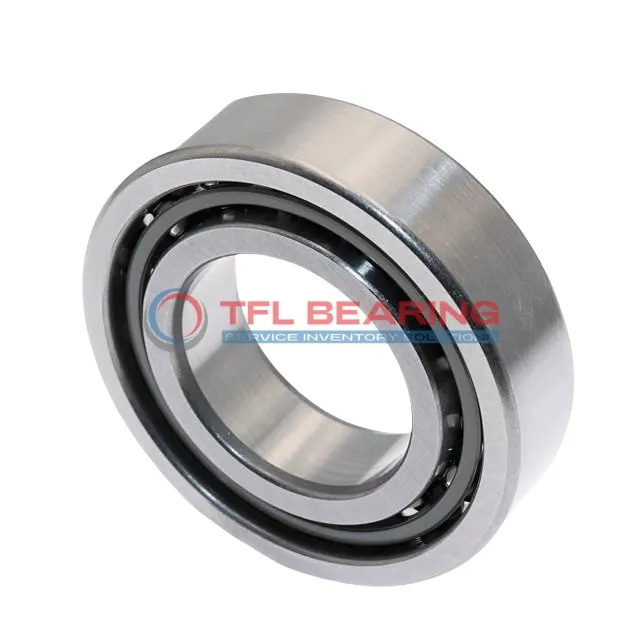
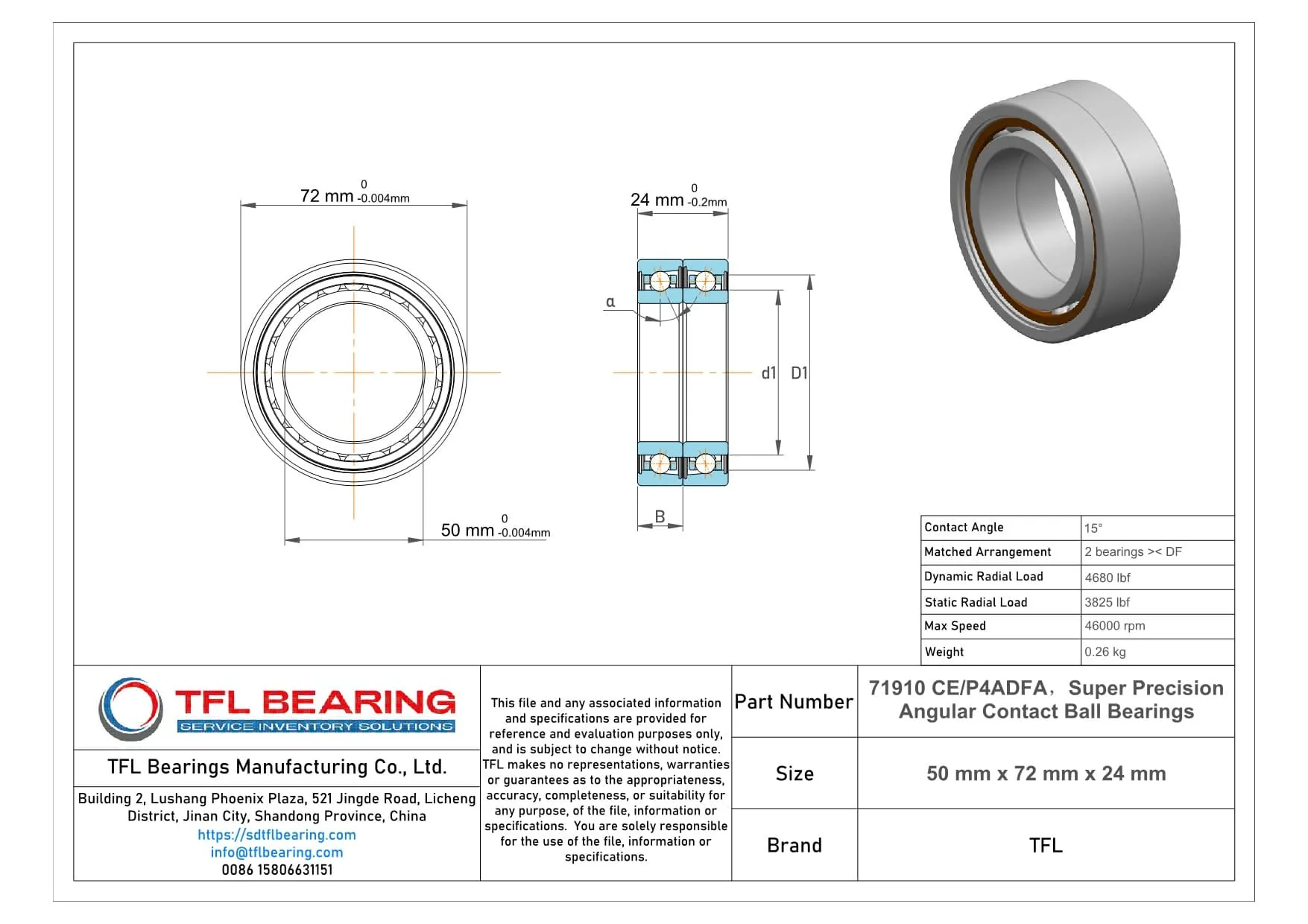
The 71910 CE/P4ADFA is a super precision angular contact ball bearing with a 50mm bore and 72mm outer diameter, crafted from high-quality chrome steel. It features a 15° contact angle and comes in a matched set of two bearings arranged face-to-face (DF).

This bearing handles radial loads up to 4680 lbf and can spin at impressive speeds up to 46,000 RPM. Its phenolic cage ensures smooth operation and durability under high-speed conditions.

The open design allows for easy lubrication, while the P4A tolerance class guarantees exceptional precision. It operates reliably in temperatures ranging from -30°C to 110°C.

Ideal for applications requiring high precision and speed, such as machine tool spindles or precision instruments. Weighing just 0.26kg, it offers a lightweight yet robust solution for demanding environments.

Interchangeable with SKF bearings, this model provides a dependable option for replacements or upgrades. Its extra light preload (Class A) ensures minimal friction and optimal performance.

Get A Free Quote

Product Parameters

  • Part Number 71910 CE/P4ADFA
  • Brand TFL
  • Interchangeable SKF
  • Bore Dia 50 mm
  • Bore Dia Tolerance -0.004mm to 0
  • Outer Dia 72 mm
  • Outer Dia Tolerance -0.004mm to 0
  • Width 24 mm
  • Width Tolerance -0.2mm to 0
  • Ball Dia 7.144 mm
  • Ball Qty 21
  • Contact Angle 15°
  • Tolerance Class P4A
  • System of Measurement Metric
  • Seal Type Open
  • Matched Arrangement 2 bearings >< DF
  • Number Of Bearings In Matched Set 2
  • Universal Matching Bearing No
  • Preload Extra light / Class A
  • For Load Direction Angular Contact
  • Ring Material Chrome Steel
  • Ball Material Chrome Steel
  • Cage Material Phenolic
  • Dynamic Radial Load 4680 lbf
  • Static Radial Load 3825 lbf
  • Lubrication Lubricated
  • Temperature Range - 30°C to 110 °C
  • Max Speed 46000 rpm
  • Weight 0.26 kg

Features

Performance Features of 71910 CE/P4ADFA Bearing

71910 CE/P4ADFA Bearing is designed with a 15° contact angle, optimising load distribution for angular contact applications.
The chrome steel rings and balls enhance durability, supporting dynamic radial loads up to 4680 lbf.

Its phenolic cage ensures smooth operation, reducing friction and noise during high-speed rotations.
With a maximum speed of 46,000 rpm, it delivers reliable performance in precision tasks.

The matched arrangement of two bearings provides stability, ideal for demanding setups.
Preloaded for extra light conditions, it maintains accuracy and reduces vibration.

71910 CE/P4ADFA Bearing operates efficiently in temperatures from -30°C to 110°C.
Its open design allows easy lubrication, ensuring long service life with minimal maintenance.

Application

Industrial Uses of 71910 CE/P4ADFA Bearing
71910 CE/P4ADFA Bearing is commonly used in high-speed machine tools, where its precision and angular contact design ensure accurate spindle performance. The matched arrangement of two bearings provides stability under radial and axial loads.

Where Is 71910 CE/P4ADFA Bearing Used?
You’ll often find 71910 CE/P4ADFA Bearing in automotive transmissions, where its extra light preload reduces friction and improves efficiency. The phenolic cage material helps maintain performance even at high temperatures.

Built for Heavy-Duty Use: 71910 CE/P4ADFA Bearing
71910 CE/P4ADFA Bearing excels in robotics, particularly in articulated arms requiring smooth, precise movement. Its chrome steel construction offers durability in continuous operation.

Medical vs Industrial: Where 71910 CE/P4ADFA Bearing Excels
In medical imaging devices, 71910 CE/P4ADFA Bearing’s low noise and high-speed capability ensure reliable operation. Industrial applications like CNC machines benefit from its P4A tolerance class for consistent accuracy.

Automotive vs Aerospace: Applications of 71910 CE/P4ADFA Bearing
71910 CE/P4ADFA Bearing is a go-to choice for automotive turbochargers due to its high-speed tolerance. In aerospace, it supports instrumentation systems where precision and reliability are critical.

Q&A

SEND INQUIRY