TS (Single Row Tapered Roller Bearings) (Imperial) 1987-1931

TS (Single Row Tapered Roller Bearings) (Imperial) 1987-1931

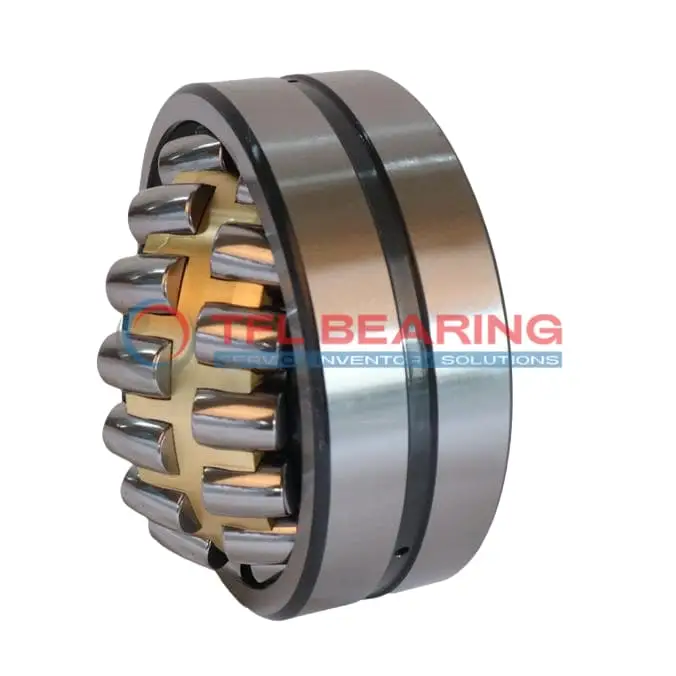
The 1987-1931 is a single-row tapered roller bearing with a 1.062″ bore and 2.375″ outer diameter, made from sturdy chrome steel. It handles combined loads up to 10900 lbf radially and 1590 lbf in thrust, suitable for moderate-speed applications.

Its open design allows easy lubrication, while the steel cage ensures durability. The bearing operates smoothly in temperatures from -30°C to 110°C, making it versatile for various conditions.

This model is interchangeable with Timken bearings, offering a reliable replacement option. Ideal for use in gearboxes, axles, or industrial equipment where combined loads are present.

Weighing just 0.6lb, it’s lightweight yet robust. Compliant with RoHS and REACH standards, it meets safety and environmental requirements.

Get A Free Quote

Product Parameters

  • Part Number 1987-1931
  • Brand TFL
  • Interchangeable Timken
  • Size 1.062" x 2.375" x 0.762"
  • Bore Dia 1.062"
  • Bore Dia Tolerance +0.005" to 0
  • Outer Dia 2.375"
  • Outer Dia Tolerance +0.001" to 0
  • Cone Width 0.762"
  • Cone Width Tolerance +0.003" to -0.01
  • Cup Width 0.625"
  • Cup Width Tolerance +0.002" to -0.01
  • Width 0.762"
  • Width Tolerance +0.008" to 0
  • Cone Backface ToClear Radius 0.03"
  • Cup Backface ToClear Radius 0.050"
  • Cone Frontface Backing Diameter 1.24"
  • Cone Backface Backing Diameter 1.28"
  • Cup Frontface Backing Diameter 2.20"
  • Cup Backface Backing Diameter 2.05"
  • Cage Cone Frontface Clearance 0.08"
  • Cage Cone Backface Clearance 0"
  • Effective Center Location -0.23"
  • System of Measurement Inch
  • Type Bearing
  • Cone Part Number 1987
  • Cup Part Number 1931
  • Bearing Type Roller
  • Roller Bearing Type Tapered
  • For Load Direction Combined
  • Construction Single Row
  • Seal Type Open
  • Cups Type Standard
  • Series 1900
  • Ring Material Chrome Steel
  • Roller Material Chrome Steel
  • Cage Material Steel
  • Dynamic Radial Load 10900 lbf
  • Static Radial Load 11300 lbf
  • Dynamic Radial Rating(90 Million Revolutions)(C90) 2820 lbf
  • Dynamic Thrust Rating(90 Million Revolutions)(Ca90) 1590 lbf
  • Lubrication Required
  • Temperature Range -30° to 110 °C
  • ABEC Rating ABEC-1
  • Radial Clearance Standard (Available in C3/C4/C5)
  • RoHS Compliant
  • REACH Compliant
  • Weight 0.600 lb

Features

Performance Features of 1987-1931 Bearing

1987-1931 Bearing is built with chrome steel rings and rollers, offering strong resistance to combined loads.
Its dynamic radial load capacity reaches 10,900 lbf, making it suitable for heavy-duty applications.
The steel cage ensures proper roller alignment, reducing friction and wear.
With a temperature range of -30° to 110°C, it performs reliably in various conditions.

How Does 1987-1931 Bearing Reduce Friction?

1987-1931 Bearing’s tapered roller design minimises friction, ensuring smooth operation under combined loads.
The chrome steel construction enhances durability while maintaining efficient performance.
Its standard radial clearance allows for optimal lubrication, further reducing friction.
This design makes it a reliable choice for industrial applications.

Engineered for Precision: 1987-1931 Bearing

1987-1931 Bearing features precise dimensions with tight tolerances for accurate performance.
The single row construction provides stability and consistent load distribution.
Its ABEC-1 rating ensures reliable operation in various mechanical systems.
The bearing’s design focuses on delivering consistent performance over time.

Steel vs Ceramic Bearings: Strengths of 1987-1931 Bearing

1987-1931 Bearing uses chrome steel for both rings and rollers, offering excellent strength.
This material choice provides good wear resistance and load capacity compared to ceramic options.
The steel cage maintains proper roller spacing for smooth operation.
With its robust construction, it handles demanding applications effectively.

Application

Industrial Uses of 1987-1931 Bearing
The 1987-1931 Bearing is commonly used in heavy machinery like construction equipment and agricultural gear, where its tapered roller design handles combined loads efficiently. Its chrome steel construction ensures durability even in demanding environments.

In automotive applications, 1987-1931 Bearing fits well in wheel hubs and differential systems, providing reliable performance under varying loads. The imperial sizing makes it a straightforward replacement for compatible US-made vehicles.

For industrial conveyor systems, 1987-1931 Bearing’s open design simplifies lubrication and maintenance, reducing downtime. Its standard radial clearance offers flexibility for different operational needs.

What Makes 1987-1931 Bearing a Preferred Choice?
The 1987-1931 Bearing’s steel cage and chrome steel rollers make it a robust option for high-load scenarios like mining equipment. Its ABEC-1 rating ensures consistent performance without overcomplicating precision requirements.

In automation setups, 1987-1931 Bearing supports rotating shafts in assembly lines, where its tapered rollers manage both radial and thrust loads smoothly. The temperature range suits most indoor industrial environments.

Built for Heavy-Duty Use: 1987-1931 Bearing
The 1987-1931 Bearing excels in applications like gearboxes and drivetrains, where its dynamic load capacity keeps operations running smoothly. Its interchangeable design with Timken bearings adds to its versatility.

For farm machinery, 1987-1931 Bearing’s resistance to wear and tear makes it a practical choice for tractors and harvesters. The standard lubrication requirement is easy to manage with routine maintenance.

Light-Duty vs Heavy-Duty: Best Uses for 1987-1931 Bearing
In lighter applications like small industrial motors, 1987-1931 Bearing provides reliable support without unnecessary bulk. Its compact design fits neatly into confined spaces.

For heavier tasks like logging equipment, 1987-1931 Bearing’s static load rating ensures stability under extreme pressures. The chrome steel components resist deformation over time.


Q&A

SEND INQUIRY