







Super Precision Angular Contact Ball Bearings 71926 ACD/P4ADBA

Super Precision Angular Contact Ball Bearings 71926 ACD/P4ADBA

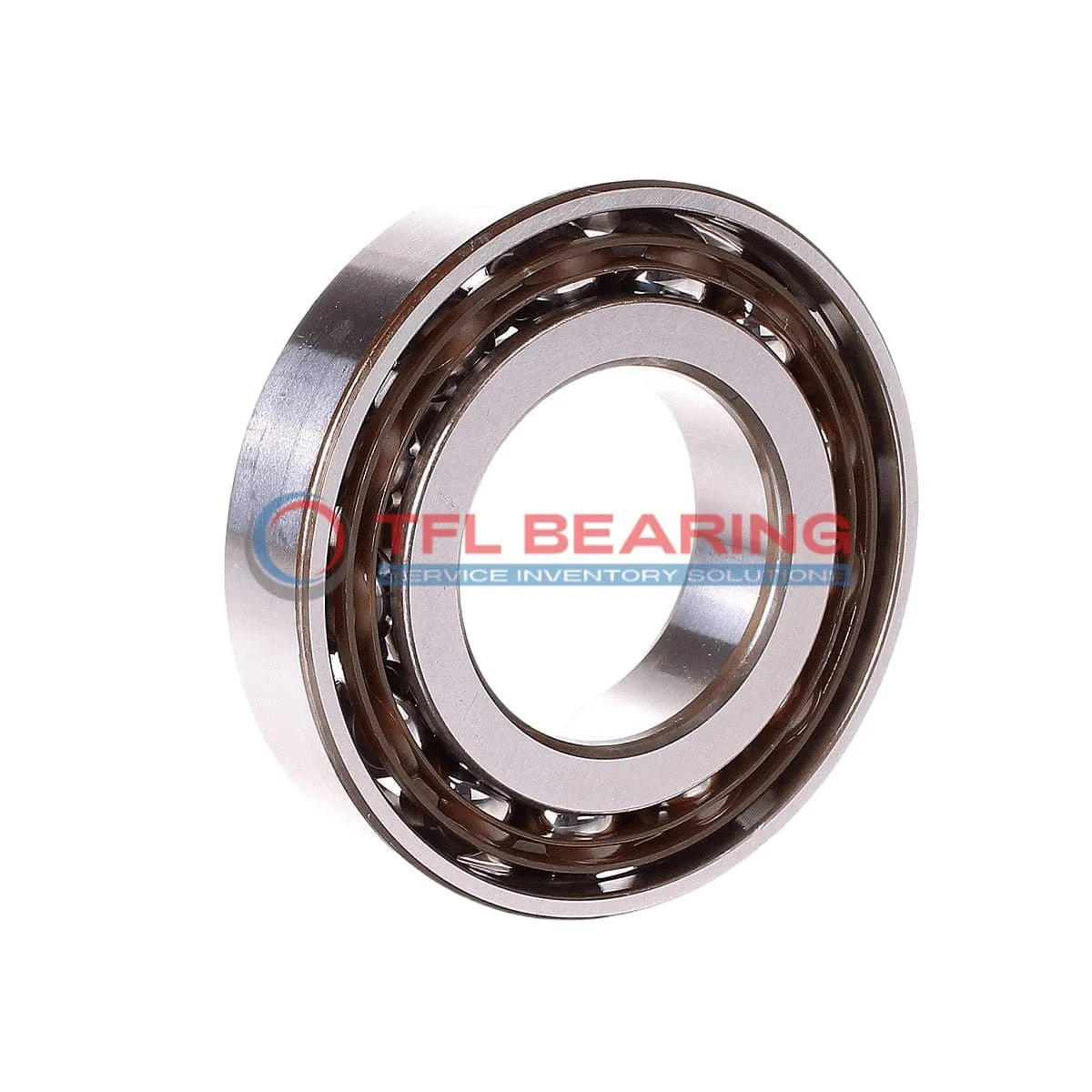
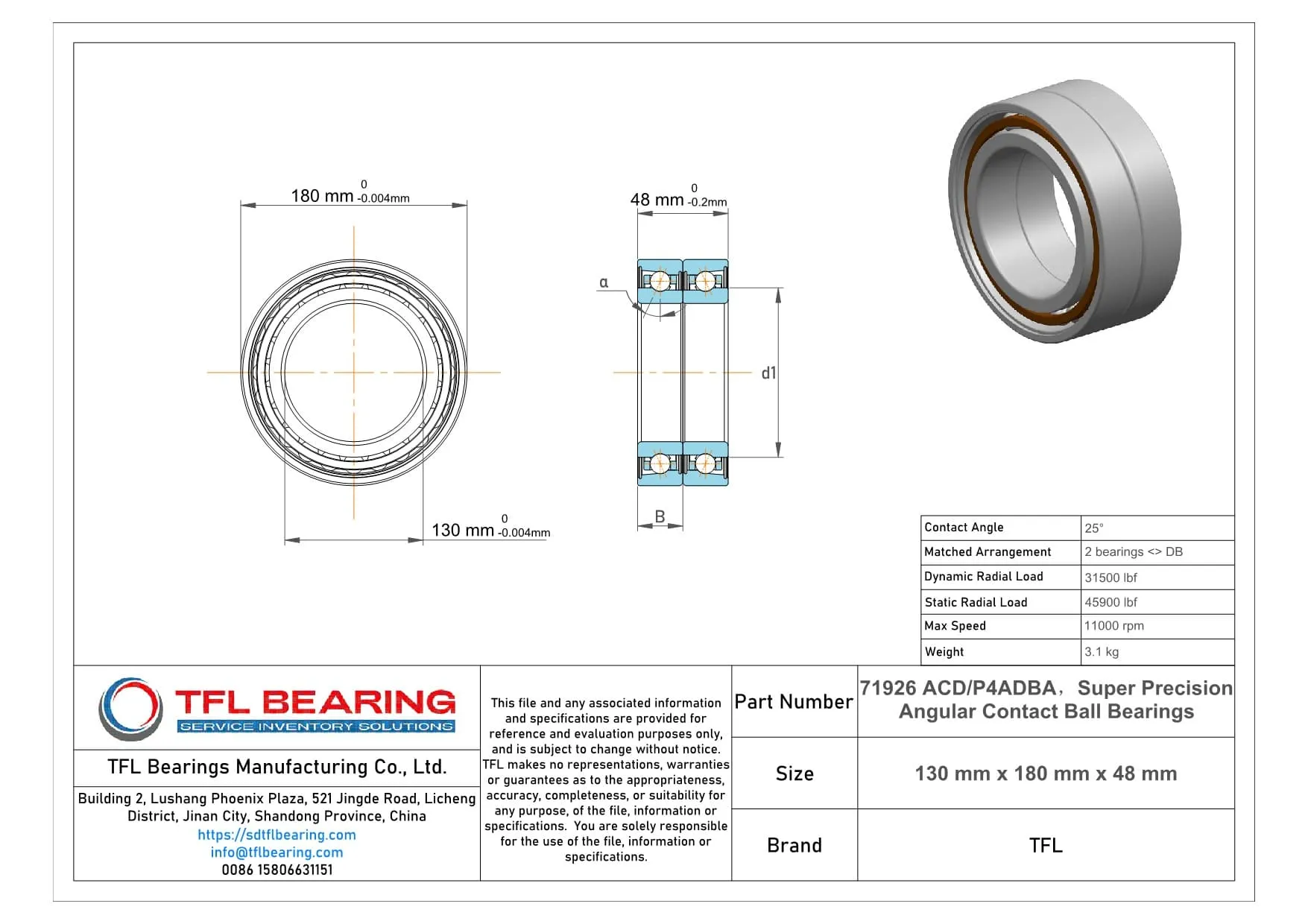
The 71926 ACD/P4ADBA is a super precision angular contact ball bearing with a 130mm bore and 180mm outer diameter, crafted from high-quality chrome steel. Its 25° contact angle and matched arrangement of two bearings ensure smooth handling of radial and axial loads.

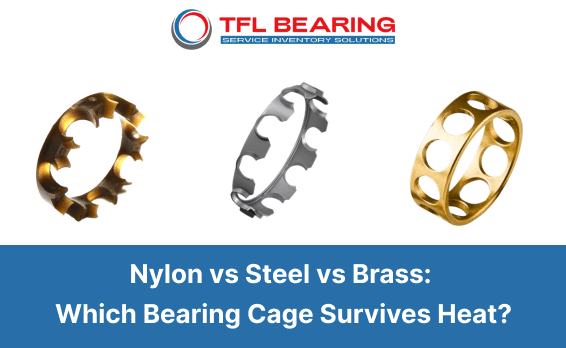
With a dynamic radial load capacity of 31500 lbf and a max speed of 11000 RPM, it performs reliably in demanding conditions. The phenolic cage enhances durability while keeping the bearing lightweight at just 3.1kg.

Its open design allows for easy lubrication, and it operates efficiently in temperatures from -30°C to 110°C. The P4A tolerance class ensures high precision for critical applications.

Ideal for use in machine tools or high-speed spindles where precision and reliability are essential. The matched set simplifies installation and improves performance in paired configurations.

Get A Free Quote

Product Parameters

  • Part Number 71926 ACD/P4ADBA
  • Brand TFL
  • Interchangeable SKF
  • Bore Dia 130 mm
  • Bore Dia Tolerance -0.004mm to 0
  • Outer Dia 180 mm
  • Outer Dia Tolerance -0.004mm to 0
  • Width 48 mm
  • Width Tolerance -0.2mm to 0
  • Ball Dia 15.875 mm
  • Ball Qty 27
  • Contact Angle 25°
  • Tolerance Class P4A
  • System of Measurement Metric
  • Seal Type Open
  • Matched Arrangement 2 bearings <> DB
  • Number Of Bearings In Matched Set 2
  • Universal Matching Bearing No
  • Preload Extra light / Class A
  • For Load Direction Angular Contact
  • Ring Material Chrome Steel
  • Ball Material Chrome Steel
  • Cage Material Phenolic
  • Dynamic Radial Load 31500 lbf
  • Static Radial Load 45900 lbf
  • Lubrication Lubricated
  • Temperature Range - 30°C to 110 °C
  • Max Speed 11000 rpm
  • Weight 3.1 kg

Features

Performance Features of 71926 ACD/P4ADBA Bearing

71926 ACD/P4ADBA Bearing is designed with a 25° contact angle, optimising load distribution for precision applications.
Its chrome steel rings and balls ensure durability and consistent performance under high radial loads.

The phenolic cage in 71926 ACD/P4ADBA Bearing reduces friction and wear, enhancing operational efficiency.
With a maximum speed of 11,000 rpm, it delivers reliable high-speed performance.

71926 ACD/P4ADBA Bearing operates in temperatures from -30°C to 110°C, suitable for various environments.
Its extra light preload ensures smooth rotation and minimises vibration.

The matched arrangement of two bearings provides stability and accuracy in demanding setups.
71926 ACD/P4ADBA Bearing’s P4A tolerance class guarantees exceptional precision for critical applications.

Application

Industrial Uses of 71926 ACD/P4ADBA Bearing
71926 ACD/P4ADBA Bearing is commonly used in high-precision machine tools, where its angular contact design ensures accurate alignment under radial and axial loads. The phenolic cage offers smooth operation at high speeds, making it suitable for spindle applications.

Where Is 71926 ACD/P4ADBA Bearing Used?
In aerospace systems, 71926 ACD/P4ADBA Bearing supports critical components like turbine shafts, thanks to its extra-light preload and P4A tolerance class. The matched arrangement enhances stability in demanding flight conditions.

Built for Heavy-Duty Use: 71926 ACD/P4ADBA Bearing
For robotics and automation, 71926 ACD/P4ADBA Bearing provides reliable performance in robotic arms and CNC machines. Its chrome steel construction ensures durability even in continuous operation.

Automotive vs Aerospace: Applications of 71926 ACD/P4ADBA Bearing
In automotive applications, 71926 ACD/P4ADBA Bearing is found in high-performance gearboxes, where its precision handling of angular loads improves shifting smoothness. Meanwhile, aerospace benefits from its ability to withstand extreme conditions.

Key Fields for 71926 ACD/P4ADBA Bearing
Medical imaging devices often use 71926 ACD/P4ADBA Bearing for its quiet and precise rotation, essential for accurate diagnostics. The open design allows for easy lubrication, extending service life in clinical environments.

Q&A

SEND INQUIRY