







Female Rod End Bearing: Sizes and Threads
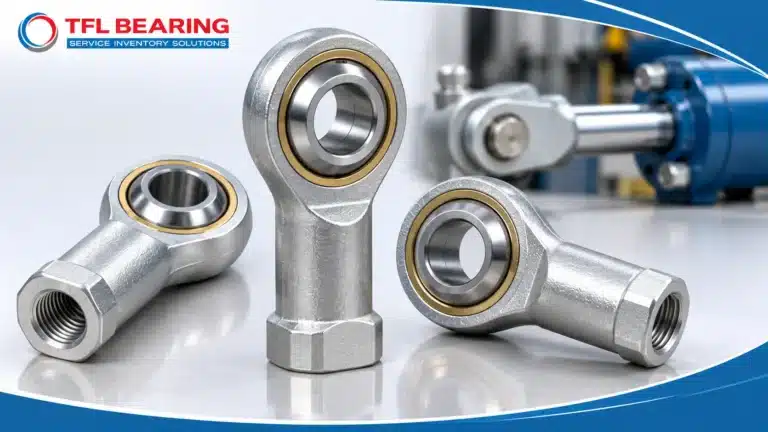
A female rod end bearing is a rod end with an internal thread in its shank, so it screws onto a threaded rod or…
Read articleCompare leading global bearing brands and explore compatible TFL alternatives by model, product type and application.
View all Brands GuideMatch manufacturer part numbers with interchangeable TFL bearing options and model-selection support.
Browse bearing solutions by equipment, operating environment and industry.
Practical guidance on bearing selection, applications, maintenance and sourcing.
A female rod end bearing is a rod end with an internal thread in its shank, so it screws onto a threaded rod or…
Read article
Find answers about quality, orders, technical support and after-sales service.
Use our articles, reference tools and customer resources to support sourcing decisions.
Learn about TFL Bearing, our quality systems and supply capabilities.
View all About & CapabilitiesAccess engineering support and services throughout the purchasing process.
View all Services & SupportExplore customer projects, sourcing partnerships and ways to contact our team.
View all Work With TFL
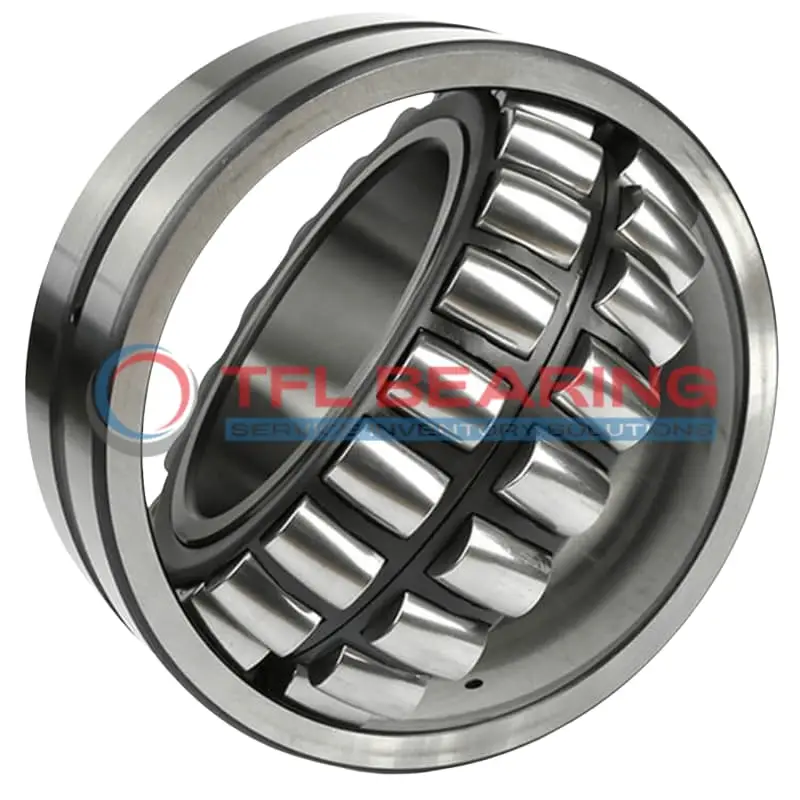
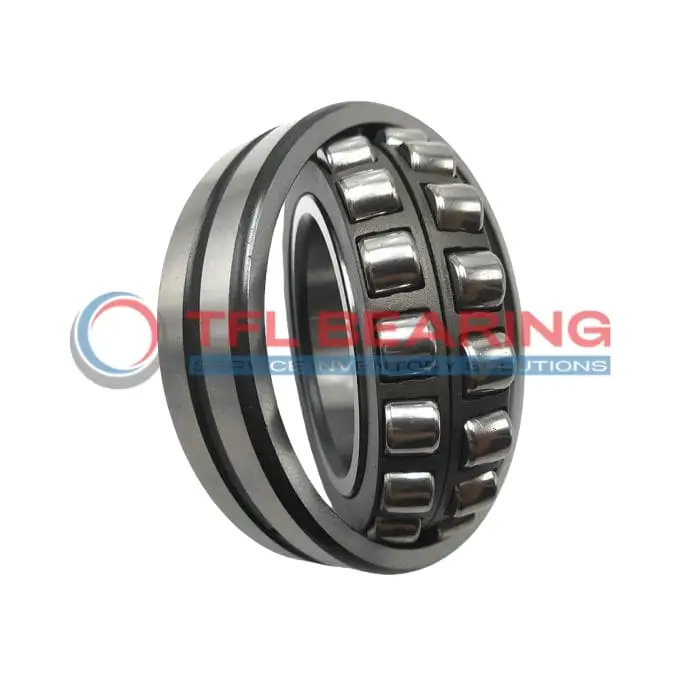
The 23172 CC/W33 is a double-row spherical roller bearing with a large 360mm bore and 600mm outer diameter, built from tough chrome steel for durability. It handles combined loads up to 1015012 lbf and operates smoothly at speeds up to 1000 RPM.
Its spherical roller design allows for slight misalignment, while the steel cage ensures reliable performance under heavy loads. The open construction requires regular lubrication, with grooves and holes for easy maintenance.
This bearing suits high-load applications like industrial gearboxes or heavy machinery, where alignment flexibility is needed. It works in temperatures from -30°C to 200°C, making it versatile for various environments.
Weighing 230kg, it’s a robust choice for demanding settings. Compliant with RoHS and REACH standards, it’s interchangeable with SKF models for easy replacement. Ideal for mining or construction equipment.
How Is 23172 CC/W33 Bearing Engineered for Reliability?
23172 CC/W33 Bearing features a double-row spherical roller design, ideal for handling combined loads with ease.
Its chrome steel construction ensures durability, even under high dynamic radial loads of up to 1,015,012 lbf.
The steel cage maintains roller alignment, reducing friction and extending operational life.
With a maximum speed of 1,000 rpm, it delivers consistent performance in demanding conditions.
23172 CC/W33 Bearing operates efficiently in temperatures ranging from -30° to 200°C.
Its lubrication groove and hole design ensure proper lubrication, minimising maintenance needs.
Industrial Uses of 23172 CC/W33 Bearing
The 23172 CC/W33 Bearing is commonly used in heavy machinery like crushers and vibrating screens, where its double-row design handles combined loads effectively.
Its spherical roller construction allows for slight misalignment, making it suitable for rugged industrial environments.
Where Is 23172 CC/W33 Bearing Used?
You’ll often find the 23172 CC/W33 Bearing in mining equipment, where its high dynamic radial load capacity ensures reliable performance.
The open seal design simplifies lubrication, which is essential for maintaining efficiency in dusty conditions.
Built for Heavy-Duty Use: 23172 CC/W33 Bearing
The 23172 CC/W33 Bearing excels in paper mill machinery, thanks to its chrome steel rollers and sturdy steel cage.
Its wide temperature range (-30° to 200°C) makes it adaptable to both hot and cold processing environments.
Automotive vs Aerospace: Applications of 23172 CC/W33 Bearing
In automotive applications, the 23172 CC/W33 Bearing supports large drivetrain components, offering durability under high stress.
For aerospace, its precision and load capacity make it useful in ground support equipment, though it’s less common in flight systems.
Practical Applications of 23172 CC/W33 Bearing
The 23172 CC/W33 Bearing is a go-to for wind turbine gearboxes, where its spherical rollers accommodate shaft deflection.
Its metric sizing ensures compatibility with European-designed industrial systems, simplifying replacements.