Industrial Uses of 22252 CACK C3 W33 Bearing
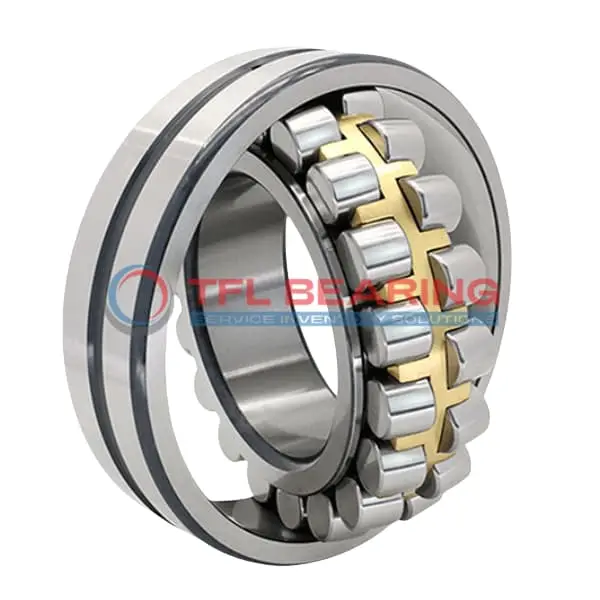
22252 CACK C3 W33 Bearing is commonly used in heavy machinery like crushers and vibrating screens, where its double-row design handles both radial and axial loads efficiently. The brass cage ensures smooth operation even under high stress.
In wind turbines, 22252 CACK C3 W33 Bearing supports the main shaft, thanks to its high load capacity and ability to withstand misalignment. The tapered bore design simplifies installation and maintenance in these critical applications.
For mining equipment, 22252 CACK C3 W33 Bearing’s robust construction and C3 clearance make it ideal for environments with heavy dust and vibration. The lubrication groove design also extends service life in harsh conditions.
What Makes 22252 CACK C3 W33 Bearing a Preferred Choice?
22252 CACK C3 W33 Bearing is a go-to solution for paper mills, where its spherical rollers compensate for shaft misalignment during high-speed operations. The chrome steel rollers provide durability against constant friction.
In steel production lines, 22252 CACK C3 W33 Bearing’s high static radial load capacity ensures stability in rolling mills. The open seal design allows for easy re-lubrication, reducing downtime in continuous operations.
For marine applications, 22252 CACK C3 W33 Bearing’s temperature range and corrosion-resistant materials make it reliable in propulsion systems. Its metric sizing ensures compatibility with international machinery standards.
Built for Heavy-Duty Use: 22252 CACK C3 W33 Bearing
22252 CACK C3 W33 Bearing excels in construction equipment like cranes, where its combined load handling supports boom movements. The large lubrication holes ensure consistent performance under prolonged use.
In power generation, 22252 CACK C3 W33 Bearing’s ability to handle dynamic radial loads makes it suitable for turbine generators. The brass cage reduces friction, enhancing efficiency in high-speed rotations.
For railway applications, 22252 CACK C3 W33 Bearing’s shock absorption is critical in axle boxes. The tapered bore ensures a secure fit, even under constant vibration and heavy loads.
Automotive vs Aerospace: Applications of 22252 CACK C3 W33 Bearing
In automotive testing rigs, 22252 CACK C3 W33 Bearing’s precision supports dynamic load simulations. Its high-speed capability ensures accurate performance measurements.
For aerospace ground equipment, 22252 CACK C3 W33 Bearing’s temperature resistance is vital in hydraulic systems. The spherical rollers accommodate alignment shifts during heavy lifting operations.
In both sectors, 22252 CACK C3 W33 Bearing’s reliability and ease of maintenance make it a versatile choice. The metric dimensions simplify integration with global equipment standards.











/M12649-Single-Cones-(Imperial)-Dimensions.webp)
%20(Imperial)/TS-(Single-Row-Tapered-Roller-Bearings)-(Imperial)-HM88649H-HM88610-Dimensions.webp)
%20(Imperial)/TS-(Single-Row-Tapered-Roller-Bearings)-(Imperial)-23100-23250X-Dimensions.webp)
%20(Imperial)/TS-(Single-Row-Tapered-Roller-Bearings)-(Imperial)-49576-49521-Dimensions.webp)
%20(Imperial)/TS-(Single-Row-Tapered-Roller-Bearings)-(Imperial)-67384-67322-Dimensions.webp)