








Single Row Full Complement Cylindrical Roller Bearings
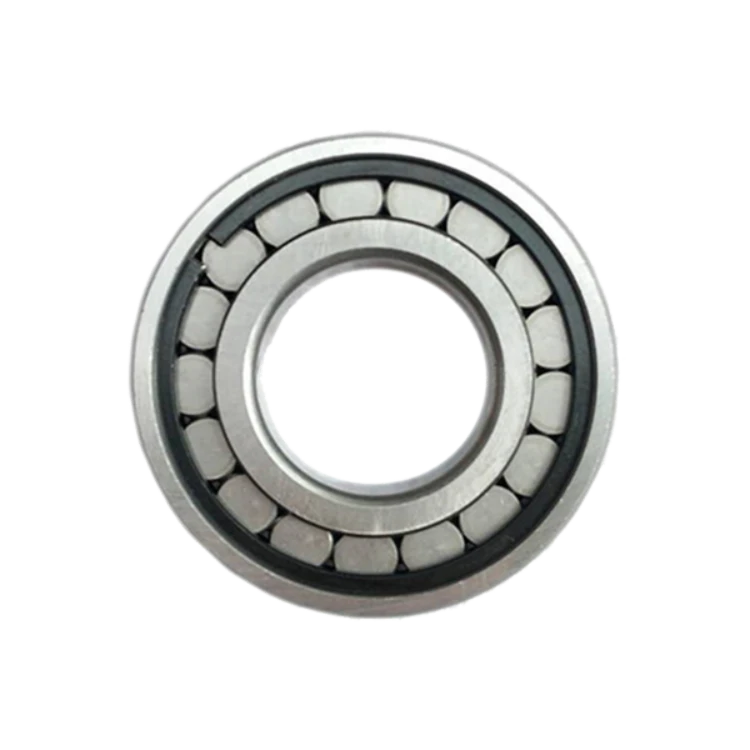
Single row full complement cylindrical roller bearings use one row of rollers without a cage to provide high radial load capacity within compact bearing dimensions. TFL supplies replacement options across NCF and NJG designs, including NCF 18, 28, 29 and 30 series models, with metric bores from 20 to 1120 mm. These bearings differ in rib arrangement, axial locating function and mounting design. Buyers can compare part numbers, bore, outside diameter, width, radial load ratings and speed in the product list. Common applications include industrial gearboxes, heavy-duty drives and other machinery carrying substantial radial loads. TFL supports bearing distributors, importers and industrial resellers with mixed-model quotations, replacement specification checks, custom requirements, OEM or neutral packaging, inspection requirements and consolidated shipment. Price, MOQ and lead time are confirmed with the quotation.
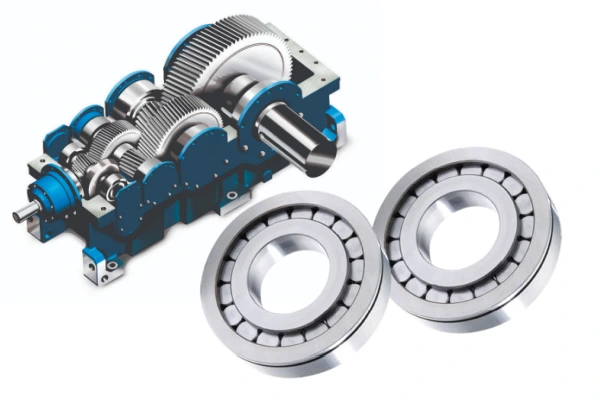
Unmatched Radial Load Capacity for Demanding Applications
Understanding the Design and Applications
Quality and Durability: The TFL Difference in Cylindrical Roller Bearings
Single Row Full Complement Cylindrical Roller Bearing
Single row full complement cylindrical roller bearings contain more rollers than comparable caged designs because they have no cage separating the rolling elements. This provides high radial load capacity and stiffness within the available bearing dimensions, making them suitable for heavily loaded machinery where operating speed is less demanding. TFL supplies NCF and NJG replacement options across standard and large-bore sizes, with support for mixed-model distributor orders.
Structural Features and Advantages of Full Complement Bearings
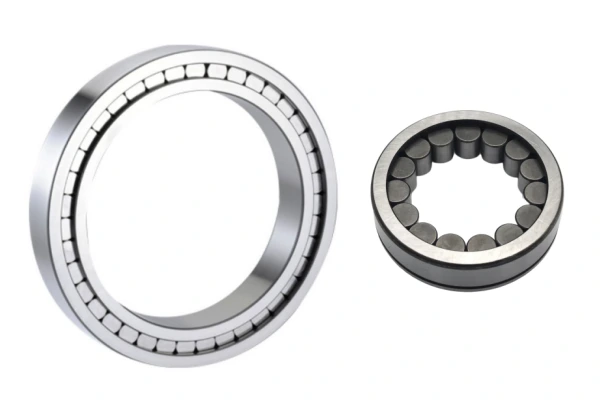
The main advantage of a full complement bearing is its high roller count. Without cage bars occupying space between the rollers, more rolling elements can fit between the inner and outer rings. This increases the available load-carrying contact within a given bearing envelope.
Compared with a conventional caged cylindrical roller bearing of similar dimensions, a full complement design can offer higher radial load ratings and greater radial stiffness. These characteristics are useful when the bearing position carries substantial radial loads but the shaft and housing dimensions cannot easily be increased.
| Structural Feature | Practical Advantage | Where It Matters |
|---|---|---|
| Maximum roller count without a cage | Provides high radial load capacity within the available bearing dimensions. | Heavily loaded gearbox shafts and industrial drive assemblies. |
| High radial stiffness | Helps limit radial deflection under substantial loads. | Gearbox and machinery bearing positions where shaft support stiffness is important. |
| Integral ring ribs | Provide axial location in one direction while permitting limited displacement in the opposite direction. | Bearing arrangements requiring a defined axial locating function. |
| Self-retaining roller complement in NJG designs | Allows the inner ring to be separated without the rollers falling out of the outer-ring assembly. | Mounting and replacement of heavily loaded NJG bearings. |
The higher roller count also introduces a trade-off. Without a cage, adjacent rollers make contact during operation, increasing sliding friction and heat generation. Full complement bearings therefore generally have lower speed capability than comparable caged designs. Their main strength is heavy radial loading rather than maximum rotational speed.
NCF vs NJG: Different Rib Arrangements and Mounting Advantages
NCF and NJG bearings share the same cage-free principle but differ in the arrangement of their integral ribs and how the bearing components are retained. These differences affect axial loading and mounting, making the original design important when selecting a replacement.
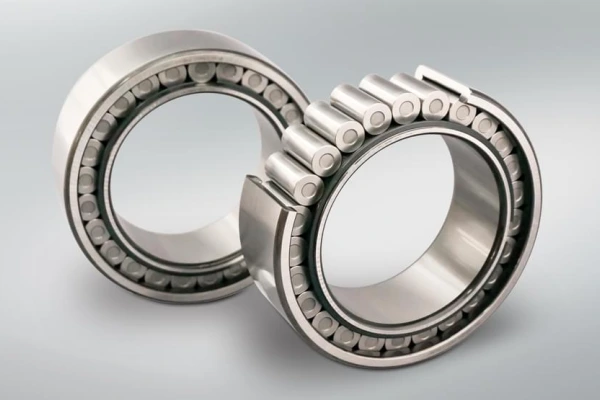
NCF design: NCF bearings have two integral ribs on the inner ring and one on the outer ring. A retaining ring on the opposite side of the outer ring holds the bearing together. This design supports axial loads in one direction and accommodates limited axial displacement in the opposite direction. It is used in bearing positions requiring high radial capacity together with one-direction axial location.
NJG design: NJG bearings have two integral ribs on the outer ring and one on the inner ring. Their self-retaining roller complement allows the outer ring and rollers to be separated from the inner ring without losing the rollers. This simplifies mounting and dismounting. NJG 23-series bearings are particularly suited to very heavily loaded, lower-speed applications.
The NCF Retaining Ring Is Not a Load-Carrying Rib
The retaining ring on the NCF outer ring holds the bearing assembly together. It is not designed to carry operating axial loads. The direction of axial loading must correspond to the integral rib arrangement. NCF and NJG designs should therefore be matched by their axial function, not only by bore, outside diameter and width.
Where Are Single Row Full Complement Cylindrical Roller Bearings Used?
These bearings are mainly used in machinery where radial loads are high, mounting space is limited and the operating speed is compatible with a full complement design. Their suitability depends on the specific bearing position rather than the equipment category alone.
Industrial gearboxes and speed reducers: Gearbox shafts can transmit substantial radial forces from gear meshing. Full complement bearings are useful in heavily loaded positions where radial load capacity and stiffness are more important than high-speed operation. The required axial locating function determines whether an NCF, NJG or another bearing arrangement is appropriate.
Heavy-duty drives and industrial machinery: Large drive assemblies and processing equipment may require bearings capable of carrying high radial loads within established shaft and housing dimensions. Full complement designs provide an option when additional radial capacity is required without substantially changing the bearing envelope. Operating speed, shock loading and lubrication still influence the final selection.
Replacement of existing heavy-load bearing positions: In industrial maintenance, the original housing and shaft dimensions are often fixed. Replacing an NCF or NJG bearing with the correct full complement execution allows the existing mounting arrangement to be retained. The complete designation remains important because different rib and roller-retention designs may share similar boundary dimensions.
When to Choose a Full Complement Bearing Instead of a Caged Design
A full complement cylindrical roller bearing is particularly relevant when the application prioritizes radial load capacity and stiffness within limited mounting space. A conventional caged cylindrical roller bearing is often more suitable when rotational speed, lower friction or heat generation is the main concern.
The choice should be based on the required load, speed and bearing position. A higher radial load rating does not automatically make a full complement bearing the better option for every application. Other single-row and high-capacity caged configurations are available in our cylindrical roller bearing range.
Available NCF and NJG Series
TFL supplies NCF 18, 28, 29 and 30 series models, selected NCF 22 references and NJG configurations. The current product range covers bore sizes from 20 to 1120 mm, outside diameters from 42 to 1360 mm and widths from 16 to 185 mm.
The range includes compact CV designs, larger V configurations and special executions such as /HB1. These differences are relevant to distributors handling replacement lists that contain several bearing sizes or original brand references.
| Listed Model | Bore × OD × Width | Key Product Feature |
|---|---|---|
| NCF 3004 CV | 20 × 42 × 16 mm | Compact full complement NCF design with modified internal construction. |
| NJG 2305 VH | 25 × 62 × 24 mm | Heavy 23-series design with a self-retaining roller complement. |
| NCF 2928 CV | 140 × 190 × 30 mm | Narrow-section NCF configuration for substantial radial loading. |
| NCF 18/560 V/HB1 | 560 × 680 × 56 mm | Large-bore NCF design with a specified heat-treatment execution. |
| NCF 18/600 V | 600 × 730 × 60 mm | Large-bore full complement bearing requiring appropriate mounting and lubrication. |
How to Identify the Correct NCF or NJG Replacement
For an existing bearing, the complete part number is the most useful starting point. Models with similar dimensions can have different rib arrangements, axial displacement capabilities or internal executions. When the original marking is incomplete, bore diameter (d), outside diameter (D), width (B) and a drawing or sample can help identify the required design.
Load ratings, permissible speed, radial clearance and lubrication requirements are also relevant when comparing a new configuration. Dynamic and static radial load ratings should be evaluated against the operating requirements rather than treated as universal maximum load limits.
Model Code Example: NCF 3004 CV
The NCF 3004 CV bearing is a compact example of the full complement design. NCF identifies the bearing construction, 30 identifies the dimensional series and 04 corresponds to a 20 mm nominal bore. In this SKF-style reference, CV identifies a modified full complement internal design. The listed dimensions are 20 × 42 × 16 mm.
The suffix is part of the bearing specification. CV does not indicate a clearance or precision grade, and different internal executions should not be treated as identical from their base numbers alone.
V, CV, VH and Special Suffixes
In SKF-style designations, V identifies a full complement roller set without a cage, CV identifies a modified full complement internal design, and VH identifies a self-retaining full complement roller set. The VH execution is associated with the NJG mounting arrangement described above.
Special suffixes may also identify material or heat-treatment requirements. For example, /HB1 denotes bainite-hardened inner and outer rings in the referenced designation system. These details are retained when comparing a TFL alternative.
Not every bearing carrying an NCF prefix has the same construction. Caged NCF ECJB designs differ from the cage-free V and CV executions, so the complete part number is important for replacement matching.
Lubrication and Operating Speed Considerations
The full complement arrangement places adjacent rollers in direct contact. This can increase friction and heat, particularly as operating speed rises. Reliable operation therefore depends on selecting suitable lubrication and maintaining an appropriate lubricant supply.
These bearings are supplied in open configurations. Grease or oil lubrication, contamination protection and heat removal depend on the surrounding assembly. For heavily loaded or continuously operating equipment, lubricant viscosity at operating temperature and lubrication at the roller-end and rib contacts are relevant selection factors.
Permissible speed varies by model and should be confirmed against the actual duty. A full complement bearing should not be selected solely because its radial load rating is higher than that of a comparable caged design.
SKF, INA/FAG and Other Replacement References
TFL supplies alternative bearings for SKF-style NCF and NJG references and can also support enquiries based on INA/FAG SL-series or other original brand designations. The proposed TFL model is matched against the relevant dimensions, internal design, axial function, clearance and special execution requirements.
Cross-brand references do not always use the same suffix system. Where the original number does not clearly identify the required construction, drawings or product specifications help establish the correct replacement. Important differences are confirmed before the order is finalized.
Why Distributors Source Full Complement Bearings from TFL
TFL supplies single row full complement cylindrical roller bearings for distributors, importers and industrial resellers that require different series, bore sizes and replacement specifications. The range covers compact NCF models, larger industrial references and NJG designs, allowing several bearing requirements to be handled through one supplier.
Mixed-model and multi-category orders: Distributors can combine NCF and NJG bearings with other cylindrical roller bearings, ball bearings or related products in one RFQ. This is useful for customers purchasing several replacement sizes or managing a broad industrial bearing catalogue.
Alternative models and specification matching: Original SKF, INA/FAG or other brand numbers can be used to identify suitable TFL alternatives. Dimensions, rib arrangement, internal design, special suffixes and important specification differences are confirmed for the proposed product. Drawings and custom requirements can also be supported where relevant.
Competitive quotations and flexible order requirements: TFL provides quotations based on the requested models and quantities, with price, MOQ and lead time confirmed by line item. Mixed-model orders, distributor quantities and repeat purchasing requirements can be discussed within the same enquiry.
Packaging, inspection and delivery: OEM, private-label and neutral packaging are supported according to the confirmed order requirements. Model numbers, quantities, visible condition and agreed packing requirements are checked before shipment. Different models can be coordinated for consolidated delivery, with inspection or specification documents addressed where required.
What to Send for a Quotation
A complete bearing number and quantity are usually enough to start an enquiry. You do not need to provide every technical detail at once. For large-bore bearings, special executions or cross-brand replacements, additional drawings, dimensions, operating conditions or packaging requirements help confirm the proposed model more quickly.
Representative Models for Distributor Enquiries
NCF 3004 CV represents a compact full complement bearing, while NCF 18/560 V/HB1 and NCF 18/600 V cover larger-bore replacement requirements. NJG 2305 VH illustrates a different rib arrangement with a self-retaining roller complement. These references show the range of available designs rather than a sales or stock ranking.
Send Your NCF and NJG Bearing List
Send your bearing numbers and quantities for a mixed-model quote. TFL can provide suitable replacement options and confirm specifications, price, MOQ, lead time and packaging requirements. Drawings or additional operating details are helpful when needed.
SKF, INA/FAG and other referenced brand names and part numbers are used only to identify replacement requirements. TFL supplies alternative bearing options and does not imply original-brand manufacture or authorized distribution. Final interchangeability is confirmed against the relevant dimensions, internal design and operating specifications.
FREQUENTLY ASKED QUESTIONS
