






High-Quality Ball Bearings
Why TFL for Ball Bearings?
-
Top
Product Category
Application
FAQ
Our Process
Top Selling Products
Support
Ball Bearings Category
21779 Products. Interchangeable with: SKF, FAG, EZO etc.
The Fundamental Role of Ball Bearings
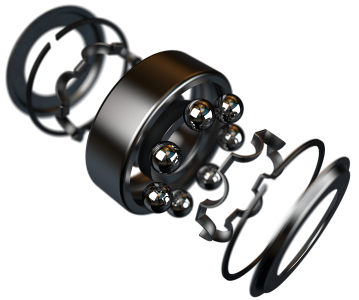
The Essential Components: Inside a Ball Bearing
A standard ball bearing relies on the precise interaction of inner and outer races, rolling elements (balls), and a cage to convert sliding friction into smooth rotational motion. The operational lifespan of these assemblies is fundamentally tied to material quality.
Depending on your specific application, TFL Bearing supplies durable chrome steel balls for heavy-duty industrial loads, stainless steel balls for highly corrosive environments, and advanced ceramic coating for electrical insulation. To guarantee long-term reliability, every component within our supply network is rigorously inspected to meet strict international standards, ensuring you receive consistent, premium-grade performance.
Ball Bearings in Action: Automotive and Industrial Uses
INTERCHANGEABLE BRANDS
TFL Bearings: High quality bearings, an ideal choice to replace SKF and FAG.
One-Stop Supply Chain Integration
Simplify your vendor management. As an integrated supplier, we consolidate diverse bearing requirements into a single, efficient channel. We manage inventory, quality control, and global logistics to save you time.
View Cross-Reference Guide
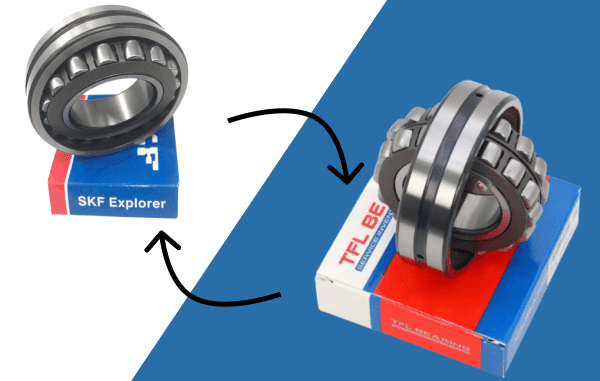
100% Interchangeable Brand Equivalents
Why pay a premium for a brand name? We provide precision-engineered, cost-effective equivalents for major global brands. Get the exact same dimensions, load capacities, and lifespan without compromising performance.
Explore Our Catalog
Certified Quality & Compliance
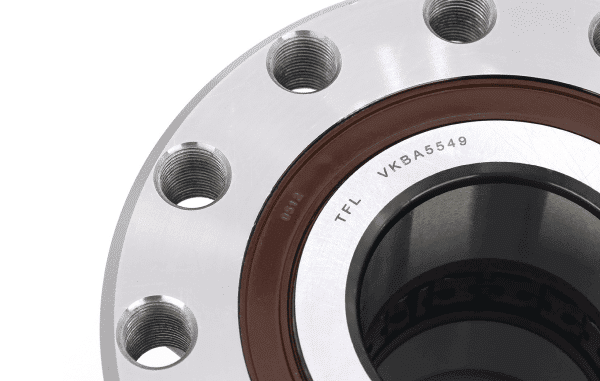
Trust is built on verified quality. Our manufacturing processes are strictly ISO 9001 certified, ensuring consistent, defect-free production. All our products are fully RoHS and REACH compliant.
Contact for Compliance DetailsFREQUENTLY ASKED QUESTIONS
What are the main types of bearings offered by TFL?
How do I determine the correct bearing size for my application?
What's the difference between a ball bearing and a thrust bearing?
What’s the difference between steel ball bearings and ceramic bearings?
When should I specify a stainless steel deep groove ball bearing?
A stainless steel deep groove ball bearing (typically forged from 440C or 304-grade steel) is essential when your machinery operates in high-humidity, highly corrosive, or hygienic food-grade environments. While they have a slightly lower dynamic load rating compared to standard chrome steel, their exceptional resistance to rust prevents premature catastrophic failure in these harsh washdown conditions.
OUR PROCESS
Initial Contact
Specialists Review
Needs
Our Engineers Help YouChoose The RightBearings
Option To Visit OurManufacturing Plant
Your entire order is
delivered.
We provide ongoingproduct support
MORE ABOUT BALL BEARING
What is a Ball Bearing & How It Optimizes Operations
A ball bearing is a highly precise mechanical component that utilizes spherical rolling elements to separate bearing rings and reduce rotational friction. By minimizing mechanical wear, it enables high-speed operations, handles radial loads efficiently, and significantly reduces equipment downtime in demanding industrial applications.
At the core of virtually every rotating machine, ball bearings serve as the critical interface that ensures smooth power transmission. The basic architecture consists of an inner ring, an outer ring, a set of precision balls (typically steel or ceramic), and a cage (retainer) that spaces the balls evenly. This structural design drastically lowers the coefficient of friction compared to plain bearings, converting sliding friction into rolling motion.
In real-world engineering environments—ranging from high-speed electric motors to heavy-duty HVAC systems and fluid pumps—the primary function of a ball bearing is to optimize operational efficiency. By maintaining precise shaft alignment and managing dynamic loads, premium ball bearings prevent excessive heat generation and mechanical vibration. This structural integrity not only ensures stable performance under continuous operation but also extends the overall lifecycle of your machinery, thereby lowering long-term maintenance costs and preventing catastrophic unexpected failures.
Classifications of Ball Bearings
While the standard design is highly versatile, ball bearings are engineered into several distinct classifications to address specific mechanical and directional forces in industrial applications:- Deep Groove Ball Bearings: The most ubiquitous type, designed primarily for high-speed radial loads with moderate axial load capacity. They are the go-to solution for electric motors, gearboxes, and everyday mechanical assemblies.
- Angular Contact Ball Bearings: Engineered with asymmetric raceways to handle combined loads (simultaneous radial and high axial loads). They are crucial in applications like CNC machine tool spindles where precision and thrust management are non-negotiable.
- Self-Aligning Ball Bearings: Featuring two rows of balls and a common sphered raceway in the outer ring, these are designed to accommodate shaft deflection or mounting misalignment without increasing friction.
Configuration Options & Cost Implications
Selecting the right ball bearing goes beyond basic dimensions. Even within the same size category, engineers must specify the correct material, seals, and internal clearances to balance operational longevity with procurement budgets. For instance, understanding bearing seal types is critical to preventing premature failure in contaminated environments.| Configuration Metric | Common Options | Application Scenario & Value | Cost Implication |
|---|---|---|---|
| Material | Chrome Steel (52100) vs. Stainless Steel (440C/304) vs. Ceramic (Si3N4) | Chrome steel handles high loads efficiently. Stainless prevents rust in humid/food-grade washdowns. Ceramic prevents electrical arcing in EV motors. | Chrome: Baseline ($) Stainless: Premium ($$) Ceramic: Highest ($$$) |
| Seals/Shields | Open vs. ZZ (Metal Shields) vs. 2RS (Rubber Seals) | Open for oil bath lubrication; ZZ keeps out large debris; 2RS provides LUB-grade water and fine dust protection. | Open: Baseline ($) ZZ: Moderate (+) 2RS: Higher (++) |
| Internal Clearance | CN (Standard) vs. C3 / C4 (Greater Clearance) | C3/C4 accommodates thermal expansion in high-temperature environments (e.g., industrial fans, exhaust blowers) preventing raceway binding. | Negligible price difference, but critical for lifecycle. |
TFL Bearing provides professional configuration recommendations based on your budget and operating environment, but the final choice remains with the customer based on their specific application needs.
Expert Insight from Jessica Jia
“When balancing your procurement budget, avoid the trap of over-specifying. For example, deploying high-cost 440C stainless steel bearings in a dry, indoor conveyor system is an unnecessary expense. Chrome steel with proper ZZ shields will deliver the exact same speed and load performance at a fraction of the cost. Precision in specification equals maximum ROI.”
Need a Custom Quote or Technical Validation?
Send us your blueprints, old nomenclature codes, or a bulk RFQ list. Our engineering team will return a tiered pricing proposal tailored to your application’s exact needs. Request a Quote TodayHow to Read Ball Bearing Nomenclature
Many legacy equipment blueprints still utilize outdated national standard codes, which differ significantly from current international designations. For example, under the old system, a code like “180205” required referencing a manual to identify it as a deep groove ball bearing with rubber seals and a 25mm bore. Today, the modern designation “6205-2RS” is instantly readable:- “6” = Deep groove ball bearing type
- “2” = Dimension series
- “05” = Bore code (05 × 5 = 25mm bore diameter)
- “2RS” = Double-sided rubber seals
TFL Bearing: Your Centralized Procurement Partner
Managing a complex supply chain requires a partner who understands both mechanical demands and procurement realities. TFL Bearing leverages an extensive global supply network and substantial ready-to-ship inventory to provide premium bearing solutions tailored to your specific budget and operational requirements. Whether you need cost-effective chrome steel bearings for standard agricultural equipment or a specialized stainless steel deep groove ball bearing for food processing washdowns, our supply capabilities cover the entire spectrum. Every bearing we supply undergoes strict quality control protocols backed by our ISO 9001 and IATF 16949 certified quality management systems. This ensures that regardless of your budget tier, you receive reliable performance and dimensional accuracy.HOT PRODUCTS
CAN’T FIND WHAT YOU NEED?
Please provide your question.
We’ll find you with the best support options.