







Super Precision Angular Contact Ball Bearings S71909 ACDTP/P4B

Super Precision Angular Contact Ball Bearings S71909 ACDTP/P4B

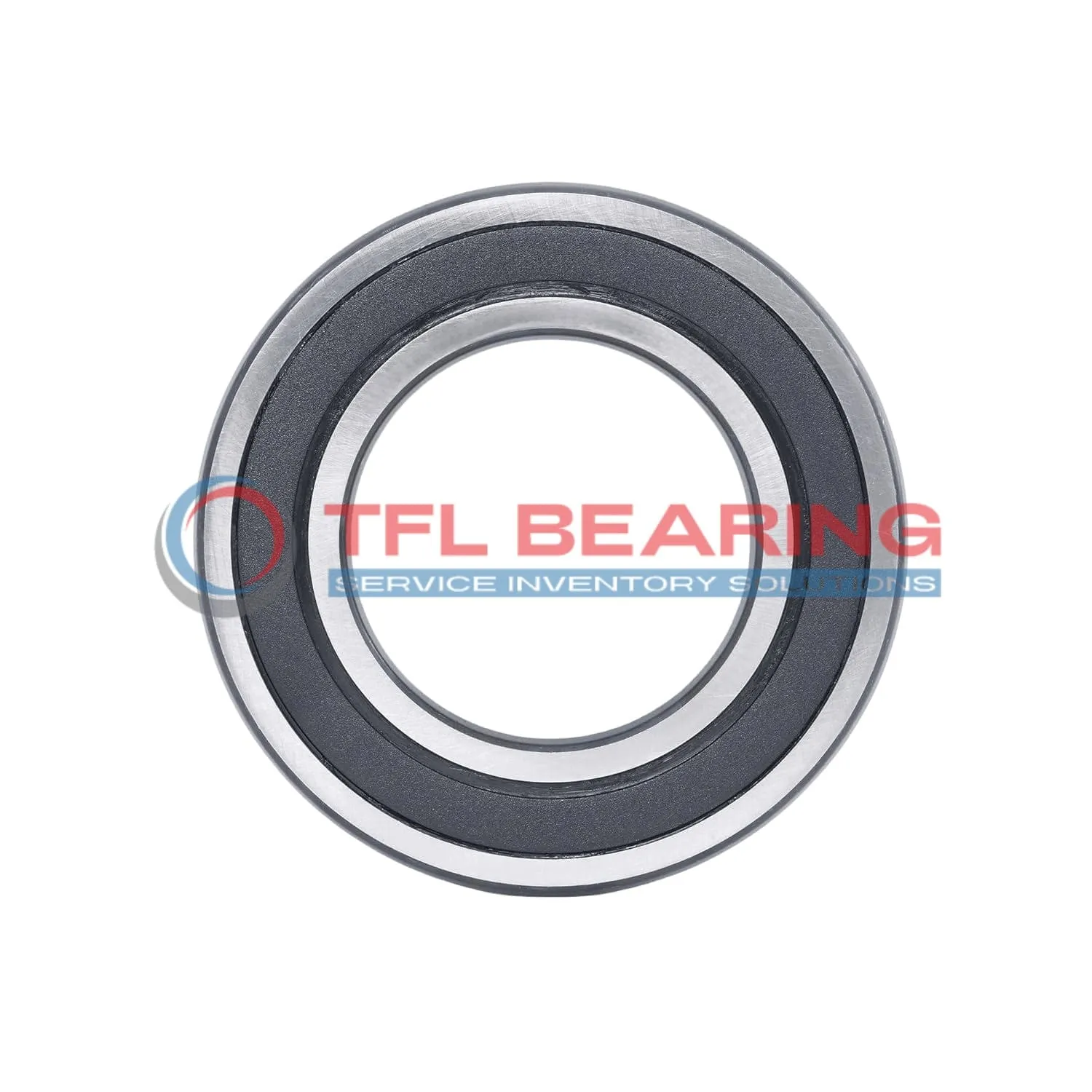
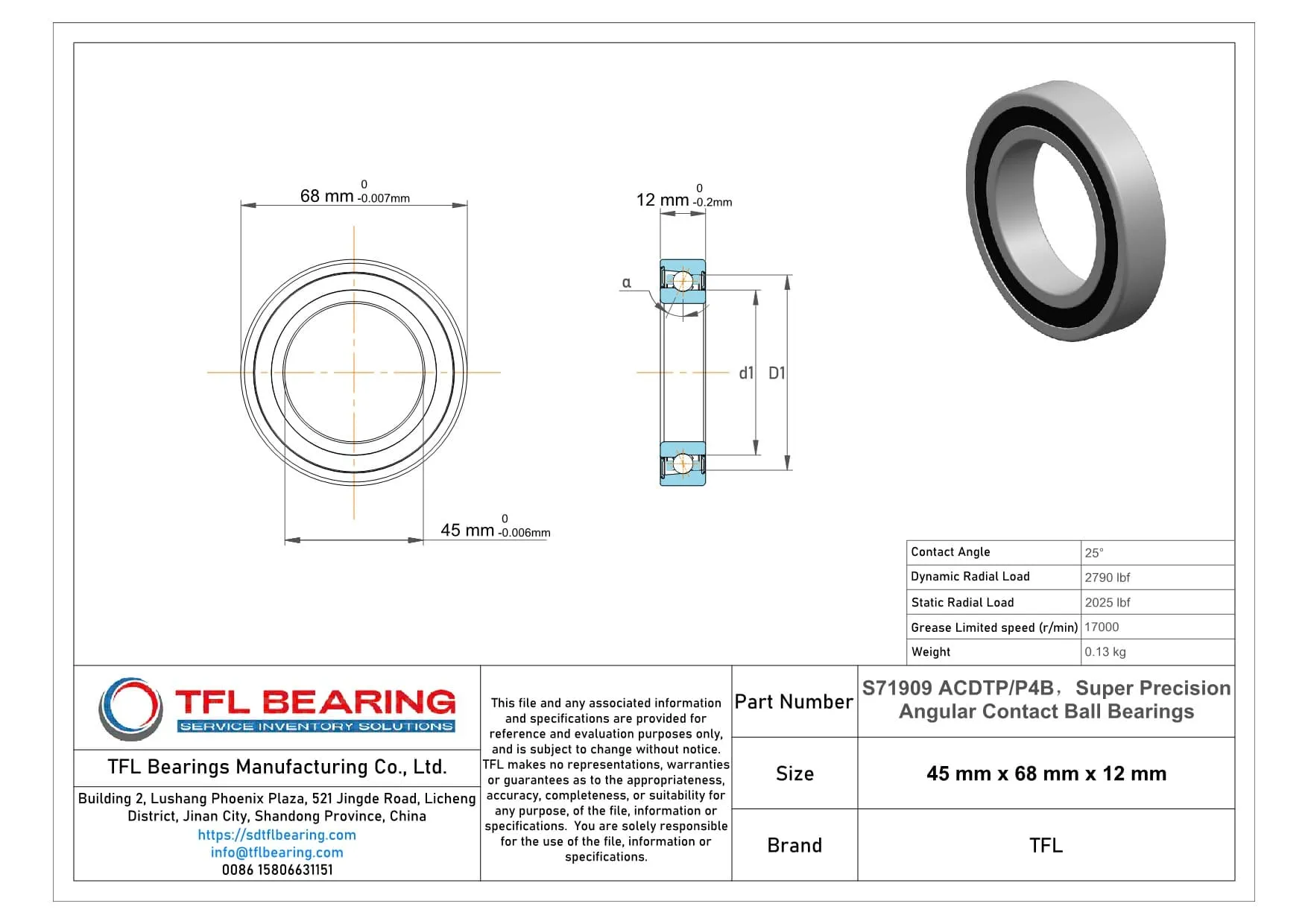
The S71909 ACDTP/P4B is a super precision angular contact ball bearing with a 45mm bore and 68mm outer diameter, crafted from high-quality chrome steel. It handles radial loads up to 2790 lbf and spins smoothly at speeds up to 17000 RPM.
Its sealed design keeps lubrication in and contaminants out, while the phenolic cage ensures quiet operation. The 25° contact angle provides excellent stability for angular loads.
This bearing is available with preload and matched arrangements, making it versatile for precise applications. Ideal for machine tools or high-speed spindles where accuracy is key.
Weighing just 0.13kg, it’s lightweight yet robust, and complies with P4 tolerance standards for reliable performance.

Get A Free Quote

Product Parameters

  • Part Number S71909 ACDTP/P4B
  • Brand TFL
  • Interchangeable SKF
  • Bore Dia 45 mm
  • Bore Dia Tolerance -0.006mm to 0
  • Outer Dia 68 mm
  • Outer Dia Tolerance -0.007mm to 0
  • Width 12 mm
  • Width Tolerance -0.2mm to 0
  • Ball Dia 6.35 mm
  • Ball Qty 23
  • Contact Angle 25°
  • Tolerance Class P4 (ABEC-7)
  • System of Measurement Metric
  • Seal Type Sealed
  • Matched Arrangement Available
  • Preload Available
  • For Load Direction Angular Contact
  • Ring Material Chrome Steel
  • Ball Material Chrome Steel
  • Cage Material Phenolic
  • Dynamic Radial Load 2790 lbf
  • Static Radial Load 2025 lbf
  • Lubrication Lubricated
  • Temperature Range -30° to 110 °C
  • Max Speed 17000 rpm
  • Weight 0.13 kg
  • Price($) 389.556

Features

Performance Features of S71909 ACDTP/P4B Bearing

S71909 ACDTP/P4B Bearing is designed with a 25° contact angle, optimising load distribution for angular contact applications.
Its chrome steel rings and balls ensure durability under dynamic radial loads up to 2790 lbf.

The phenolic cage maintains ball alignment, reducing friction and noise during high-speed operation.
With a maximum speed of 17,000 rpm, it delivers smooth performance in precision tasks.

S71909 ACDTP/P4B Bearing operates efficiently within a temperature range of -30° to 110°C.
Its sealed design and lubrication enhance longevity, reducing maintenance needs.

The P4 tolerance class ensures high precision, making it suitable for demanding applications.
Its compact size (45 mm×68 mm×12 mm) allows for easy integration into various systems.

Application

Essential Roles of S71909 ACDTP/P4B Bearing
S71909 ACDTP/P4B Bearing is commonly used in high-precision machine tools, where its angular contact design ensures accurate spindle rotation. The sealed construction keeps contaminants out, extending service life in demanding workshop conditions.

In robotics, S71909 ACDTP/P4B Bearing enables smooth movement in articulated arms, thanks to its phenolic cage reducing friction. Its P4 tolerance class makes it suitable for applications requiring minimal vibration.

For medical imaging devices, S71909 ACDTP/P4B Bearing’s chrome steel components provide reliable performance during repeated use. The 25° contact angle helps maintain stability in precision positioning systems.

Where Is S71909 ACDTP/P4B Bearing Used?
You’ll find S71909 ACDTP/P4B Bearing in CNC machining centres, where its matched arrangement supports multi-axis operations. The lubricated design ensures consistent performance during long production runs.

In aerospace applications, S71909 ACDTP/P4B Bearing handles both radial and axial loads in instrumentation systems. Its temperature range allows operation in various environmental conditions.

Built for Heavy-Duty Use: S71909 ACDTP/P4B Bearing
S71909 ACDTP/P4B Bearing works well in industrial pumps, withstanding continuous operation thanks to its dynamic load capacity. The phenolic cage material resists degradation from chemicals commonly found in processing plants.

For electric vehicle motors, S71909 ACDTP/P4B Bearing’s high-speed capability makes it a good fit for compact designs. Its metric dimensions align with European and Asian automotive standards.

Q&A

SEND INQUIRY