







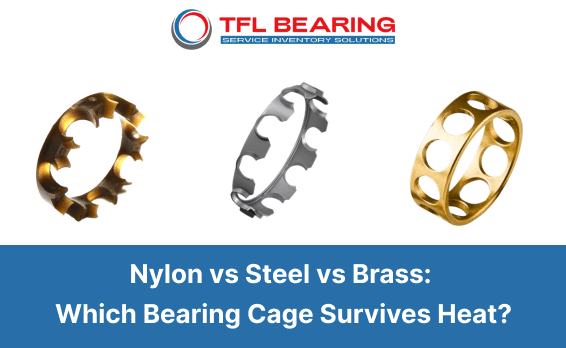
Nylon vs Steel vs Brass: Which Bearing Cage Survives Heat?
Compare Nylon (TN9), Pressed Steel, and Machined Brass (M) bearing cages under high heat. Explore 4 practical case scenarios to prevent premature cage failure.
Read articleCompare leading global bearing brands and explore compatible TFL alternatives by model, product type and application.
View all Brands GuideMatch manufacturer part numbers with interchangeable TFL bearing options and model-selection support.
Browse bearing solutions by equipment, operating environment and industry.
Practical guidance on bearing selection, applications, maintenance and sourcing.
Compare Nylon (TN9), Pressed Steel, and Machined Brass (M) bearing cages under high heat. Explore 4 practical case scenarios to prevent premature cage failure.
Read article
Find answers about quality, orders, technical support and after-sales service.
Use our articles, reference tools and customer resources to support sourcing decisions.
Learn about TFL Bearing, our quality systems and supply capabilities.
View all About & CapabilitiesAccess engineering support and services throughout the purchasing process.
View all Services & SupportExplore customer projects, sourcing partnerships and ways to contact our team.
View all Work With TFL
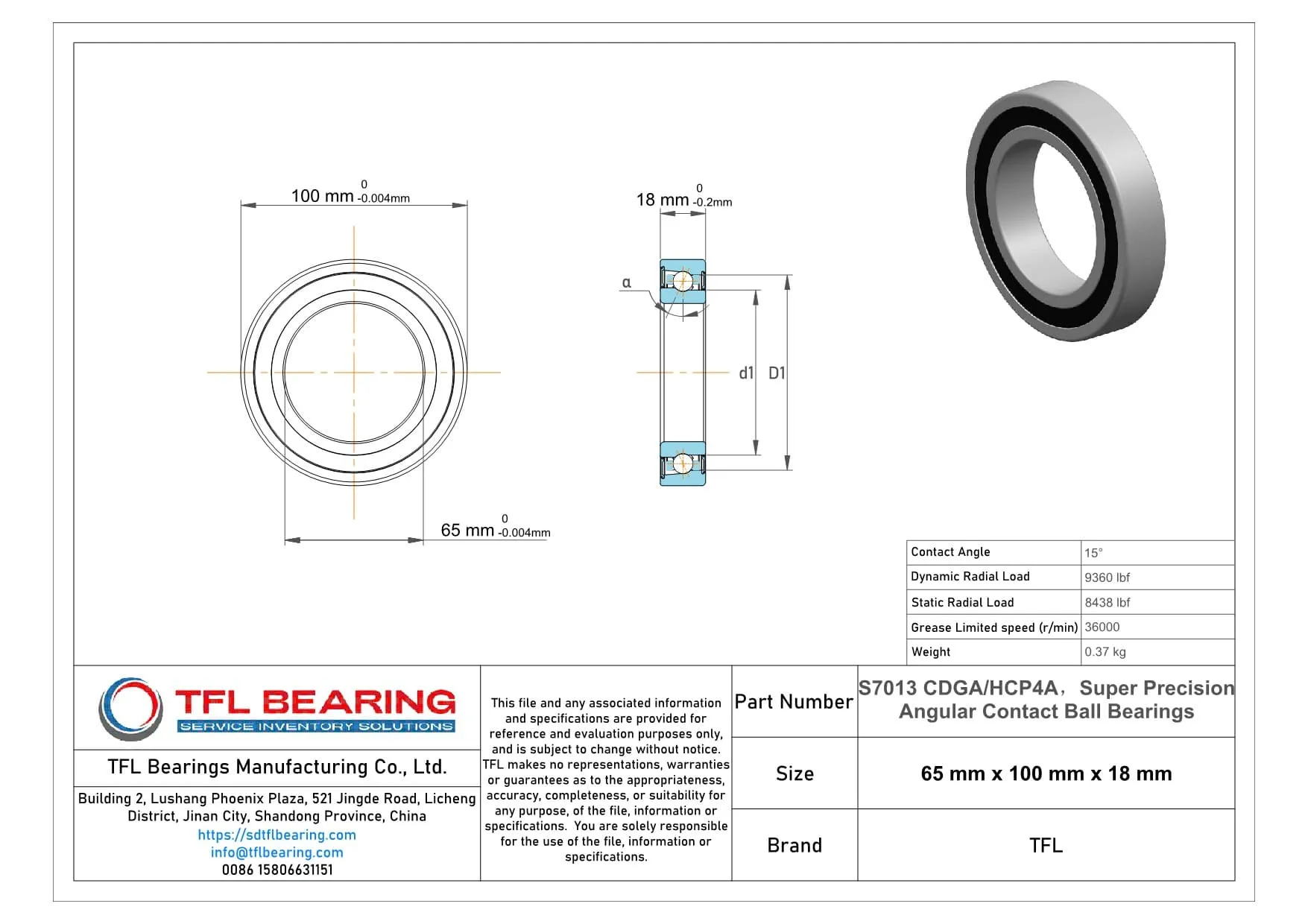
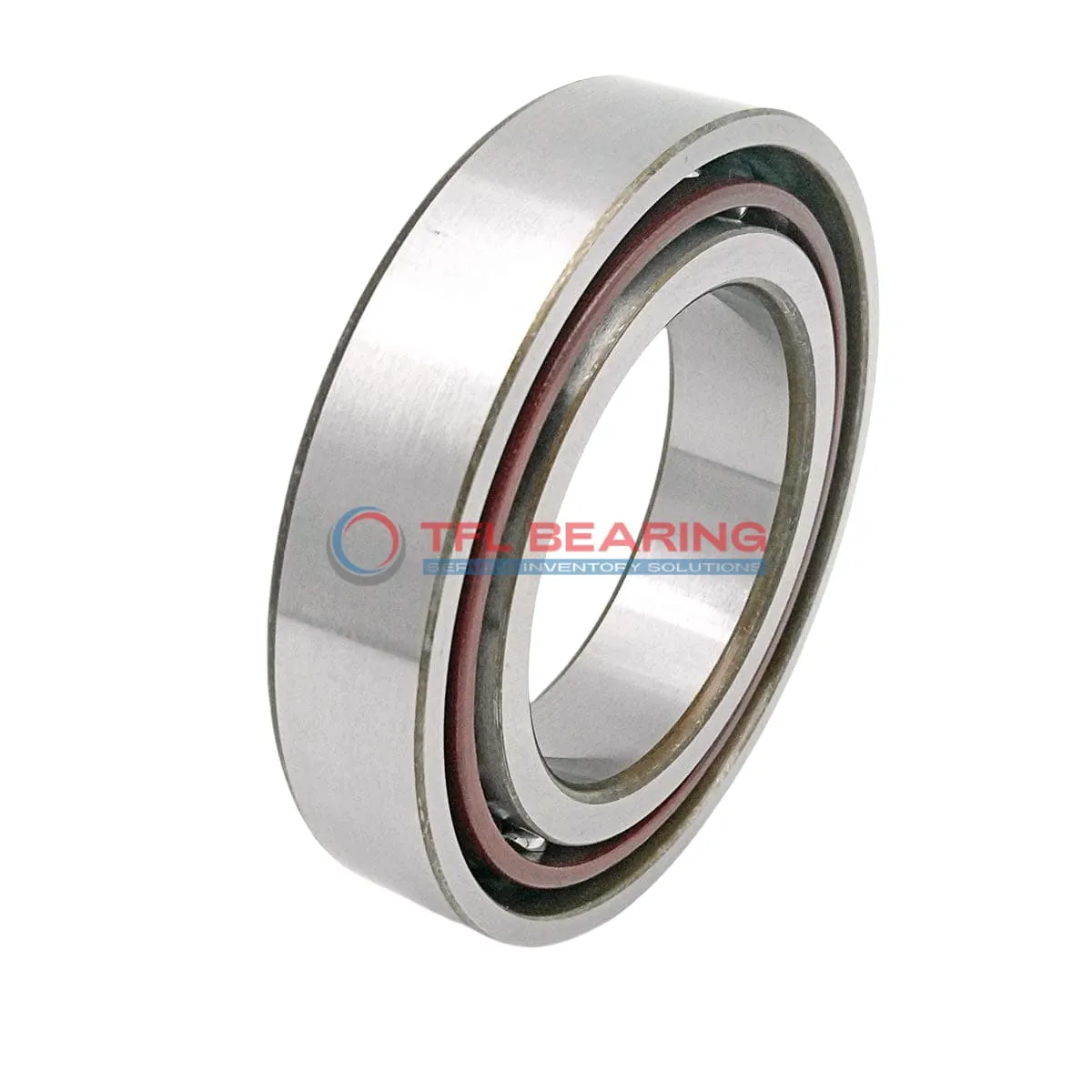
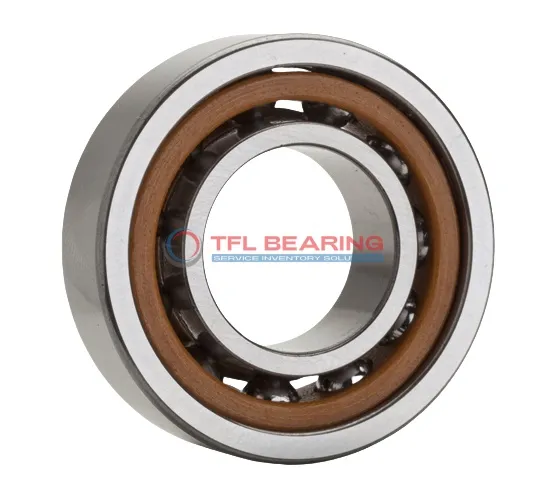
The S7013 CDGA/HCP4A is a super precision angular contact ball bearing with a 65mm bore and 100mm outer diameter, crafted from high-quality chrome steel. Its compact 18mm width makes it suitable for tight spaces while maintaining robust performance.
This bearing handles radial loads up to 9360 lbf and achieves impressive speeds of 36,000 RPM, thanks to its ceramic balls and phenolic cage. The 15° contact angle ensures smooth operation under angular loads, with extra light preload for precision applications.
Sealed for protection, it comes pre-lubricated with grease and operates efficiently in temperatures from -30°C to 110°C. The P4A tolerance class guarantees high accuracy, ideal for demanding machinery.
Universal matching allows flexible arrangements like back-to-back or tandem setups. Weighing 0.37kg, it’s a reliable choice for spindle drives or high-speed rotary systems where precision is key. Interchangeable with SKF bearings for easy replacement.
Performance Features of S7013 CDGA/HCP4A Bearing
S7013 CDGA/HCP4A Bearing is designed with a 15° contact angle, ideal for handling combined radial and axial loads.
Its chrome steel rings and ceramic balls ensure durability and smooth operation at high speeds.
The phenolic cage maintains ball alignment, reducing friction and wear.
With a dynamic radial load capacity of 9360 lbf, it performs reliably in demanding applications.
S7013 CDGA/HCP4A Bearing can reach speeds up to 36,000 rpm, making it suitable for precision tasks.
The sealed design and grease lubrication reduce maintenance needs, ensuring long service life.
Operating in temperatures from -30°C to 110°C, it adapts to various environments.
Its P4A tolerance class guarantees high precision and consistent performance.
Super Precision Angular Contact Ball Bearings S7013 CDGA/HCP4A are commonly used in high-speed machine tools, where their ceramic balls and phenolic cage reduce friction and heat buildup.
The sealed design helps keep contaminants out, making them suitable for environments where cleanliness is important.
In automotive applications, S7013 CDGA/HCP4A Bearings are often found in electric vehicle motors, supporting smooth rotation under angular loads.
Their extra-light preload ensures minimal energy loss, which is crucial for efficiency in modern drivetrains.
For robotics, these bearings provide the precision needed in articulated arms and joints, thanks to their P4A tolerance class.
The universal matching capability allows for flexible configurations in complex mechanical systems.
Medical imaging devices benefit from S7013 CDGA/HCP4A Bearings’ consistent performance and low vibration characteristics.
The grease lubrication ensures quiet operation, which is essential in sensitive diagnostic equipment.
In aerospace applications, these bearings handle both radial and axial loads in auxiliary systems.
Their wide temperature range makes them reliable even in challenging operating conditions.