







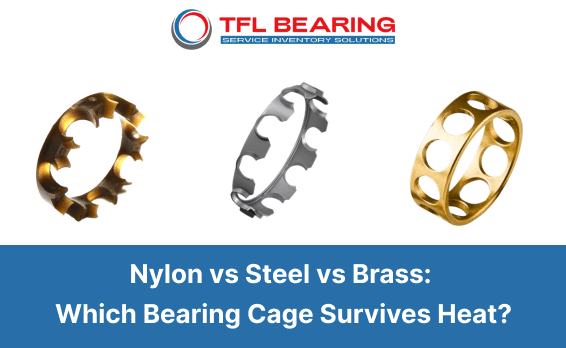
Nylon vs Steel vs Brass: Which Bearing Cage Survives Heat?
Compare Nylon (TN9), Pressed Steel, and Machined Brass (M) bearing cages under high heat. Explore 4 practical case scenarios to prevent premature cage failure.
Read articleCompare leading global bearing brands and explore compatible TFL alternatives by model, product type and application.
View all Brands GuideMatch manufacturer part numbers with interchangeable TFL bearing options and model-selection support.
Browse bearing solutions by equipment, operating environment and industry.
Practical guidance on bearing selection, applications, maintenance and sourcing.
Compare Nylon (TN9), Pressed Steel, and Machined Brass (M) bearing cages under high heat. Explore 4 practical case scenarios to prevent premature cage failure.
Read article
Find answers about quality, orders, technical support and after-sales service.
Use our articles, reference tools and customer resources to support sourcing decisions.
Learn about TFL Bearing, our quality systems and supply capabilities.
View all About & CapabilitiesAccess engineering support and services throughout the purchasing process.
View all Services & SupportExplore customer projects, sourcing partnerships and ways to contact our team.
View all Work With TFL
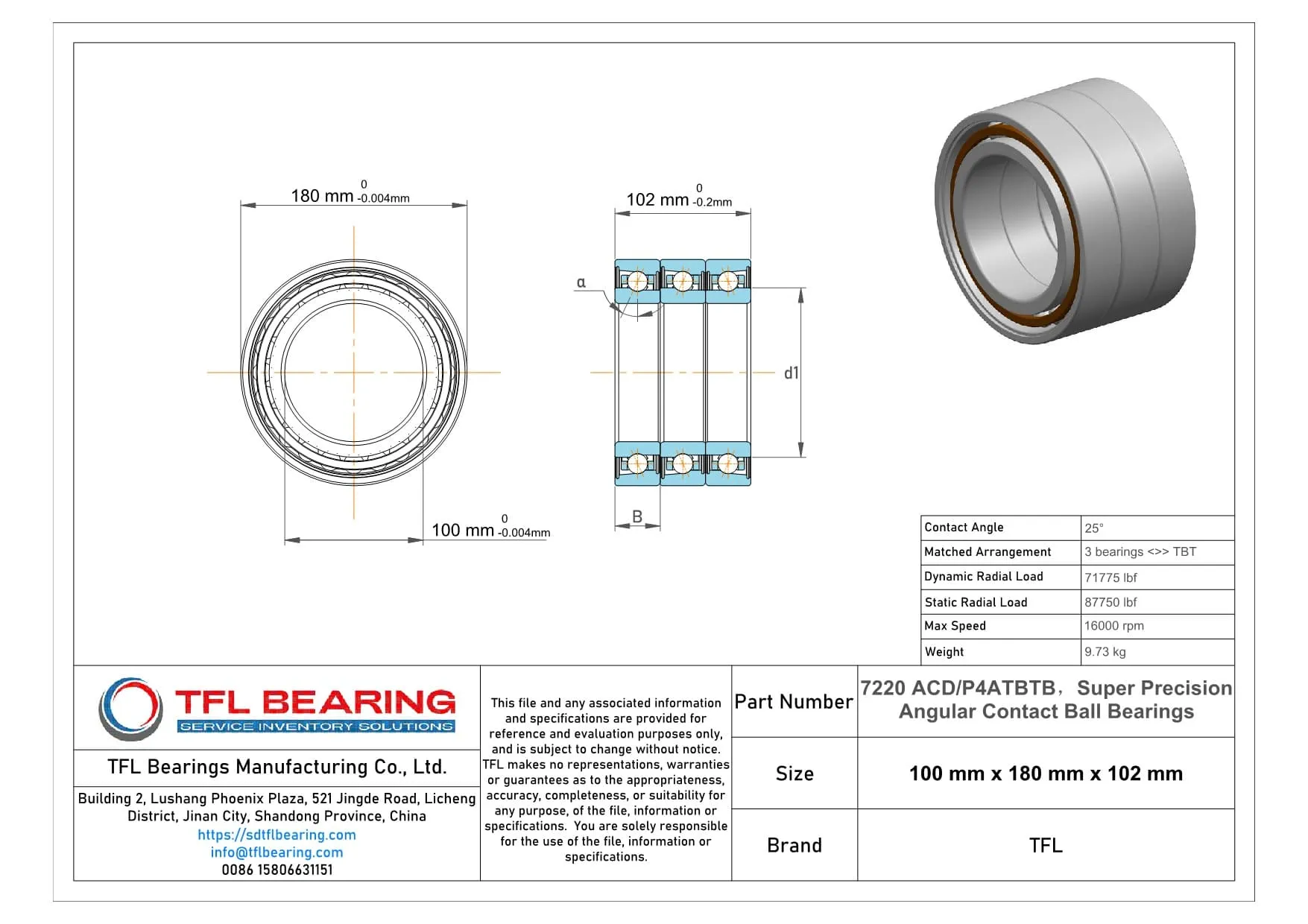
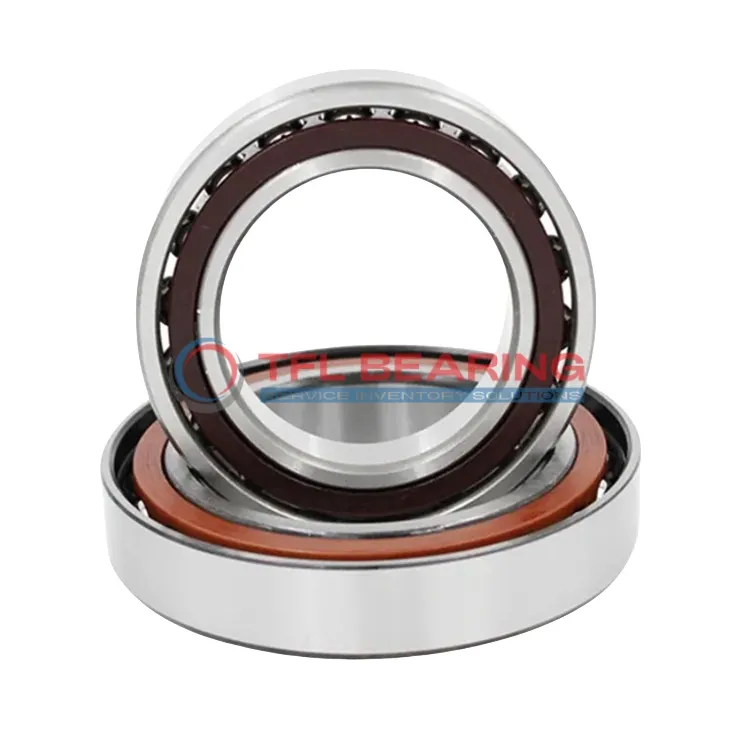
The 7220 ACD/P4ATBTB is a super precision angular contact ball bearing with a 100mm bore and 180mm outer diameter, crafted from high-quality chrome steel. It handles radial loads up to 71775 lbf and operates smoothly at speeds up to 16000 RPM.
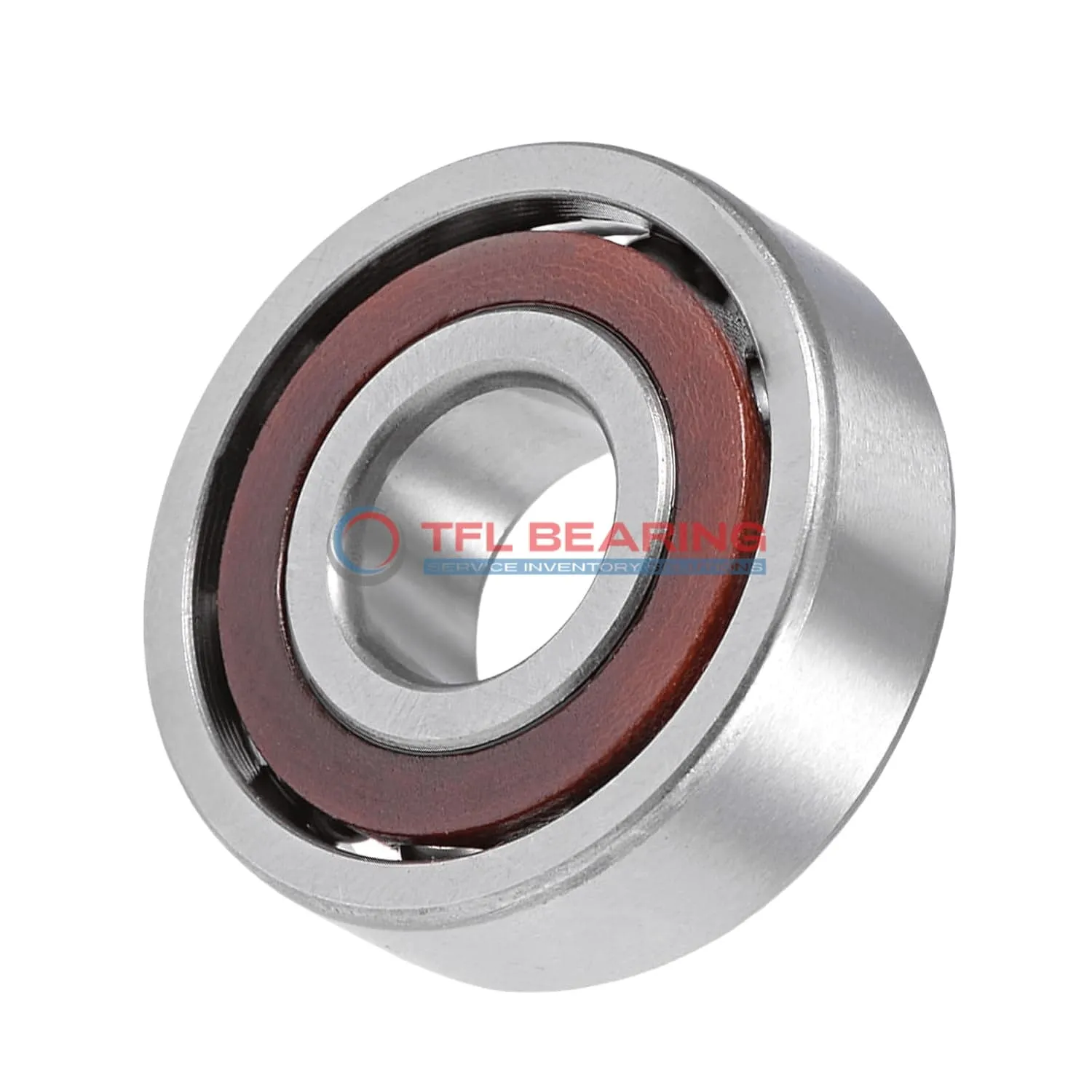
With a 25° contact angle and light preload, it offers excellent stability for precision applications. The phenolic cage ensures durability and reduces friction during high-speed rotations.
This set includes three matched bearings arranged in a TBT configuration, ideal for complex load requirements. Suitable for machine tools or spindle systems where accuracy is crucial.
Weighing 9.73kg, it’s designed for temperatures from -30°C to 110°C. Compliant with P4A tolerance standards, it’s interchangeable with SKF bearings for easy replacements.
Performance Features of 7220 ACD/P4ATBTB Bearing
7220 ACD/P4ATBTB Bearing is designed with a 25° contact angle, optimising load distribution for angular contact applications.
Its chrome steel rings and balls ensure durability and resistance to wear under high radial loads.
The phenolic cage maintains ball alignment, reducing friction and enhancing smooth operation.
With a dynamic radial load capacity of 71775 lbf, it handles demanding conditions reliably.
7220 ACD/P4ATBTB Bearing operates efficiently at speeds up to 16,000 rpm, balancing performance and longevity.
Its precision P4A tolerance class ensures consistent accuracy in high-speed applications.
The matched set of three bearings (TBT arrangement) provides stability for complex load requirements.
Light preload (Class B) minimises vibration, making it ideal for precision machinery.
7220 ACD/P4ATBTB Bearing performs consistently in temperatures from -30°C to 110°C.
Its open design allows easy lubrication, reducing maintenance needs.
Industrial Uses of 7220 ACD/P4ATBTB Bearing
The 7220 ACD/P4ATBTB Bearing is a go-to choice for high-precision machine tools, where its angular contact design handles both radial and axial loads effortlessly. Its light preload ensures smooth operation in demanding industrial environments.
In automotive applications, 7220 ACD/P4ATBTB Bearing excels in gearboxes and wheel hubs, offering reliable performance under high-speed conditions. The matched arrangement of three bearings provides added stability for critical drivetrain components.
For robotics, 7220 ACD/P4ATBTB Bearing’s phenolic cage reduces friction, making it ideal for articulated arms and precision movement systems. Its P4A tolerance class guarantees consistent accuracy in automated processes.
Medical imaging devices benefit from 7220 ACD/P4ATBTB Bearing’s chrome steel construction, ensuring quiet and vibration-free operation. The open design allows for easy lubrication, extending service life in sensitive equipment.
In aerospace, 7220 ACD/P4ATBTB Bearing’s high dynamic load capacity makes it suitable for flight control systems. Its temperature range handles both extreme cold and moderate heat encountered during flights.