







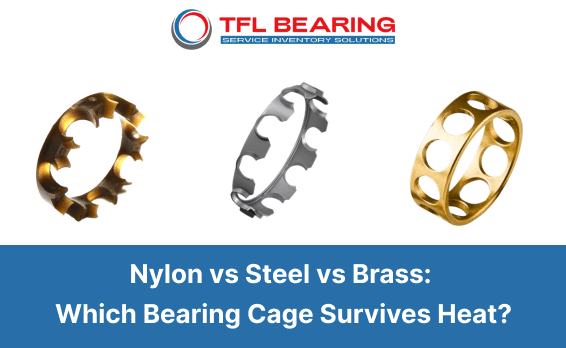
Nylon vs Steel vs Brass: Which Bearing Cage Survives Heat?
Compare Nylon (TN9), Pressed Steel, and Machined Brass (M) bearing cages under high heat. Explore 4 practical case scenarios to prevent premature cage failure.
Read articleCompare leading global bearing brands and explore compatible TFL alternatives by model, product type and application.
View all Brands GuideMatch manufacturer part numbers with interchangeable TFL bearing options and model-selection support.
Browse bearing solutions by equipment, operating environment and industry.
Practical guidance on bearing selection, applications, maintenance and sourcing.
Compare Nylon (TN9), Pressed Steel, and Machined Brass (M) bearing cages under high heat. Explore 4 practical case scenarios to prevent premature cage failure.
Read article
Find answers about quality, orders, technical support and after-sales service.
Use our articles, reference tools and customer resources to support sourcing decisions.
Learn about TFL Bearing, our quality systems and supply capabilities.
View all About & CapabilitiesAccess engineering support and services throughout the purchasing process.
View all Services & SupportExplore customer projects, sourcing partnerships and ways to contact our team.
View all Work With TFL
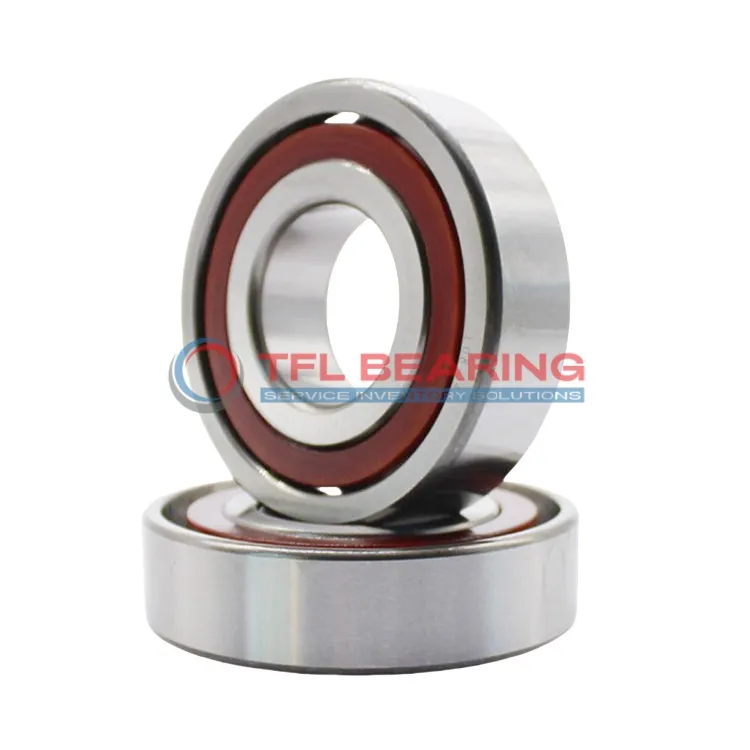
The 71924 CDGA/P4A is a super precision angular contact ball bearing with a 120mm bore and 165mm outer diameter, crafted from high-quality chrome steel. It handles radial loads up to 17550 lbf and operates smoothly at speeds up to 10000 RPM.
With a 15° contact angle and extra light preload, it offers excellent accuracy for demanding applications. The open design and phenolic cage ensure durability and easy maintenance.
This bearing is suitable for universal matching in back-to-back, face-to-face, or tandem arrangements. Ideal for high-precision machinery like spindles or CNC equipment where tight tolerances are crucial.
Weighing 1.15kg, it complies with P4A tolerance standards and works in temperatures from -30°C to 110°C. A reliable choice for engineers needing consistent performance.
Why Choose 71924 CDGA/P4A Bearing for Precision Tasks?
71924 CDGA/P4A Bearing features a 15° contact angle, optimised for high-precision angular contact applications.
Its chrome steel rings and balls ensure durability, while the phenolic cage reduces friction for smoother operation.
With a dynamic radial load capacity of 17550 lbf, it handles demanding tasks reliably.
The P4A tolerance class guarantees exceptional accuracy, making it suitable for precision machinery.
Operating at speeds up to 10,000 rpm, it maintains performance without compromising stability.
Its universal matching capability allows flexible arrangements like back-to-back or tandem configurations.
Industrial Uses of 71924 CDGA/P4A Bearing
71924 CDGA/P4A Bearing is commonly used in high-precision machine tools, where its 15° contact angle ensures accurate radial and axial load handling. The open design and phenolic cage make it suitable for environments requiring minimal friction and heat generation.
Where Is 71924 CDGA/P4A Bearing Used?
In aerospace applications, 71924 CDGA/P4A Bearing supports components like turbine shafts, thanks to its extra light preload and P4A tolerance class. Its chrome steel construction also provides durability under high-speed conditions.
Built for Heavy-Duty Use: 71924 CDGA/P4A Bearing
71924 CDGA/P4A Bearing excels in robotics, particularly in robotic arms where smooth, precise movement is essential. The tandem arrangement option allows for custom setups to meet specific load requirements.
Automotive vs Aerospace: Applications of 71924 CDGA/P4A Bearing
In automotive systems, 71924 CDGA/P4A Bearing is ideal for high-performance gearboxes, while in aerospace, it handles the demanding conditions of flight control systems. Its universal matching feature adds versatility across industries.
Perfect Fit for Automation: 71924 CDGA/P4A Bearing
71924 CDGA/P4A Bearing is a reliable choice for automated production lines, where its high-speed capability and precision ensure consistent performance. The lubricated design further reduces maintenance needs in continuous operation.