







Super Precision Angular Contact Ball Bearings 71808 CDGB/P4

Super Precision Angular Contact Ball Bearings 71808 CDGB/P4

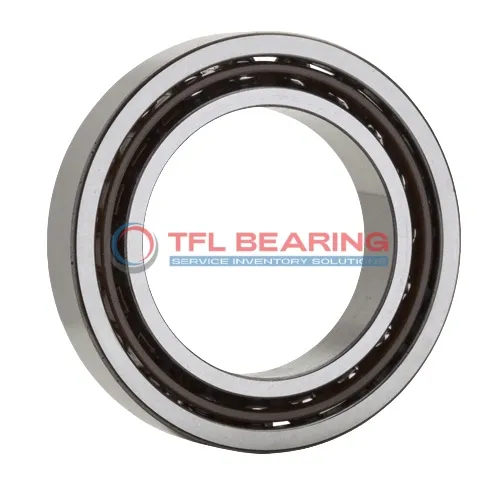
The 71808 CDGB/P4 is a super precision angular contact ball bearing with a 40mm bore and 52mm outer diameter, crafted from durable chrome steel. Its compact 7mm width makes it suitable for tight spaces while maintaining high performance.

Designed for angular contact loads, it handles up to 1098 lbf dynamically and spins smoothly at speeds up to 56,000 RPM. The phenolic cage ensures quiet operation and long service life.

With a 15° contact angle and P4 tolerance class, it offers excellent precision for demanding applications. The bearing operates reliably in temperatures from -30°C to 110°C.

Ideal for high-speed machinery like spindles or CNC tools, it can be arranged back-to-back, face-to-face, or tandem. Weighing just 0.031kg, it’s lightweight yet robust for precision tasks.

Get A Free Quote

Product Parameters

  • Part Number 71808 CDGB/P4
  • Brand TFL
  • Interchangeable SKF
  • Bore Dia 40 mm
  • Bore Dia Tolerance -0.004mm to 0
  • Outer Dia 52 mm
  • Outer Dia Tolerance -0.004mm to 0
  • Width 7 mm
  • Width Tolerance -0.2mm to 0
  • Ball Dia 3.175 mm
  • Ball Qty 29
  • Contact Angle 15°
  • Tolerance Class P4
  • System of Measurement Metric
  • Seal Type Open
  • Matched Arrangement No
  • Number Of Bearings In Matched Set 3
  • Universal Matching Bearing Yes, back-to-back (<>), face-to-face (><) or tandem (>>)
  • Preload Light / Class B
  • For Load Direction Angular Contact
  • Ring Material Chrome Steel
  • Ball Material Chrome Steel
  • Cage Material Phenolic
  • Dynamic Radial Load 1098 lbf
  • Static Radial Load 1102 lbf
  • Lubrication Lubricated
  • Temperature Range - 30°C to 110 °C
  • Max Speed 56000 rpm
  • Weight 0.031 kg

Features

Performance Features of 71808 CDGB/P4 Bearing

71808 CDGB/P4 Bearing is crafted with chrome steel rings and balls, offering high precision for angular contact applications.
Its 15° contact angle ensures optimal load distribution, enhancing performance in demanding setups.

The phenolic cage in 71808 CDGB/P4 Bearing maintains ball alignment, reducing friction and noise during operation.
With a dynamic radial load capacity of 1098 lbf, it handles rigorous conditions efficiently.

71808 CDGB/P4 Bearing operates smoothly at speeds up to 56,000 rpm, making it suitable for high-speed machinery.
Its P4 tolerance class guarantees consistent accuracy and reliability in precision tasks.

The lightweight design of 71808 CDGB/P4 Bearing, at just 0.031 kg, ensures easy integration without compromising strength.
Its temperature range of -30°C to 110°C allows for versatile use in various environments.

71808 CDGB/P4 Bearing’s universal matching capability supports multiple configurations like back-to-back or tandem arrangements.
This flexibility makes it a practical choice for complex mechanical systems.

Application

Common Applications of 71808 CDGB/P4 Bearing
71808 CDGB/P4 Bearing is widely used in high-precision machine tools, where its angular contact design ensures accurate spindle rotation. The light preload and P4 tolerance make it ideal for applications demanding minimal vibration.

In automotive systems, 71808 CDGB/P4 Bearing supports components like electric power steering units, offering smooth operation under angular loads. Its chrome steel construction provides durability in demanding driving conditions.

For robotics, 71808 CDGB/P4 Bearing excels in articulated arms, where its phenolic cage reduces friction during high-speed movements. The open design allows for easy lubrication, extending service life in continuous operation.

Medical imaging devices benefit from 71808 CDGB/P4 Bearing’s precision, ensuring stable performance in scanners and diagnostic equipment. The temperature range suits both clinical and laboratory environments.

In consumer electronics, 71808 CDGB/P4 Bearing is found in high-end printers, where its compact size and reliability contribute to consistent print quality. The metric sizing ensures compatibility with various international models.

Q&A

SEND INQUIRY