







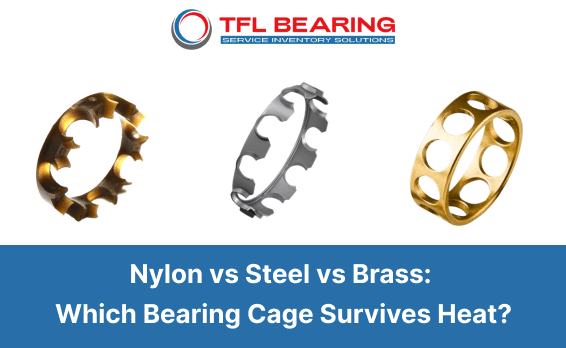
Nylon vs Steel vs Brass: Which Bearing Cage Survives Heat?
Compare Nylon (TN9), Pressed Steel, and Machined Brass (M) bearing cages under high heat. Explore 4 practical case scenarios to prevent premature cage failure.
Read articleCompare leading global bearing brands and explore compatible TFL alternatives by model, product type and application.
View all Brands GuideMatch manufacturer part numbers with interchangeable TFL bearing options and model-selection support.
Browse bearing solutions by equipment, operating environment and industry.
Practical guidance on bearing selection, applications, maintenance and sourcing.
Compare Nylon (TN9), Pressed Steel, and Machined Brass (M) bearing cages under high heat. Explore 4 practical case scenarios to prevent premature cage failure.
Read article
Find answers about quality, orders, technical support and after-sales service.
Use our articles, reference tools and customer resources to support sourcing decisions.
Learn about TFL Bearing, our quality systems and supply capabilities.
View all About & CapabilitiesAccess engineering support and services throughout the purchasing process.
View all Services & SupportExplore customer projects, sourcing partnerships and ways to contact our team.
View all Work With TFL
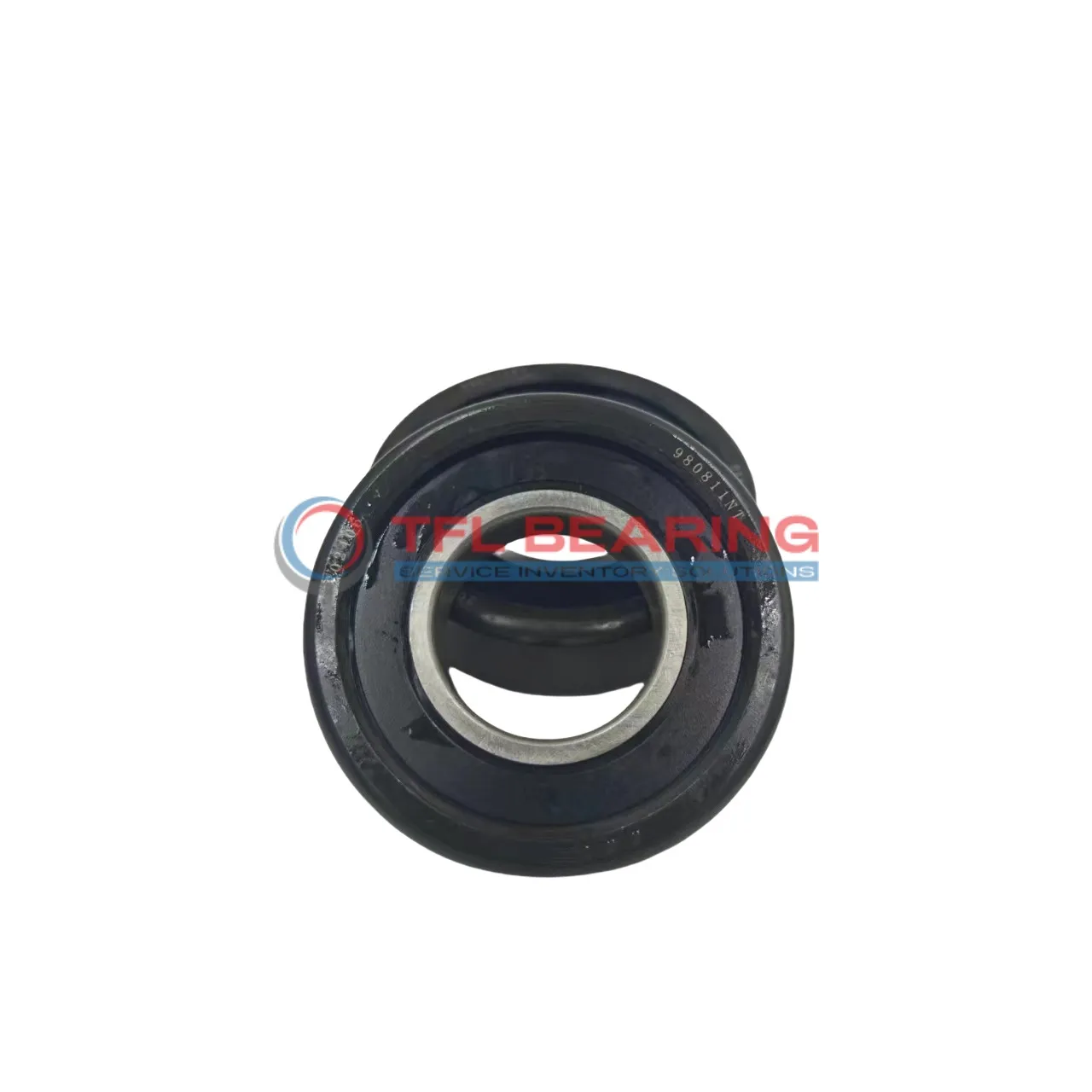
The MG 306 DDL‑4 is a mast guide bearing measuring 30mm in inner diameter and 76.2mm in outer diameter, with a width of 24mm. Its compact size makes it suitable for tight spaces while maintaining strength.
With a dynamic load capacity of 57,100 N and static load capacity of 67,100 N, it handles heavy loads reliably. The bearing’s robust construction ensures smooth operation under demanding conditions.
Featuring a 6mm radius, it fits securely in various setups. The inner and outer ring widths (16mm and 24mm) provide stability during use.
Ideal for mast guide applications, this bearing is also useful in construction or industrial machinery. Weighing just 0.59kg, it’s lightweight yet durable for its size.
Performance Features of MG 306 DDL‑4 Bearing
MG 306 DDL‑4 Bearing is built with precise dimensions of 30.000 mm x 76.20 mm x 24.000 mm, ensuring a perfect fit for mast guide applications.
Its dynamic capacity of 57,100 N allows it to handle significant loads with ease.
The bearing’s static capacity reaches 67,100 N, providing reliable performance in stationary applications.
With a weight of 0.5897 kg, it offers a balance between strength and portability.
The 6 mm radius design reduces stress concentrations, enhancing durability.
MG 306 DDL‑4 Bearing’s robust construction makes it suitable for demanding industrial environments.
Industrial Uses of MG 306 DDL‑4 Bearing
MG 306 DDL‑4 Bearing is commonly used in construction equipment, such as crane mast guides, where its robust design handles heavy radial loads. The 76.20 mm outer diameter provides stability in demanding environments.
In automation systems, MG 306 DDL‑4 Bearing ensures smooth movement in robotic arms and linear guides. Its 57,100 N dynamic capacity makes it suitable for repetitive motion tasks.
For industrial fans, MG 306 DDL‑4 Bearing’s 24.000 mm width offers balanced support, reducing vibration during prolonged operation. The 6 mm radius also helps with easy installation in tight spaces.
What Makes MG 306 DDL‑4 Bearing a Preferred Choice?
MG 306 DDL‑4 Bearing works well in conveyor systems, thanks to its 30.000 mm inner diameter fitting standard shafts. The stainless steel construction resists wear in dusty or humid conditions.
In packaging machinery, MG 306 DDL‑4 Bearing’s 16 mm inner ring width allows for compact designs without sacrificing performance. Its 67,100 N static capacity ensures reliability under sudden loads.
Built for Heavy-Duty Use: MG 306 DDL‑4 Bearing
MG 306 DDL‑4 Bearing is ideal for agricultural equipment, like harvesters, where its 0.5897 Kg weight balances durability and ease of handling. The chrome steel rings withstand rough field conditions.
For printing presses, MG 306 DDL‑4 Bearing’s precision reduces paper feed errors. The 24.000 mm outer ring width provides ample surface contact for consistent operation.