







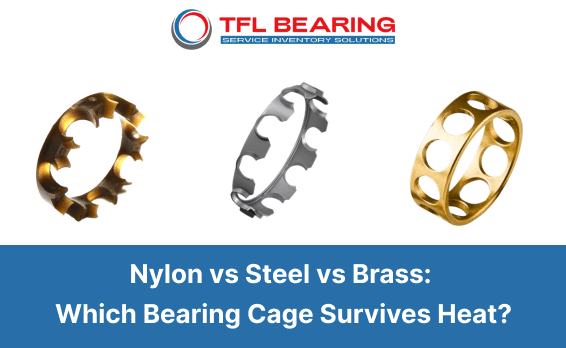
Nylon vs Steel vs Brass: Which Bearing Cage Survives Heat?
Compare Nylon (TN9), Pressed Steel, and Machined Brass (M) bearing cages under high heat. Explore 4 practical case scenarios to prevent premature cage failure.
Read articleCompare leading global bearing brands and explore compatible TFL alternatives by model, product type and application.
View all Brands GuideMatch manufacturer part numbers with interchangeable TFL bearing options and model-selection support.
Browse bearing solutions by equipment, operating environment and industry.
Practical guidance on bearing selection, applications, maintenance and sourcing.
Compare Nylon (TN9), Pressed Steel, and Machined Brass (M) bearing cages under high heat. Explore 4 practical case scenarios to prevent premature cage failure.
Read article
Find answers about quality, orders, technical support and after-sales service.
Use our articles, reference tools and customer resources to support sourcing decisions.
Learn about TFL Bearing, our quality systems and supply capabilities.
View all About & CapabilitiesAccess engineering support and services throughout the purchasing process.
View all Services & SupportExplore customer projects, sourcing partnerships and ways to contact our team.
View all Work With TFL
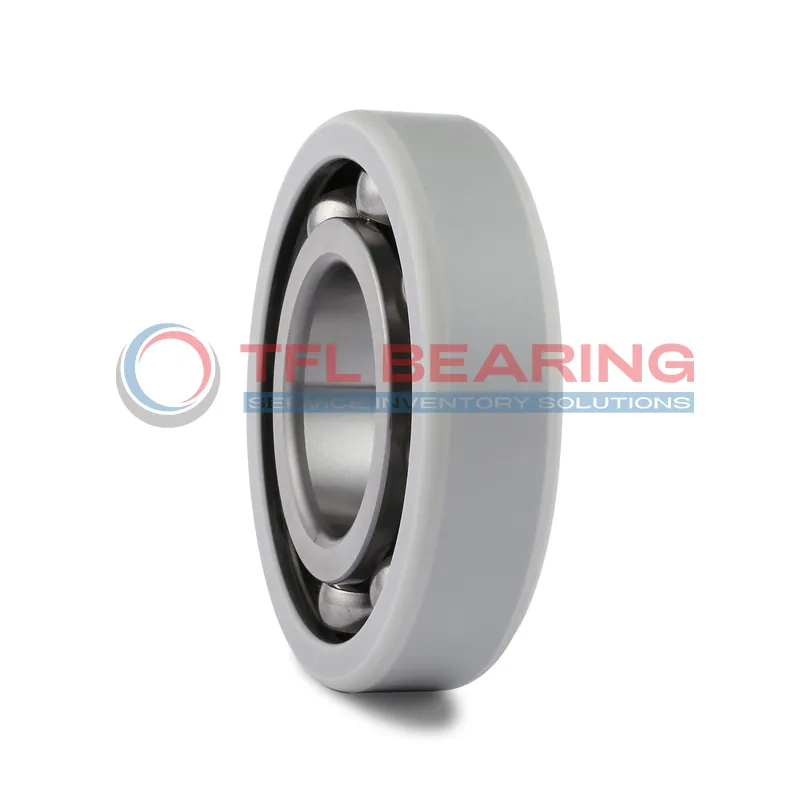
The FAG 6312-J20AA-C4 is a current-insulated bearing with a 60mm bore and 130mm outer diameter, designed to prevent electrical damage. Its outer ring features a ceramic coating, providing insulation up to 3000V.
With a dynamic load rating of 89kN, it handles heavy loads while maintaining smooth rotation at speeds up to 7900 RPM. The C4 radial clearance ensures reliable performance under varying temperatures.
The sheet metal cage offers durability, and the coating maintains high electrical resistance even in damp conditions. Ideal for electric motors or generators where current leakage is a concern.
Compliant with RoHS and REACH standards, this 1.65kg bearing balances strength and safety in demanding applications.
How Does 6312-J20AA-C4 Bearing Prevent Electrical Damage?
6312-J20AA-C4 Bearing features an outer ring ceramic coating, providing excellent insulation against electrical currents.
The coating offers a breakdown voltage of up to 3000 V, protecting the bearing from electrical damage.
With a basic dynamic load rating of 89.0 kN, 6312-J20AA-C4 Bearing handles heavy loads reliably.
Its C4 radial internal clearance ensures stable performance under varying thermal conditions.
The sheet metal cage maintains ball alignment, reducing friction and wear.
6312-J20AA-C4 Bearing operates smoothly at speeds up to 7900 r/min, making it suitable for high-speed applications.
Its electrical resistance remains high even in damp conditions, ensuring consistent insulation.
This makes 6312-J20AA-C4 Bearing ideal for use in environments with electrical risks.
Industrial Uses of 6312-J20AA-C4 Bearing
The 6312-J20AA-C4 Bearing is commonly used in electric motors and generators, where its ceramic coating prevents electrical currents from damaging the bearing. This makes it ideal for industries relying on heavy electrical equipment.
Where Is 6312-J20AA-C4 Bearing Used?
You’ll often find the 6312-J20AA-C4 Bearing in wind turbines, where it handles high loads while resisting electrical erosion. Its C4 clearance ensures smooth operation even under varying thermal conditions.
Built for Heavy-Duty Use: 6312-J20AA-C4 Bearing
The 6312-J20AA-C4 Bearing’s robust design suits industrial gearboxes, offering reliable performance under continuous operation. Its sheet metal cage enhances durability in high-speed applications.
Automotive vs Aerospace: Applications of 6312-J20AA-C4 Bearing
In automotive alternators, the 6312-J20AA-C4 Bearing prevents electrical damage, while in aerospace, its lightweight yet sturdy build supports auxiliary power units. The ceramic coating ensures longevity in both fields.
Perfect Fit for Automation: 6312-J20AA-C4 Bearing
The 6312-J20AA-C4 Bearing works well in robotic arms, where its insulation properties protect against stray currents. Its high dynamic load rating ensures consistent performance in repetitive tasks.