







How Hot Is Too Hot for a Bearing?
Learn why bearing overheating has no universal temperature limit, how to read temperature trends, and when a hot bearing needs investigation or shutdown.
Read articleCompare leading global bearing brands and explore compatible TFL alternatives by model, product type and application.
View all Brands GuideMatch manufacturer part numbers with interchangeable TFL bearing options and model-selection support.
Browse bearing solutions by equipment, operating environment and industry.
Practical guidance on bearing selection, applications, maintenance and sourcing.
Learn why bearing overheating has no universal temperature limit, how to read temperature trends, and when a hot bearing needs investigation or shutdown.
Read article
Find answers about quality, orders, technical support and after-sales service.
Use our articles, reference tools and customer resources to support sourcing decisions.
Learn about TFL Bearing, our quality systems and supply capabilities.
View all About & CapabilitiesAccess engineering support and services throughout the purchasing process.
View all Services & SupportExplore customer projects, sourcing partnerships and ways to contact our team.
View all Work With TFL
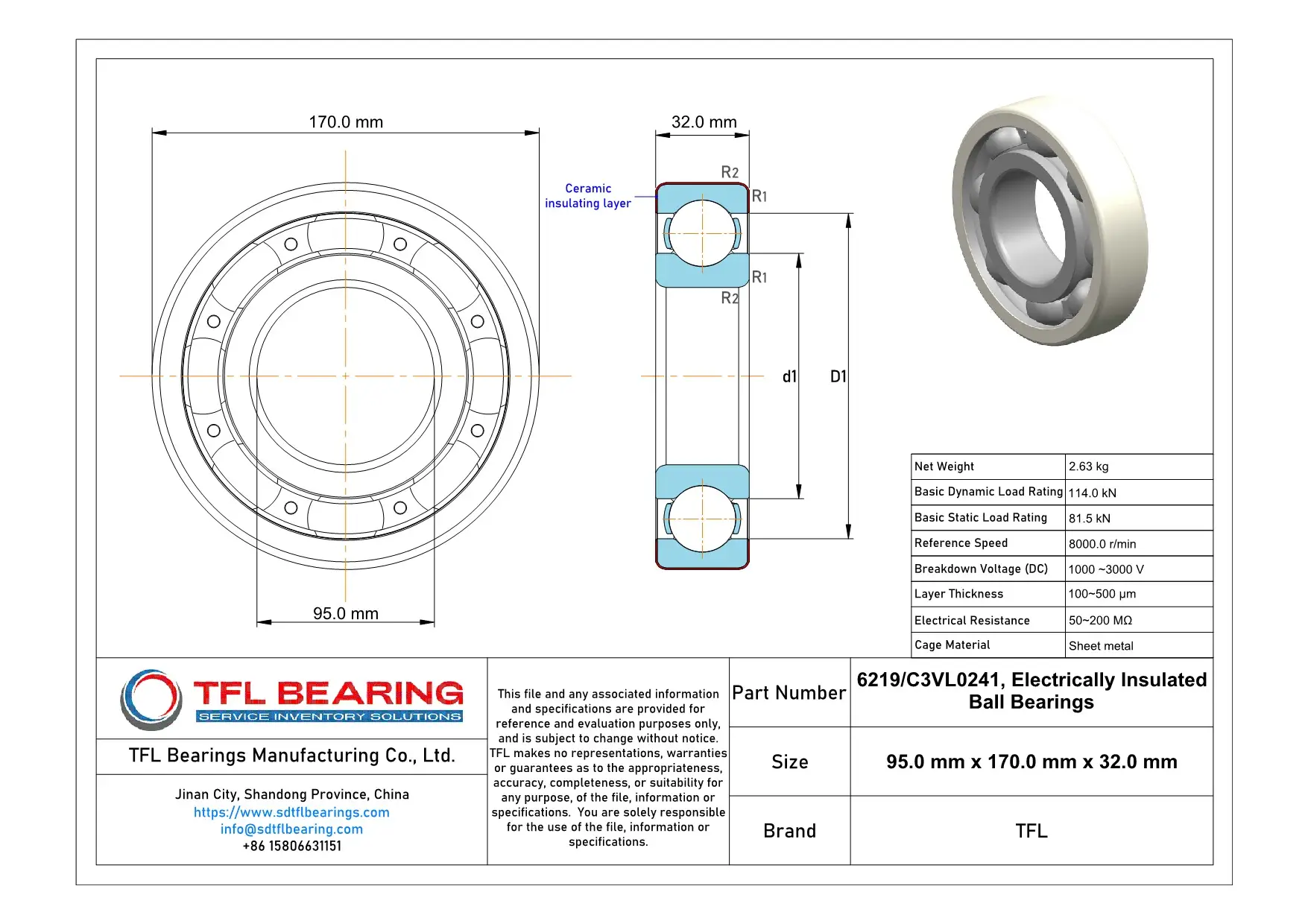
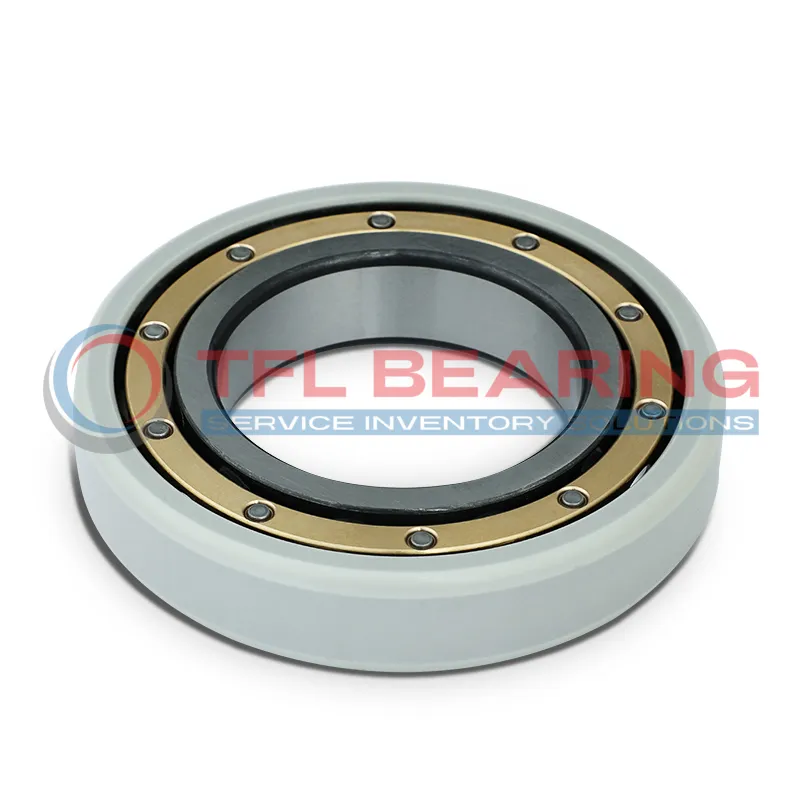
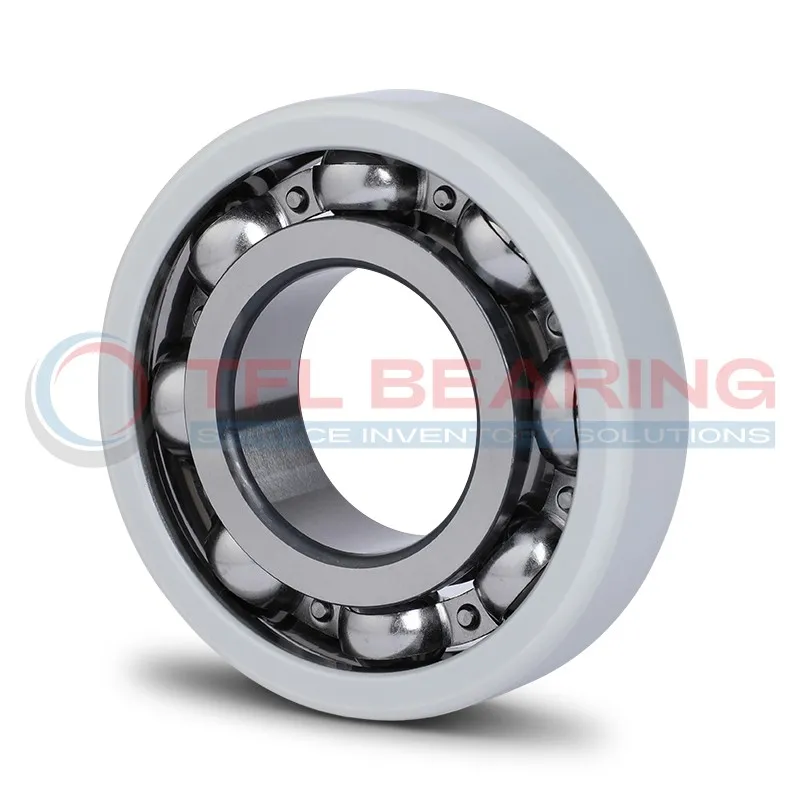
The 6219/C3VL0241 is an electrically insulated ball bearing with a 95mm bore and 170mm outer diameter, designed to prevent electrical currents from passing through. Its robust construction handles dynamic loads up to 114 kN and spins smoothly at speeds up to 8000 RPM.
The outer ring features a special insulating coating, providing a breakdown voltage of 1000-3000V and electrical resistance of 50-200 MΩ. This makes it ideal for use in electric motors or generators where stray currents can cause damage.
With a C3 radial clearance and sheet metal cage, it offers reliable performance under varying thermal conditions. The bearing is compliant with RoHS and REACH standards, ensuring safe and eco-friendly use.
Weighing 2.63kg, it’s a durable choice for industrial applications requiring electrical insulation and high-speed operation. Suitable for wind turbines or railway systems where electrical isolation is crucial.
How Is 6219/C3VL0241 Bearing Engineered for Reliability?
6219/C3VL0241 Bearing features an insulation coating on the outer ring, preventing electrical current damage.
This design ensures reliable operation in environments with electrical interference.
The sheet metal cage maintains ball alignment, reducing friction and wear.
With a basic dynamic load rating of 114.0 kN, it handles heavy loads efficiently.
6219/C3VL0241 Bearing’s breakdown voltage ranges from 1000 to 3000 V, suitable for various electrical conditions.
Its reference speed of 8000 r/min allows for high-speed applications without compromising performance.
The C3 radial internal clearance ensures smooth operation under varying thermal conditions.
This makes 6219/C3VL0241 Bearing a dependable choice for industrial applications.
Industrial Uses of 6219/C3VL0241 Bearing
This bearing is commonly used in electric motors and generators, where its insulation coating prevents electrical current from passing through. The C3 clearance ensures smooth operation even under varying thermal conditions.
Where Is 6219/C3VL0241 Bearing Used?
You’ll often find it in wind turbines and industrial drives, where high voltage resistance is essential. Its robust design handles dynamic loads up to 114 kN, making it reliable for heavy machinery.
Built for Heavy-Duty Use: 6219/C3VL0241 Bearing
In conveyor systems and pumps, this bearing’s sheet metal cage provides durability. The insulation coating also reduces wear from electrical arcing, extending its lifespan.
Automotive vs Aerospace: Applications of 6219/C3VL0241 Bearing
While it’s used in hybrid vehicle motors for its insulation properties, it’s also found in aerospace ground equipment. The breakdown voltage range of 1000-3000 V makes it versatile for different environments.
Perfect Fit for Automation: 6219/C3VL0241 Bearing
In robotic arms and CNC machines, this bearing’s high reference speed of 8000 r/min ensures precision. The electrical resistance of 50-200 MΩ adds an extra layer of safety in automated systems.