







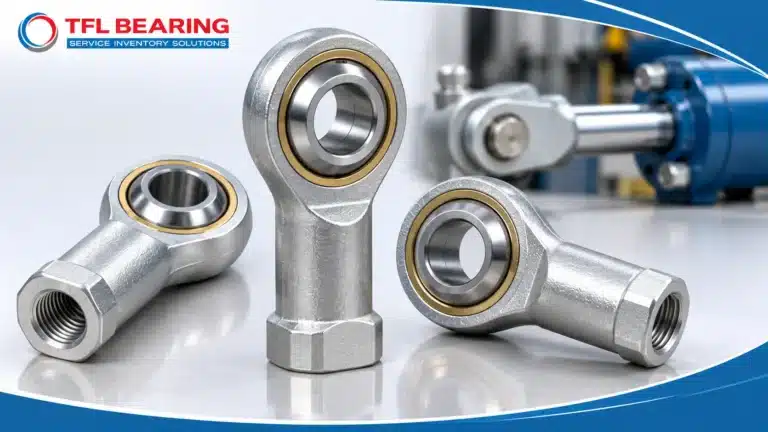
Female Rod End Bearing: Sizes and Threads
A female rod end bearing is a rod end with an internal thread in its shank, so it screws onto a threaded rod or…
Read articleCompare leading global bearing brands and explore compatible TFL alternatives by model, product type and application.
View all Brands GuideMatch manufacturer part numbers with interchangeable TFL bearing options and model-selection support.
Browse bearing solutions by equipment, operating environment and industry.
Practical guidance on bearing selection, applications, maintenance and sourcing.
A female rod end bearing is a rod end with an internal thread in its shank, so it screws onto a threaded rod or…
Read article
Find answers about quality, orders, technical support and after-sales service.
Use our articles, reference tools and customer resources to support sourcing decisions.
Learn about TFL Bearing, our quality systems and supply capabilities.
View all About & CapabilitiesAccess engineering support and services throughout the purchasing process.
View all Services & SupportExplore customer projects, sourcing partnerships and ways to contact our team.
View all Work With TFL
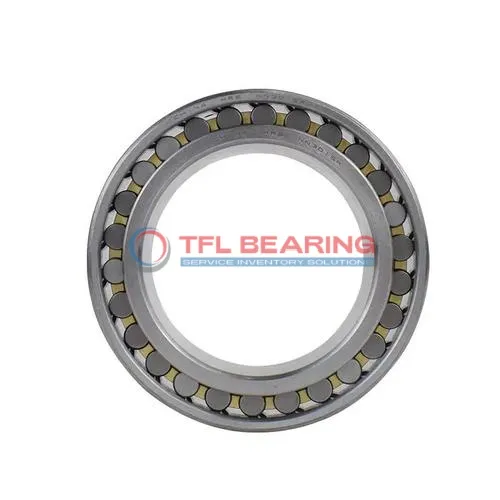
The NNU 4984 BK/SPW33 is a double-row cylindrical roller bearing with a large 420mm bore and 560mm outer diameter, built from tough chrome steel. It handles combined loads up to 339,750 lbf and runs smoothly at speeds up to 1000 RPM.
Its open design allows easy lubrication with grease or oil, while the double-row construction provides extra stability. The bearing operates well in temperatures from -30°C to 110°C.
This model is interchangeable with SKF bearings, making it a practical choice for replacements. Ideal for heavy machinery or industrial equipment where high radial loads are common.
Weighing 91kg, it’s a robust unit designed for demanding applications. Compliant with RoHS and REACH standards for safe use.
Performance Features of NNU 4984 BK/SPW33 Bearing
NNU 4984 BK/SPW33 Bearing is built with chrome steel rings and rollers, offering high resistance to combined loads.
Its dynamic radial load capacity reaches 339750 lbf, making it suitable for heavy-duty applications.
The double-row cylindrical design ensures stability and precision in demanding conditions.
With a maximum speed of 1000 rpm, it balances performance and durability.
NNU 4984 BK/SPW33 Bearing operates efficiently in temperatures ranging from -30° to 110°C.
Its open design allows for easy lubrication with grease or oil, reducing maintenance needs.
The tapered bore design simplifies installation and ensures secure fitting.
This bearing is ideal for applications requiring high precision and reliability.
Industrial Uses of NNU 4984 BK/SPW33 Bearing
NNU 4984 BK/SPW33 Bearing is commonly used in heavy industrial machinery, such as large lathes and rolling mills, where its double-row design handles both radial and axial loads efficiently. The tapered bore ensures a secure fit, reducing slippage during high-load operations.
What Makes NNU 4984 BK/SPW33 Bearing a Preferred Choice?
In wind turbine applications, NNU 4984 BK/SPW33 Bearing’s high dynamic radial load capacity makes it reliable for prolonged use in harsh conditions. Its open design allows for easy lubrication, extending service life in remote installations.
Built for Heavy-Duty Use: NNU 4984 BK/SPW33 Bearing
For mining equipment, NNU 4984 BK/SPW33 Bearing’s chrome steel construction withstands extreme loads and vibrations. The wide temperature range ensures performance in both hot and cold environments, making it versatile for underground operations.
Automotive vs Aerospace: Applications of NNU 4984 BK/SPW33 Bearing
In aerospace, NNU 4984 BK/SPW33 Bearing’s precision engineering supports critical components like landing gear systems. For automotive testing rigs, its high-speed capability ensures accurate performance measurements under stress.
Where Is NNU 4984 BK/SPW33 Bearing Used?
NNU 4984 BK/SPW33 Bearing is ideal for paper manufacturing machinery, where its combined load handling keeps production lines running smoothly. The grease or oil lubrication options adapt to different operational needs, reducing downtime.