









Double Row Cylindrical Roller Bearings
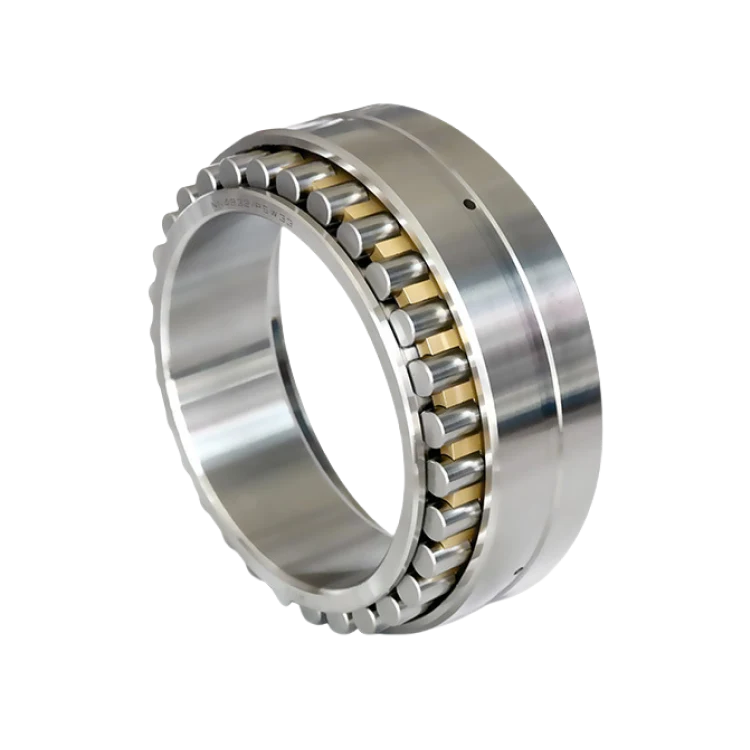
Double row cylindrical roller bearings use two rows of cylindrical rollers to provide high radial load capacity and stiffness in heavy-duty machinery. TFL supplies large-size replacement options across NNU 41 and NNU 48 series, selected NNUP designs, and BC2B or drawing-number references. The current range covers bore diameters from 260 to 1319.5 mm, with different bore types, cage designs and lubrication features. Buyers can compare part numbers, bore, outside diameter, width, load ratings and speed in the product list. These bearings are used in rolling mills, large industrial gearboxes and heavy-duty drives. TFL supports bearing distributors, importers and industrial resellers with replacement specification checks, mixed-model quotations, custom requirements, OEM or neutral packaging, inspection requirements and consolidated shipment. Price, MOQ and lead time are confirmed with the quotation.
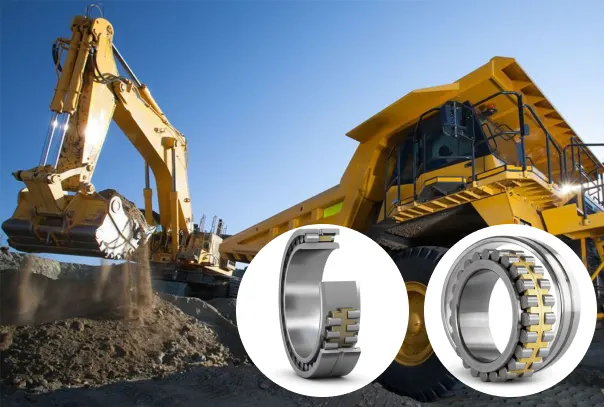
Designed for Heavy-Duty Applications
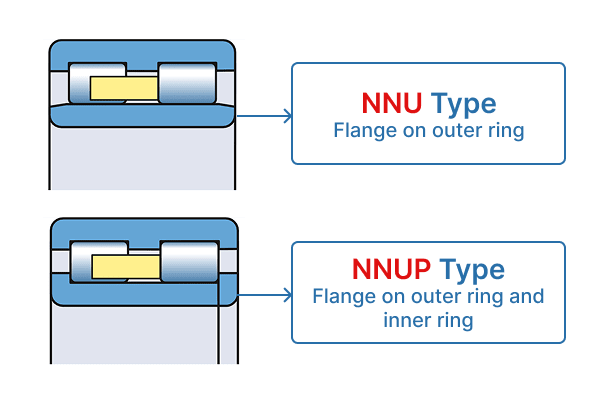
Versatile Designs to Suit Different Mounting Needs (NNU and NNUP Types)
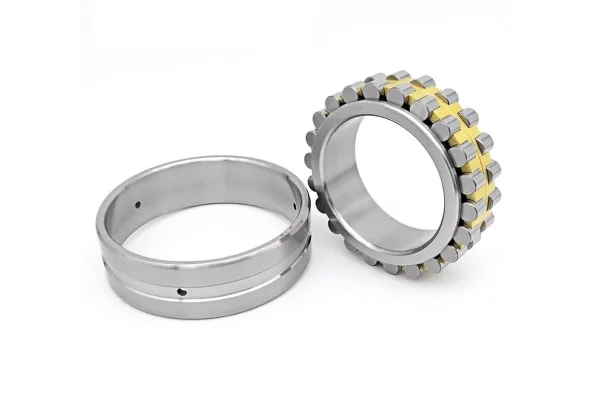
Reliable Performance with Highly Competitive Cost-Effectiveness
Double Row Cylindrical Roller Bearing Selection and Sourcing Guide
For replacement enquiries, start with the complete bearing number and quantity. Double row cylindrical roller bearings provide high radial load capacity and stiffness, but their axial locating functions depend on the internal design. NNU and NN designs generally allow axial displacement, while NNUP designs can provide axial location. Bore type, cage, clearance, lubrication features and drawing-specific requirements help define the correct replacement.
How to Choose from the Product List
Start with the original bearing number or mounting drawing. If the designation is incomplete, compare bore diameter (d), outside diameter (D) and width (B). Then confirm the bearing’s axial function, cylindrical or tapered bore, cage, clearance and lubrication features. Shaft and housing fits, shoulders and mounting dimensions are also important when the replacement differs from the original specification.
Dynamic and static radial load ratings are useful for comparing models, but neither represents a universal maximum operating load. Required bearing life, operating speed, shock loads and lubrication conditions also affect selection. When comparing ratings from different catalogues, check the units carefully, particularly when the product data uses lbf and the original specification uses kN.
Common Series and Model Range
TFL supplies NNU 41 series bearings, selected NNU 48 and NNUP designs, and large-size BC2B or numerical drawing references. The current range covers bore diameters from 260 to 1319.5 mm, outside diameters from 440 to 1720 mm and widths from 100 to 438 mm. Different cage, bore and lubrication configurations are available according to the model. Drawing-number references require the original specification or drawing to confirm the internal design and supplied assembly.
| Listed Reference | Bore × OD × Width | Main Specification Check |
|---|---|---|
| NNU 4152 M/W33 | 260 × 440 × 180 mm | Machined-brass cage, lubrication features and mounting requirements. |
| 315976 B | 280 × 470 × 200 mm | Drawing-defined internal construction and B execution. |
| NNU 4164 F | 320 × 540 × 218 mm | F execution, cage specification and required axial displacement. |
| NNU 4196 M/W33 | 480 × 790 × 308 mm | Large-bore mounting, cage and lubrication arrangement. |
Axial Movement and Locating Requirements
Conventional NN and NNU double row cylindrical roller bearings are commonly used in non-locating positions. Their rib arrangements allow axial displacement within the bearing to accommodate shaft expansion. NNUP designs provide axial locating capability through a different rib arrangement and can support axial location in both directions, subject to the specific bearing design and permissible axial load.
For BC2B and numerical drawing references, the internal construction and axial function should be confirmed from the original specification rather than assumed from the part number.
Two Roller Rows Do Not Mean Two-Direction Axial Location
Double row cylindrical roller bearings are primarily designed for high radial loads and stiffness. An NNU bearing may still require a separate locating bearing elsewhere in the shaft arrangement. When comparing a replacement, confirm whether the original bearing is used in a locating or non-locating position.
Cylindrical vs Tapered Bore Selection
Double row cylindrical roller bearings are available with cylindrical and tapered bore configurations. The bore type affects shaft mounting and the mounted radial internal clearance. In SKF-style designations, K generally identifies a 1:12 tapered bore, while K30 identifies a 1:30 tapered bore.
For example, NNU 4888 KM/W33 and NNU 41/530 K30M/W33 represent different tapered-bore requirements. The original suffix should be retained when requesting a replacement. Shaft-seat dimensions, sleeve arrangements and mounted clearance can be confirmed from the original drawing or mounting specification when needed.
Model Code Example: NNU 4152 M/W33
The NNU 4152 M/W33 reference illustrates how the complete designation identifies important bearing features. NNU identifies a double row cylindrical roller bearing with outer-ring ribs and a ribless inner ring, allowing axial displacement. 41 identifies the dimensional series, and 52 corresponds to a 260 mm nominal bore. M identifies a machined-brass cage, while W33 indicates a circumferential lubrication groove and three lubrication holes in the outer ring. The listed dimensions are 260 × 440 × 180 mm.
These designation details help define the replacement requirement. Clearance, tolerance, cage execution and other specifications are confirmed for the proposed TFL product. Numerical drawing references such as 315976 B follow a different identification system and should be matched using the original drawing.
Lubrication, Cage and Precision Confirmation
Large double row cylindrical roller bearings require suitable lubrication across both roller rows. Where the bearing includes a W33 lubrication groove and holes, the housing lubrication passages must align with the bearing arrangement. W33 identifies the lubrication features, not the type or quantity of lubricant required.
Grease or oil selection, operating temperature, contamination protection and replenishment requirements depend on the equipment. Cage material, radial internal clearance, dimensional tolerance and running accuracy can also differ between models. These details are especially relevant for drawing-specific replacements or bearings with special mounting and operating requirements.
Large industrial bearings should not automatically be assigned a particular precision grade or speed capability based on their double row construction. The specified model and operating conditions determine the relevant performance requirements. Our double row cylindrical roller bearing application guide provides additional technical background.
Key Information for a Quotation
You do not need to provide every detail before requesting a quote. The complete bearing number and quantity are often enough to begin. For drawing-number bearings, obsolete references or custom configurations, additional drawings and specifications help confirm the correct replacement more quickly.
| Information | Why It Helps |
|---|---|
| Complete bearing number | Identifies the series, bore type and important design suffixes. |
| Quantity | Allows price, MOQ and lead time to be confirmed for the requested order. |
| Bore × OD × width | Helps confirm the required dimensions when the original designation is incomplete. |
| Cylindrical or tapered bore | Distinguishes mounting arrangements and related clearance requirements. |
| Cage, clearance and precision | Helps match the original internal design and operating requirements. |
| Lubrication features | Confirms requirements such as W33 grooves and lubrication holes. |
| Drawing or original specification | Important for BC2B, numerical references, special executions and custom replacements. |
| Complete bearing or specified components | Clarifies the required supply when a bearing has separable rings or a drawing-defined assembly. |
| Packaging and delivery requirements | Helps confirm packing, handling and shipment arrangements for large bearing orders. |
SKF, FAG and NSK Replacement Notes
TFL supplies alternative double row cylindrical roller bearings for SKF, FAG and NSK references. The complete original part number helps identify the required dimensions, rib arrangement, bore type, cage, clearance and lubrication features. For drawing-specific bearings, the original drawing or specification is particularly useful when confirming a proposed replacement.
Suffixes such as B, /HB1 or /HA1 should be retained when they appear in the original reference, as they may identify a specific design, material or heat-treatment execution. Matching dimensions alone does not establish full interchangeability. Separable bearing components should also be matched to the specified assembly rather than mixed across different bearing executions without confirmed compatibility.
Common Applications
Large double row cylindrical roller bearings are commonly used in rolling mills, industrial gearboxes, heavy-duty drives and process machinery requiring substantial radial load capacity and stiffness. The appropriate bearing design depends on the shaft arrangement, axial movement, load cycle, mounting fits and lubrication system. For roll-neck bearings and other drawing-specific replacements, the original assembly drawing is an important reference.
Other constructions are available in our wider cylindrical roller bearing range and can be included in the same distributor enquiry.
Representative Models for Distributor RFQs
The NNU 4164 F bearing represents a 320 mm bore configuration measuring 320 × 540 × 218 mm. NNU 4196 M/W33 is a larger NNU reference with a 480 mm bore, while 315976 B illustrates a drawing-number requirement where the original specification is important. These examples show different sizes and designation types rather than a sales or stock ranking.
Large-Bearing Orders and Distributor Supply
TFL supports bearing distributors, importers and industrial resellers purchasing large double row cylindrical roller bearings alongside other bearing types. Send a bearing list or BOM with complete part numbers and quantities. For drawing-specific references, add the original drawing, revision or required configuration when available. The quotation can cover the proposed TFL models, important specification differences, price, MOQ and lead time.
Custom specifications, OEM or neutral packaging, inspection requirements and consolidated shipment can be coordinated for confirmed orders. Model numbers, quantities, agreed dimensions, visible condition and packing requirements are checked before shipment. Large bearings and other bearing categories can be included in one enquiry.
Send Your Double Row Cylindrical Roller Bearing List
Send complete NNU, NNUP, BC2B or drawing references with quantities to request a quote. Add drawings, mounting specifications or packaging requirements where needed to confirm the replacement.
Send Your Bearing ListSKF, FAG and NSK brand names and bearing references are used only to identify replacement requirements. TFL supplies alternative bearing options and does not imply original-brand manufacture or authorized distribution. Final interchangeability is confirmed against the relevant design, dimensions and product specifications.
FREQUENTLY ASKED QUESTIONS

What's the difference between a double row cylindrical roller bearing and two single row ones placed side-by-side?
- Space and Rigidity: A single, integral double row cylindrical roller bearing has a more robust outer ring and a more compact structure, providing higher rigidity within a smaller radial footprint.
- Mounting and Alignment: Installing two separate single row bearings requires extremely precise alignment to ensure the load is distributed evenly across both rows of rollers. Any misalignment can lead to stress concentration and premature bearing failure. A double row bearing, as a single unit, has internally guaranteed concentricity and alignment of its two raceways, greatly simplifying installation and ensuring optimal performance.
- Cost-Effectiveness: When considering procurement, installation, and potential alignment issues, selecting a single double row bearing is often the more reliable and, in the long run, more cost-effective solution.
What kind of lubrication do double row cylindrical roller bearings require?
- Grease Lubrication: Suitable for low-to-medium speed operating conditions. Choose an appropriate grease (based on temperature, speed, and load) and fill the bearing and housing with the correct amount.
- Oil Lubrication: Recommended for high-speed or high-temperature applications. Oil lubrication (such as an oil bath, oil mist, or circulating oil system) provides more effective cooling and lubrication. Many heavy-duty models feature a lubrication groove and holes in the outer ring (suffix W33) to facilitate re-lubrication.