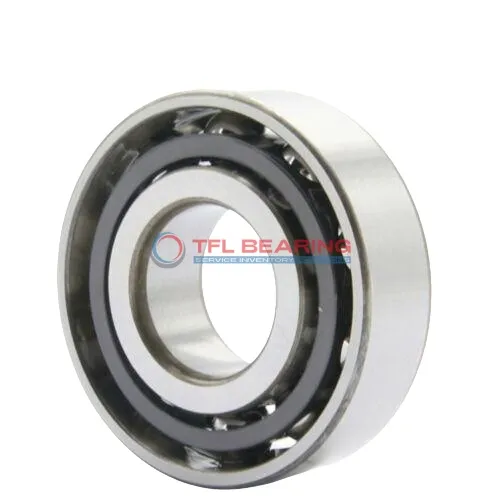
Super Precision Angular Contact Ball Bearings S71907 ACEGA/HCP4A
Super Precision Angular Contact Ball Bearings S71907 ACEGA/HCP4A
The S71907 ACEGA/HCP4A is a super precision angular contact ball bearing with a 35mm bore and 55mm outer diameter, measuring just 10mm wide. Made from chrome steel and ceramic balls, it offers smooth operation and durability.
With a 25° contact angle, it handles radial loads up to 1638 lbf and spins at speeds up to 56,000 RPM. The sealed design keeps grease in and contaminants out, ensuring long service life.
Its phenolic cage and P4A tolerance class provide excellent precision, ideal for high-speed applications. The bearing can be paired in back-to-back, face-to-face, or tandem arrangements for versatile use.
Weighing only 0.066kg, it’s perfect for precision machinery like spindles or dental tools where accuracy and speed are crucial. Compliant with standard temperature ranges from -30°C to 110°C.
Get A Free Quote
"*" indicates required fields
DescriptionFeaturesApplicationQ&ARecommended ProductsOur Process
Product Parameters
Part NumberS71907 ACEGA/HCP4A
BrandTFL
InterchangeableSKF
Bore Dia35 mm
Bore Dia Tolerance-0.004mm to 0
Outer Dia55 mm
Outer Dia Tolerance-0.004mm to 0
Width10 mm
Width Tolerance-0.2mm to 0
Ball Dia5.556 mm
Ball Qty19
Contact Angle25°
Tolerance ClassP4A
System of MeasurementMetric
Seal TypeSealed
Matched ArrangementNo
Number Of Bearings In Matched Set2
Universal Matching BearingYes, back-to-back (<>), face-to-face (><) or tandem (>>)
Performance Features of S71907 ACEGA/HCP4A Bearing
S71907 ACEGA/HCP4A Bearing is designed with a 25° contact angle, ideal for handling combined radial and axial loads.
The ceramic balls and chrome steel rings provide excellent durability and reduced friction during high-speed operation.
With a maximum speed of 56,000 rpm, it ensures smooth performance in precision applications.
The sealed design and grease lubrication minimise maintenance needs, making it a reliable choice.
Application
Common Applications of S71907 ACEGA/HCP4A Bearing
S71907 ACEGA/HCP4A Bearing is widely used in high-speed machine tools, where its precision and ceramic balls ensure smooth operation. The sealed design keeps contaminants out, making it ideal for dusty workshop environments.
In robotics, S71907 ACEGA/HCP4A Bearing supports articulated arms, providing stability during rapid movements. Its phenolic cage reduces friction, enhancing efficiency in automated systems.
For medical imaging devices, S71907 ACEGA/HCP4A Bearing’s P4A tolerance class guarantees accuracy in critical components. The grease lubrication ensures quiet performance, essential for sensitive diagnostic equipment.
In electric motors, S71907 ACEGA/HCP4A Bearing handles angular contact loads efficiently, thanks to its 25° contact angle. The extra light preload makes it suitable for applications requiring minimal resistance.