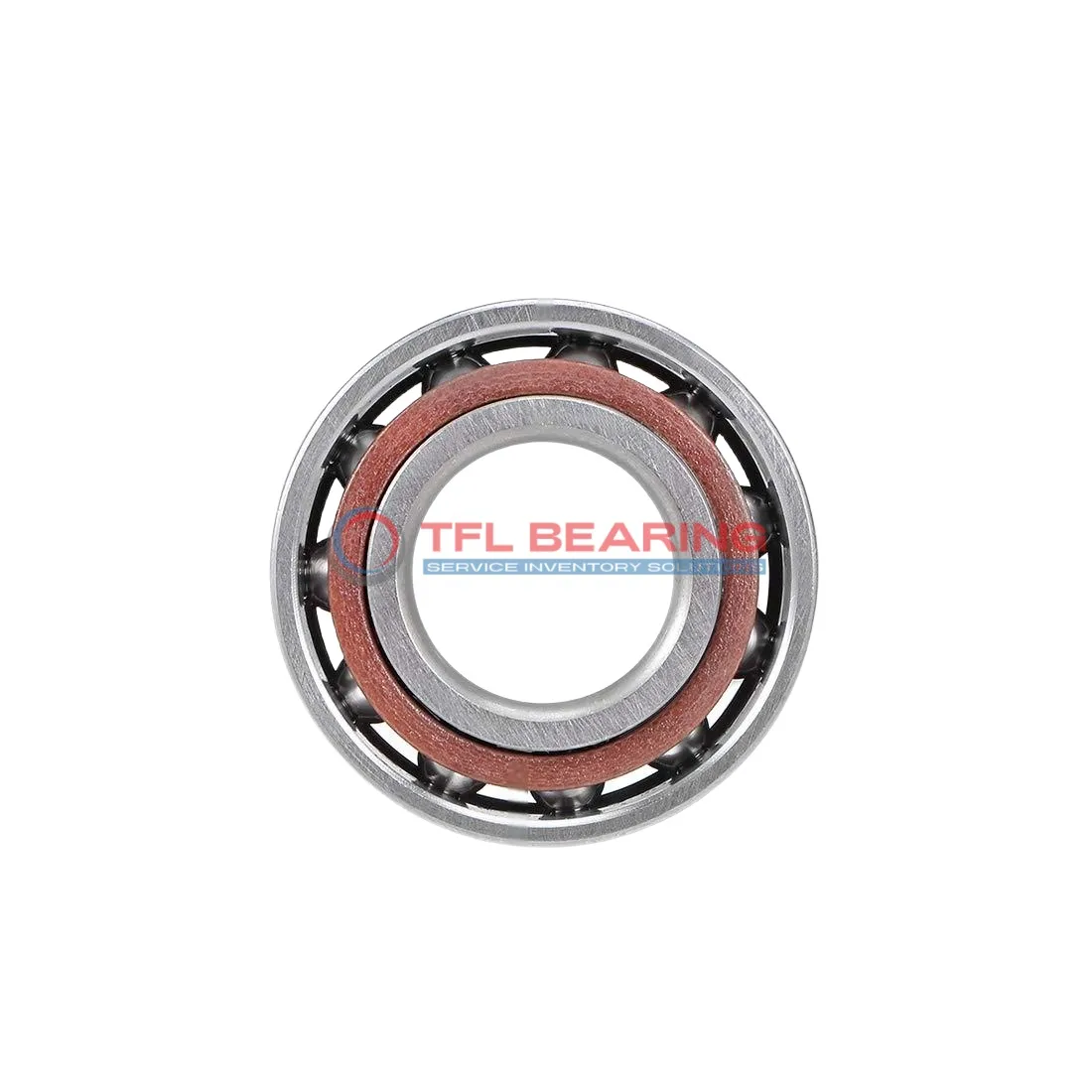
Super Precision Angular Contact Ball Bearings 7217 ACD/HCP4ADBC
Super Precision Angular Contact Ball Bearings 7217 ACD/HCP4ADBC
The 7217 ACD/HCP4ADBC is a super precision angular contact ball bearing with an 85mm bore and 150mm outer diameter, measuring 56mm in width. Made from chrome steel and ceramic balls, it offers high durability and smooth operation.
It handles radial loads up to 35100 lbf and spins at speeds up to 17000 RPM, thanks to its phenolic cage and 25° contact angle. The moderate preload (Class C) ensures stable performance under angular loads.
This matched set of two bearings (DB arrangement) is ideal for high-precision applications like machine tool spindles or robotics. Its open design allows for easy lubrication and maintenance.
Weighing 3.13kg, it operates in temperatures from -30°C to 110°C. Compliant with P4A tolerance standards, it’s interchangeable with SKF bearings for convenient replacements.
Get A Free Quote
"*" indicates required fields
DescriptionFeaturesApplicationQ&ARecommended ProductsOur Process
7217 ACD/HCP4ADBC Bearing is designed with a 25° contact angle, optimising load distribution for angular contact applications.
Its chrome steel rings and ceramic balls enhance durability while reducing friction.
The phenolic cage ensures smooth operation, even at high speeds up to 17,000 rpm.
With a dynamic radial load capacity of 35,100 lbf, it handles demanding tasks with ease.
Moderate preload and P4A tolerance class provide consistent performance in precision settings.
The matched arrangement of two bearings offers stability for complex applications.
Operating between -30°C to 110°C, 7217 ACD/HCP4ADBC Bearing adapts to various environmental conditions.
Its open design simplifies maintenance while ensuring reliable lubrication.
Application
Industrial Uses of 7217 ACD/HCP4ADBC Bearing
7217 ACD/HCP4ADBC Bearing is commonly used in high-precision machine tools, where its angular contact design handles both radial and axial loads efficiently. The ceramic balls reduce friction, making it suitable for high-speed operations.
In automotive applications, 7217 ACD/HCP4ADBC Bearing supports gearboxes and drivetrains, ensuring smooth performance under moderate preload conditions. Its matched arrangement enhances stability in dynamic driving scenarios.
For robotics, 7217 ACD/HCP4ADBC Bearing’s phenolic cage and chrome steel rings provide durability in articulated arms and automated systems. The P4A tolerance class ensures consistent accuracy in repetitive movements.
Medical imaging devices benefit from 7217 ACD/HCP4ADBC Bearing’s low-friction ceramic balls, which contribute to quiet and precise operation. The open design allows for easy lubrication, extending service life in critical applications.
In aerospace components, 7217 ACD/HCP4ADBC Bearing’s ability to handle high speeds and temperatures makes it reliable for flight control systems. The metric sizing ensures compatibility with international engineering standards.