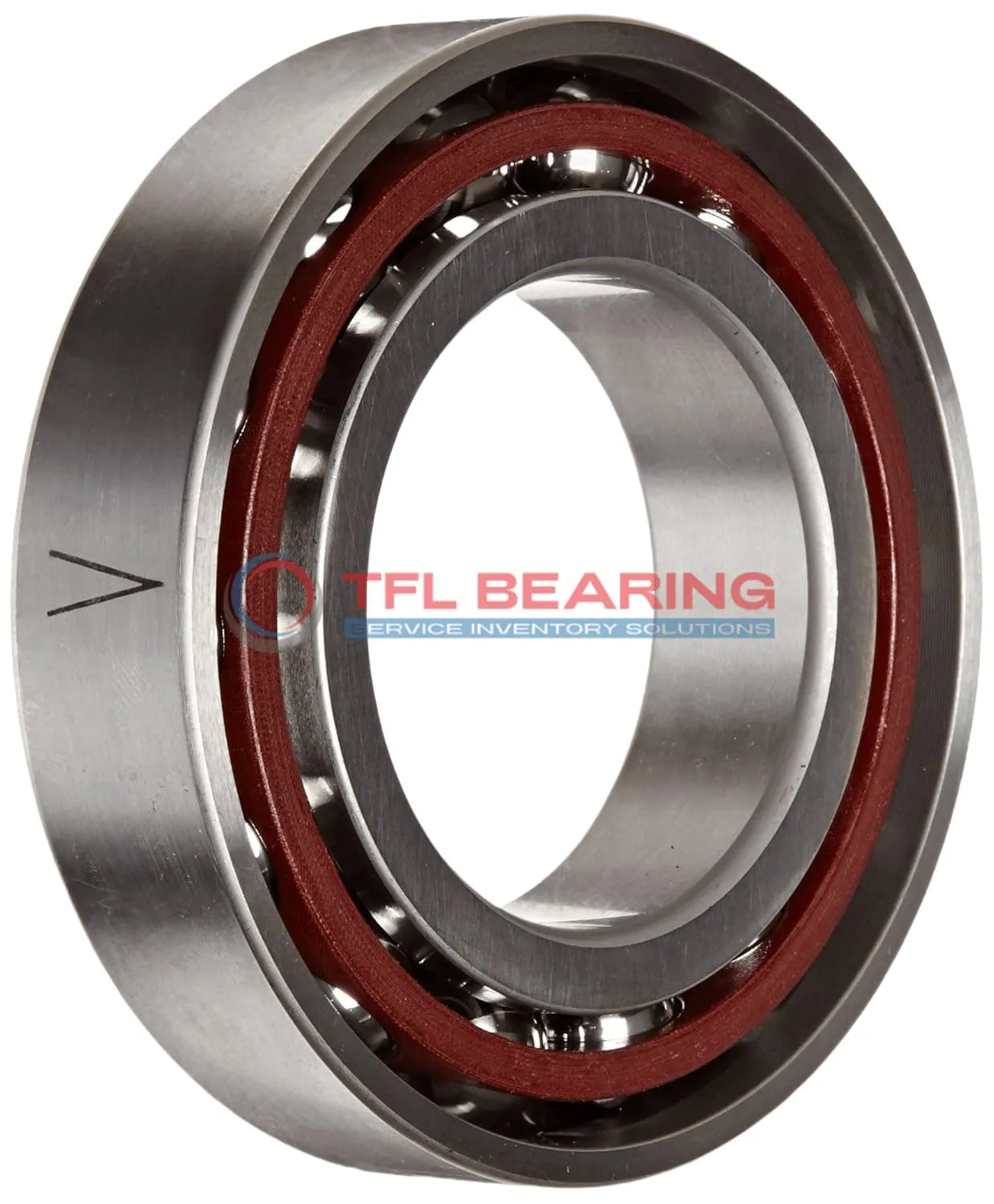
Super Precision Angular Contact Ball Bearings 71917 CD/P4ADBC
Super Precision Angular Contact Ball Bearings 71917 CD/P4ADBC
The 71917 CD/P4ADBC is a super precision angular contact ball bearing with an 85mm bore and 120mm outer diameter, crafted from durable chrome steel. It handles radial loads up to 17122 lbf and operates smoothly at speeds up to 17000 RPM.
Its 15° contact angle and matched arrangement (2 bearings DB) provide stability under moderate preload. The phenolic cage ensures quiet performance and longevity, even in demanding conditions.
This bearing is ideal for high-precision applications like machine tool spindles or robotics, where accuracy and speed are crucial. It works within a temperature range of -30°C to 110°C.
Weighing 1.06kg, it’s robust yet manageable for its size. Compliant with P4A tolerance standards, it’s interchangeable with SKF bearings for easy replacements.
Get A Free Quote
"*" indicates required fields
DescriptionFeaturesApplicationQ&ARecommended ProductsOur Process
71917 CD/P4ADBC Bearing is designed with a 15° contact angle, optimising load distribution for angular contact applications.
Its chrome steel rings and balls ensure durability, while the phenolic cage reduces friction and wear.
With a dynamic radial load capacity of 17122 lbf, it handles demanding conditions reliably.
The P4A tolerance class guarantees precision, making it suitable for high-speed applications up to 17,000 rpm.
The matched arrangement of two bearings provides balanced performance and stability.
Its moderate preload (Class C) ensures smooth operation without excessive rigidity.
Application
Key Fields for 71917 CD/P4ADBC Bearing
In precision machine tools, 71917 CD/P4ADBC Bearing excels due to its 15° contact angle and P4A tolerance class, ensuring accurate spindle rotation. The matched pair design (DB arrangement) further enhances stability for high-speed operations.
Where Is 71917 CD/P4ADBC Bearing Used?
You’ll often find 71917 CD/P4ADBC Bearing in aerospace applications, such as helicopter gearboxes, where its moderate preload (Class C) handles combined radial and axial loads. The phenolic cage also reduces friction at elevated speeds.
Built for Heavy-Duty Use: 71917 CD/P4ADBC Bearing
Industrial pumps benefit from 71917 CD/P4ADBC Bearing’s chrome steel construction, which withstands dynamic radial loads up to 17,122 lbf. Its open design simplifies relubrication in harsh environments.
Automotive vs Aerospace: Applications of 71917 CD/P4ADBC Bearing
While 71917 CD/P4ADBC Bearing suits automotive turbochargers for its 17,000 rpm limit, it’s equally vital in aircraft landing gear systems. The metric sizing ensures compatibility across global machinery standards.
Perfect Fit for Automation: 71917 CD/P4ADBC Bearing
Robotic arms rely on 71917 CD/P4ADBC Bearing for smooth angular movement, thanks to its balanced preload and 25-ball configuration. The temperature range (-30°C to 110°C) accommodates varied operating conditions.