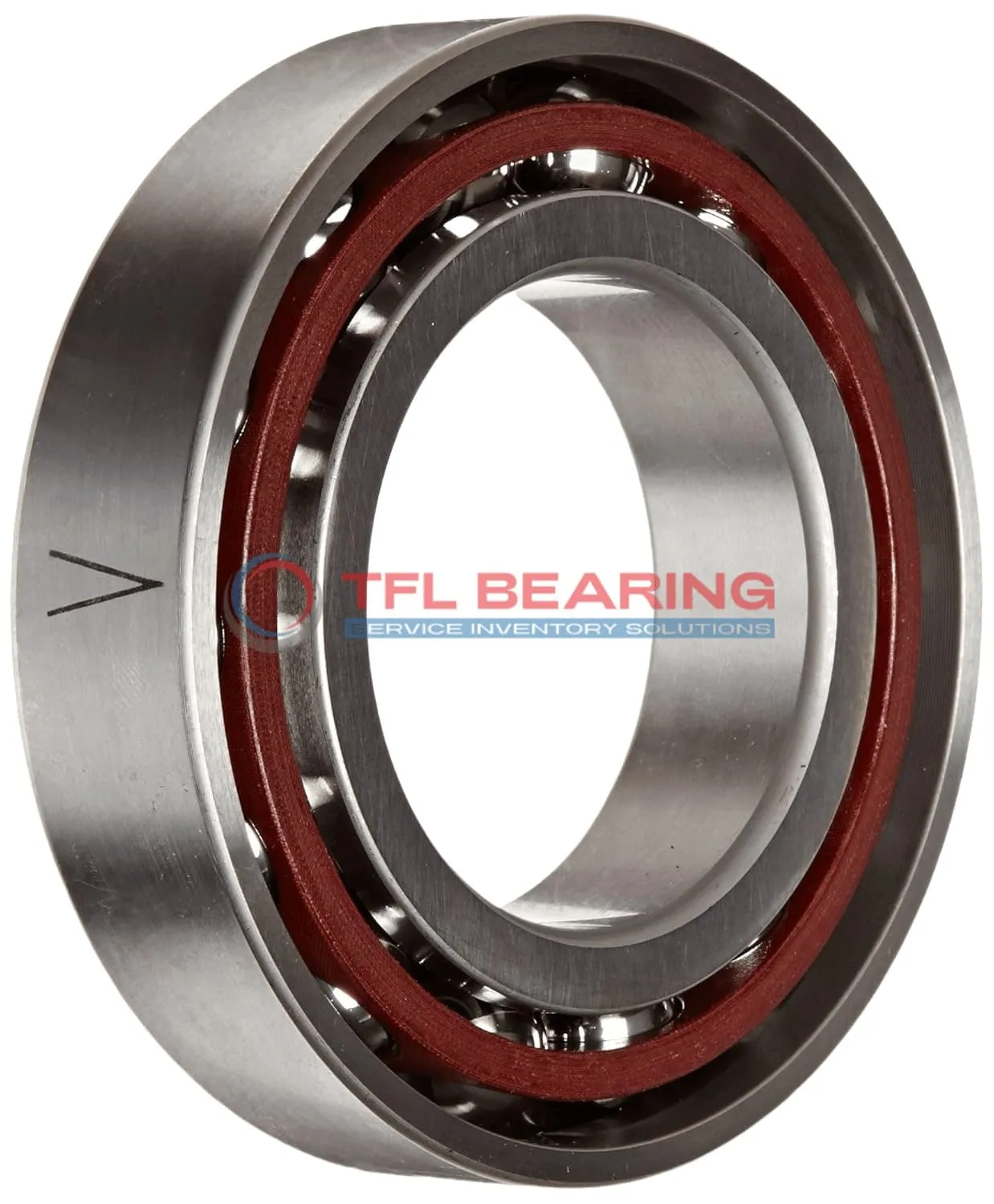
Super Precision Angular Contact Ball Bearings 71917 ACD/P4ADGB
Super Precision Angular Contact Ball Bearings 71917 ACD/P4ADGB
The 71917 ACD/P4ADGB is a super precision angular contact ball bearing with an 85mm bore and 120mm outer diameter, crafted from durable chrome steel. It handles radial loads up to 16088 lbf and reaches speeds of 28000 RPM smoothly.
With a 25° contact angle and universal matching design, it offers flexibility for back-to-back, face-to-face, or tandem arrangements. The phenolic cage ensures quiet operation and longevity.
Its light preload (Class B) and P4A tolerance class make it ideal for high-precision applications like machine tool spindles or robotics. The open design allows for easy lubrication.
Weighing 1.06kg, this bearing operates efficiently in temperatures from -30°C to 110°C. It’s interchangeable with SKF bearings, providing a reliable replacement option.
Get A Free Quote
"*" indicates required fields
DescriptionFeaturesApplicationQ&ARecommended ProductsOur Process
Product Parameters
Part Number71917 ACD/P4ADGB
BrandTFL
InterchangeableSKF
Bore Dia85 mm
Bore Dia Tolerance-0.004mm to 0
Outer Dia120 mm
Outer Dia Tolerance-0.004mm to 0
Width36 mm
Width Tolerance-0.2mm to 0
Ball Dia11.112 mm
Ball Qty25
Contact Angle25°
Tolerance ClassP4A
System of MeasurementMetric
Seal TypeOpen
Matched ArrangementUniversal matching
Number Of Bearings In Matched Set2
Universal Matching BearingYes, back-to-back (<>), face-to-face (><) or tandem (>>)
71917 ACD/P4ADGB Bearing is designed with a 25° contact angle, optimising load distribution for precision applications.
Its chrome steel rings and balls ensure durability and resistance to wear under high radial loads.
The phenolic cage maintains ball alignment, reducing friction and enhancing performance at high speeds.
With a maximum speed of 28,000 rpm, it delivers reliable operation in demanding conditions.
Universal matching allows flexible arrangement, supporting back-to-back, face-to-face, or tandem configurations.
This versatility makes 71917 ACD/P4ADGB Bearing suitable for complex machinery setups.
Its P4A tolerance class ensures exceptional precision, meeting the needs of high-accuracy applications.
The light preload further enhances stability and reduces vibration during operation.
Application
Key Fields for 71917 ACD/P4ADGB Bearing
71917 ACD/P4ADGB Bearing is widely used in high-precision machine tools, where its 25° contact angle ensures accurate radial and axial load handling. The universal matching design allows flexible arrangements for complex machinery needs.
In aerospace applications, 71917 ACD/P4ADGB Bearing supports critical components like turbine shafts, thanks to its phenolic cage and chrome steel construction. Its light preload class ensures smooth operation at high speeds.
For robotics, 71917 ACD/P4ADGB Bearing excels in articulated arms and joints, providing reliable performance under dynamic loads. The P4A tolerance class guarantees precision in repetitive movements.
Medical imaging devices benefit from 71917 ACD/P4ADGB Bearing’s low friction and high-speed capabilities. The lubricated design minimises maintenance while ensuring consistent operation.
In automotive testing equipment, 71917 ACD/P4ADGB Bearing handles both radial and thrust loads with ease. Its metric sizing makes it compatible with European and Asian machinery standards.