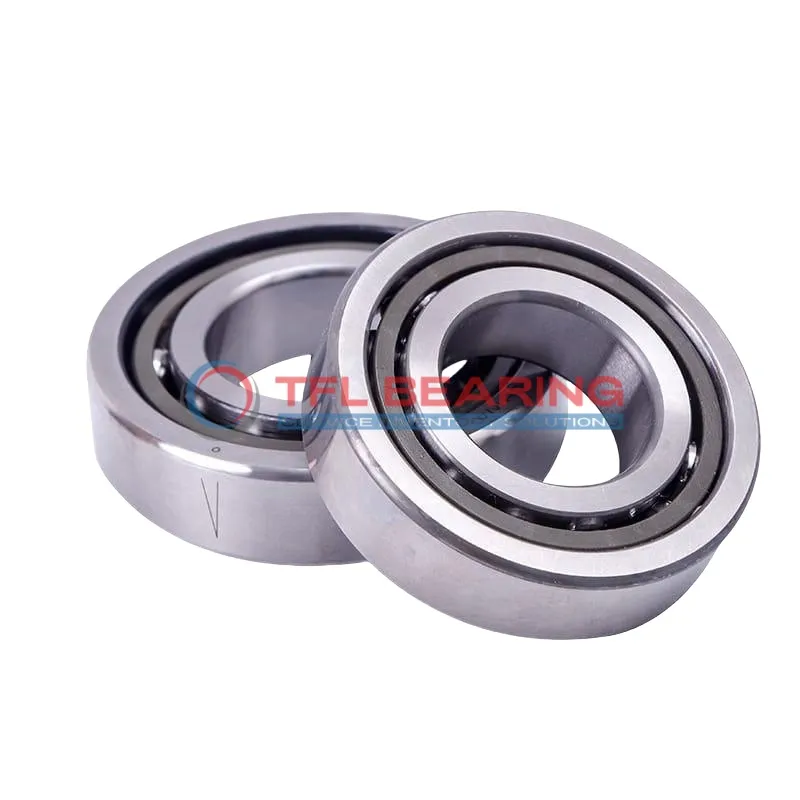
Super Precision Angular Contact Ball Bearings 71916 ACD/P4ADGA
Super Precision Angular Contact Ball Bearings 71916 ACD/P4ADGA
The 71916 ACD/P4ADGA is a super precision angular contact ball bearing with an 80mm bore and 110mm outer diameter, crafted from durable chrome steel. Its 25° contact angle and extra-light preload ensure smooth operation under angular loads.
This bearing handles radial loads up to 12578 lbf and spins at speeds up to 17000 RPM, making it suitable for high-performance applications. The phenolic cage offers stability while keeping weight low at just 0.74kg.
Designed for universal matching, it works in back-to-back, face-to-face, or tandem arrangements. Ideal for precision machinery like spindles or CNC equipment where accuracy is key.
It operates efficiently in temperatures from -30°C to 110°C and comes pre-lubricated for easy installation. Interchangeable with SKF bearings, it’s a reliable choice for replacements or upgrades.
Get A Free Quote
"*" indicates required fields
DescriptionFeaturesApplicationQ&ARecommended ProductsOur Process
Product Parameters
Part Number71916 ACD/P4ADGA
BrandTFL
InterchangeableSKF
Bore Dia80 mm
Bore Dia Tolerance-0.004mm to 0
Outer Dia110 mm
Outer Dia Tolerance-0.004mm to 0
Width32 mm
Width Tolerance-0.2mm to 0
Ball Dia9.525 mm
Ball Qty27
Contact Angle25°
Tolerance ClassP4A
System of MeasurementMetric
Seal TypeOpen
Matched ArrangementUniversal matching
Number Of Bearings In Matched Set2
Universal Matching BearingYes, back-to-back (<>), face-to-face (><) or tandem (>>)
71916 ACD/P4ADGA Bearing is designed with a 25° contact angle, optimising load distribution for precision applications.
Its chrome steel rings and balls ensure durability, while the phenolic cage reduces friction and noise.
With a dynamic radial load capacity of 12578 lbf, it handles demanding conditions reliably.
The universal matching design allows flexible arrangements like back-to-back or face-to-face mounting.
Operating at speeds up to 17,000 rpm, it maintains smooth performance.
Its P4A tolerance class ensures high precision, making it suitable for critical machinery.
The extra light preload reduces friction, enhancing efficiency.
Its temperature range of -30°C to 110°C ensures stable operation in varied environments.
Application
Key Fields for 71916 ACD/P4ADGA Bearing
71916 ACD/P4ADGA Bearing is commonly used in high-precision machine tools, where its angular contact design ensures accurate spindle rotation. The universal matching feature allows for flexible arrangements, making it suitable for complex setups.
In automotive applications, 71916 ACD/P4ADGA Bearing supports high-speed components like turbochargers and transmission systems. Its extra light preload helps reduce friction, enhancing overall efficiency.
For robotics, 71916 ACD/P4ADGA Bearing provides reliable performance in articulated arms and joints. The phenolic cage material offers good heat resistance, which is essential for continuous operation.
Medical imaging devices benefit from 71916 ACD/P4ADGA Bearing’s precision and smooth operation. The P4A tolerance class ensures minimal vibration, crucial for sensitive diagnostic equipment.
In aerospace, 71916 ACD/P4ADGA Bearing is used in control systems and actuators. Its high dynamic radial load capacity makes it dependable in demanding flight conditions.