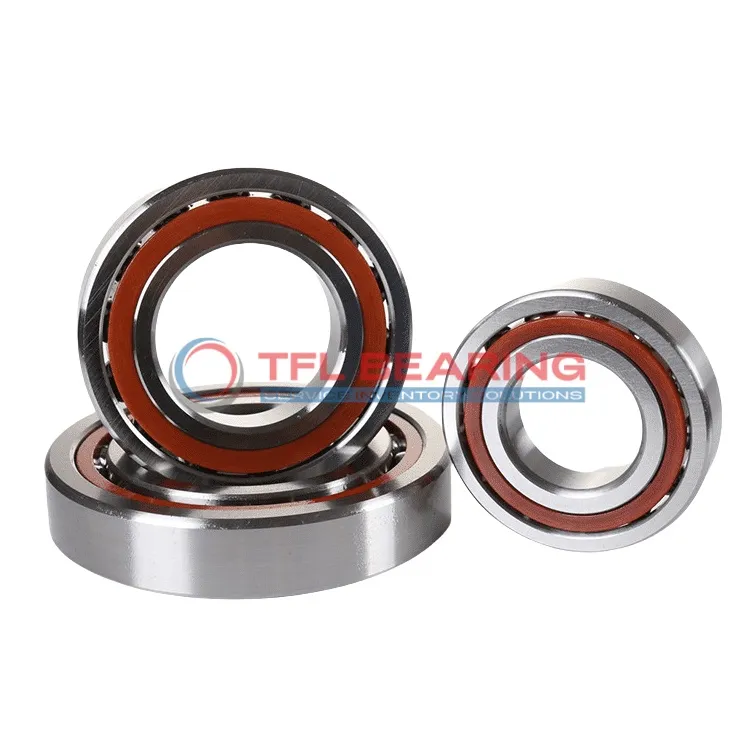
Super Precision Angular Contact Ball Bearings 7016 CD/P4ATBTA
Super Precision Angular Contact Ball Bearings 7016 CD/P4ATBTA
The 7016 CD/P4ATBTA is a super precision angular contact ball bearing with an 80mm bore and 125mm outer diameter, crafted from durable chrome steel. It handles radial loads up to 31500 lbf and operates smoothly at high speeds up to 28000 RPM.
Its 15° contact angle and matched arrangement of three bearings (TBT) provide excellent stability and load distribution. The phenolic cage ensures quiet operation and long service life, even in demanding conditions.
This bearing is lubricated for easy maintenance and performs well in temperatures from -30°C to 110°C. Ideal for high-precision applications like machine tool spindles or high-speed robotics.
Weighing 2.56kg, it’s a robust choice for industrial use. Compliant with P4A tolerance standards, it’s interchangeable with SKF bearings for reliable replacements.
Get A Free Quote
"*" indicates required fields
DescriptionFeaturesApplicationQ&ARecommended ProductsOur Process
7016 CD/P4ATBTA Bearing is designed with a 15° contact angle, optimising load distribution for precision applications.
Its chrome steel rings and balls ensure durability and smooth operation under high radial loads.
The phenolic cage maintains ball alignment, reducing friction and enhancing performance.
With a dynamic radial load capacity of 31500 lbf, it handles demanding conditions reliably.
7016 CD/P4ATBTA Bearing operates at speeds up to 28,000 rpm, balancing speed and stability.
Its extra light preload ensures minimal resistance, ideal for high-precision machinery.
The open design allows for easy lubrication, extending service life.
7016 CD/P4ATBTA Bearing’s P4A tolerance class guarantees consistent performance in critical applications.
Application
Industrial Uses of 7016 CD/P4ATBTA Bearing
This bearing is commonly used in high-speed machine spindles, where its precision and stability are key. The matched set arrangement ensures consistent performance in demanding industrial environments.
Where Is 7016 CD/P4ATBTA Bearing Used?
You’ll often find it in CNC machining centres, supporting spindle rotation with minimal vibration. Its phenolic cage helps reduce friction, making it ideal for long operational cycles.
Built for Heavy-Duty Use: 7016 CD/P4ATBTA Bearing
It handles heavy radial loads in applications like grinding machines, thanks to its chrome steel construction. The extra light preload also enhances accuracy in precision tools.
Automotive vs Aerospace: Applications of 7016 CD/P4ATBTA Bearing
In automotive testing rigs, it ensures smooth operation under high speeds. For aerospace, its P4A tolerance class meets the strict requirements for navigation systems.
Perfect Fit for Automation: 7016 CD/P4ATBTA Bearing
Robotic arms benefit from its angular contact design, providing reliable movement in automated assembly lines. The lubricated setup reduces maintenance needs.