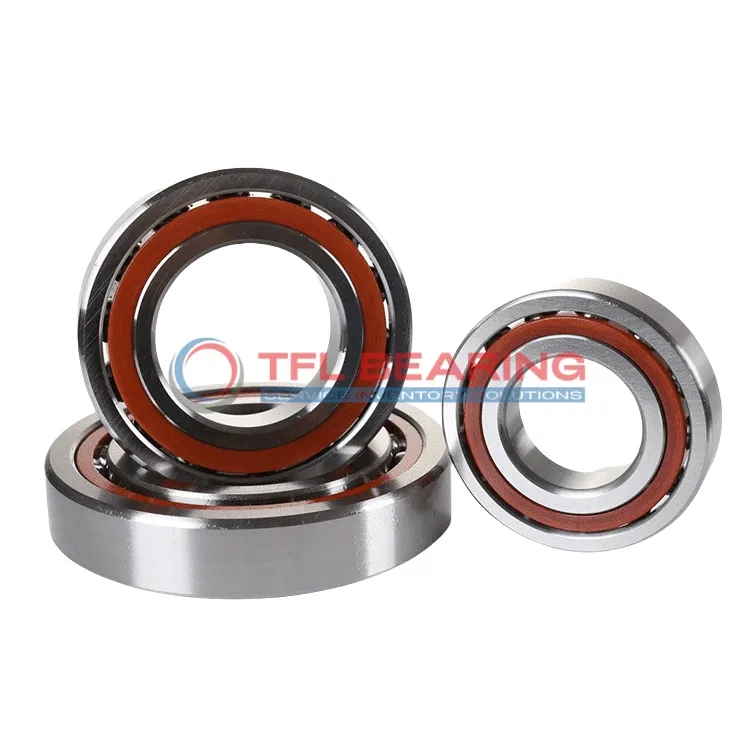
Super Precision Angular Contact Ball Bearings 7016 CD/P4AQBCA
Super Precision Angular Contact Ball Bearings 7016 CD/P4AQBCA
The 7016 CD/P4AQBCA is a super precision angular contact ball bearing with an 80mm bore and 125mm outer diameter, crafted from durable chrome steel. It handles radial loads up to 39150 lbf and operates smoothly at speeds up to 28000 RPM.
Its 15° contact angle and matched set of four bearings provide excellent stability for high-precision applications. The phenolic cage ensures quiet and efficient performance.
Designed for extra light preload, this bearing is ideal for machine tools or spindle systems where accuracy is crucial. It works in temperatures from -30°C to 110°C.
Weighing 3.42kg, it’s robust yet suitable for precision machinery. Compliant with P4A tolerance standards, it’s interchangeable with SKF bearings for easy replacement.
Get A Free Quote
"*" indicates required fields
DescriptionFeaturesApplicationQ&ARecommended ProductsOur Process
How Does 7016 CD/P4AQBCA Bearing Ensure Precision in High-Speed Applications?
7016 CD/P4AQBCA Bearing features a 15° contact angle, optimised for high-speed operations up to 28,000 rpm.
Its chrome steel rings and balls provide excellent durability under dynamic radial loads of 39,150 lbf.
The phenolic cage maintains ball alignment, reducing friction and ensuring smooth performance.
With a P4A tolerance class, it delivers consistent precision in demanding angular contact applications.
7016 CD/P4AQBCA Bearing operates efficiently within a temperature range of -30°C to 110°C.
Its extra light preload design minimises vibration, enhancing stability during high-speed rotation.
Application
Key Fields for 7016 CD/P4AQBCA Bearing
In high-speed machine tools, 7016 CD/P4AQBCA Bearing excels due to its precision angular contact design, ensuring smooth rotation under radial and axial loads. The phenolic cage reduces friction, making it ideal for prolonged use.
Where Is 7016 CD/P4AQBCA Bearing Used?
You’ll often find 7016 CD/P4AQBCA Bearing in aerospace applications, where its extra-light preload and P4A tolerance class meet strict performance requirements. Its matched arrangement of four bearings also enhances stability in critical systems.
Built for Heavy-Duty Use: 7016 CD/P4AQBCA Bearing
7016 CD/P4AQBCA Bearing handles dynamic radial loads up to 39,150 lbf, making it suitable for industrial gearboxes and pumps. The chrome steel construction ensures durability even in demanding environments.
Automotive vs Aerospace: Applications of 7016 CD/P4AQBCA Bearing
While 7016 CD/P4AQBCA Bearing supports high-speed spindles in aerospace, it also performs well in automotive transmissions. Its 15° contact angle balances load distribution for varied applications.
Practical Applications of 7016 CD/P4AQBCA Bearing
In robotics, 7016 CD/P4AQBCA Bearing’s low friction and high precision enable accurate movement in articulated arms. The lubricated design further reduces maintenance needs for continuous operation.